Cancer Research UK Edinburgh Centre, Institute of Genetics and Molecular Medicine, University of Edinburgh, Crewe Road South, Edinburgh EH4 2XR, UK.
Open Biol. 2020 Sep;10(9):200184. doi: 10.1098/rsob.200184. Epub 2020 Sep 2.
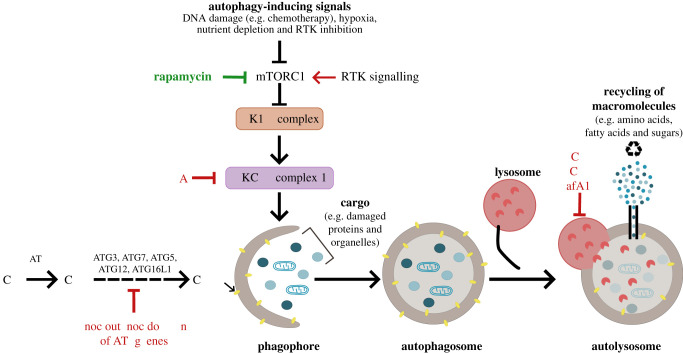
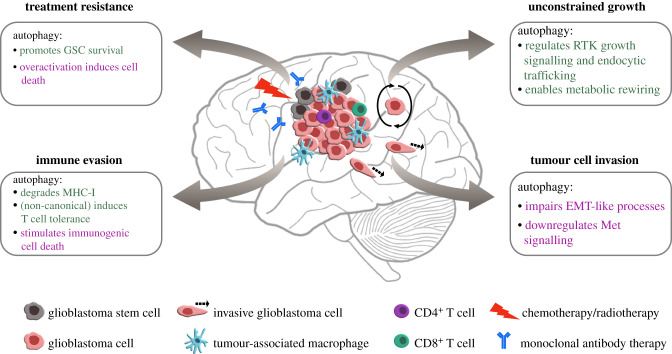
Glioblastoma is the most common and aggressive adult brain tumour, with poor median survival and limited treatment options. Following surgical resection and chemotherapy, recurrence of the disease is inevitable. Genomic studies have identified key drivers of glioblastoma development, including amplifications of receptor tyrosine kinases, which drive tumour growth. To improve treatment, it is crucial to understand survival response processes in glioblastoma that fuel cell proliferation and promote resistance to treatment. One such process is autophagy, a catabolic pathway that delivers cellular components sequestered into vesicles for lysosomal degradation. Autophagy plays an important role in maintaining cellular homeostasis and is upregulated during stress conditions, such as limited nutrient and oxygen availability, and in response to anti-cancer therapy. Autophagy can also regulate pro-growth signalling and metabolic rewiring of cancer cells in order to support tumour growth. In this review, we will discuss our current understanding of how autophagy is implicated in glioblastoma development and survival. When appropriate, we will refer to findings derived from the role of autophagy in other cancer models and predict the outcome of manipulating autophagy during glioblastoma treatment.
胶质母细胞瘤是最常见且侵袭性最强的成人脑肿瘤,中位生存期较差,治疗选择有限。手术切除和化疗后,疾病必然会复发。基因组研究已经确定了胶质母细胞瘤发展的关键驱动因素,包括受体酪氨酸激酶的扩增,这些驱动肿瘤生长。为了改善治疗效果,了解促进细胞增殖和对治疗产生抗性的胶质母细胞瘤存活反应过程至关重要。其中一个过程是自噬,这是一种将细胞成分隔离到囊泡中进行溶酶体降解的分解代谢途径。自噬在维持细胞内稳态方面发挥着重要作用,并且在应激条件下(如营养和氧气有限)以及对癌症治疗的反应中会被上调。自噬还可以调节促生长信号和癌细胞的代谢重编程,以支持肿瘤生长。在这篇综述中,我们将讨论我们目前对自噬如何参与胶质母细胞瘤的发展和存活的理解。在适当的情况下,我们将参考自噬在其他癌症模型中的作用的发现,并预测在胶质母细胞瘤治疗期间操纵自噬的结果。