Sridhar Niranjan, Shoeb Ali, Stephens Philip, Kharbouch Alaa, Shimol David Ben, Burkart Joshua, Ghoreyshi Atiyeh, Myers Lance
Verily Life Sciences, Mountain View, CA USA.
NPJ Digit Med. 2020 Aug 20;3:106. doi: 10.1038/s41746-020-0291-x. eCollection 2020.
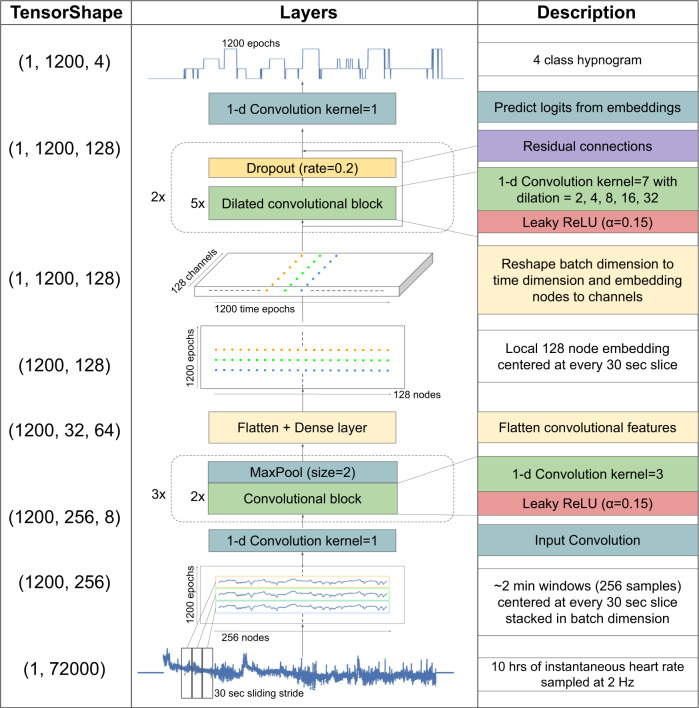
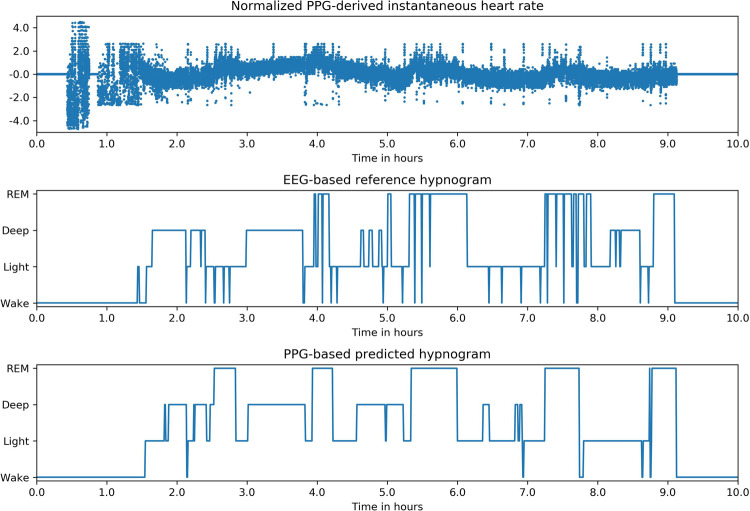
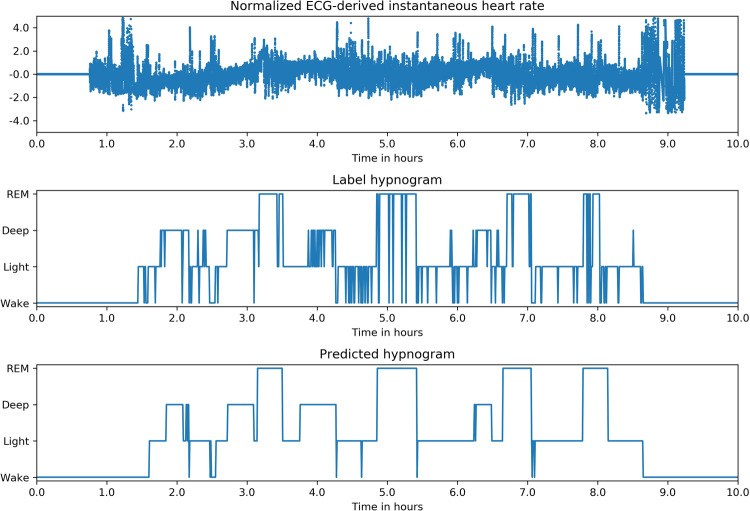
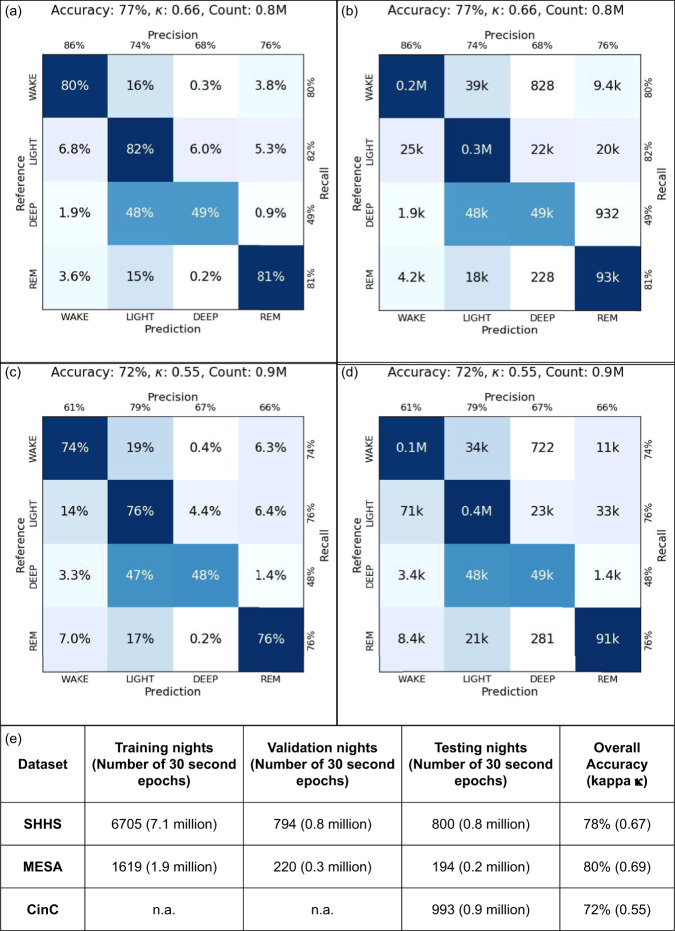
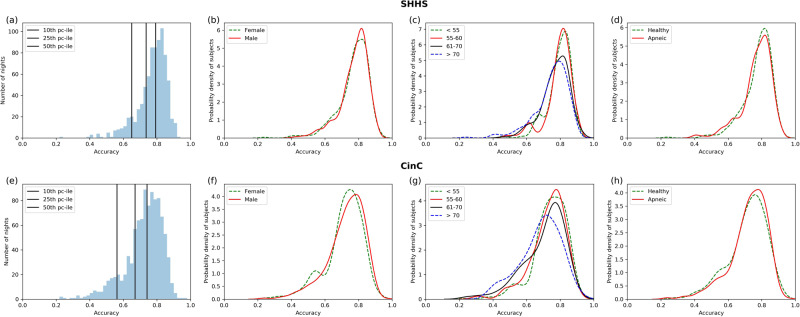
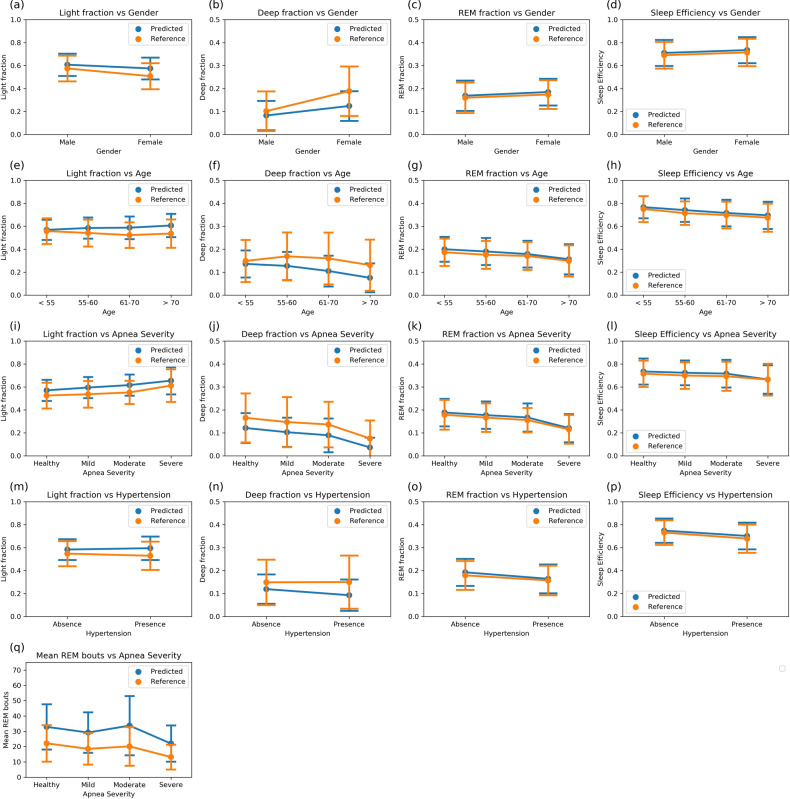
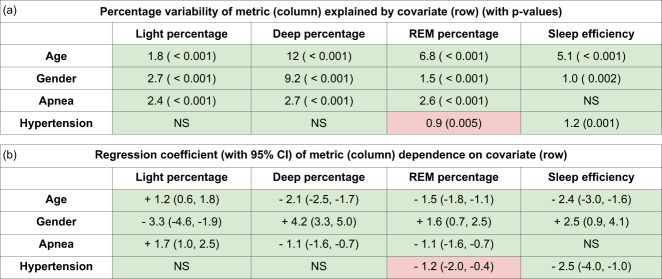
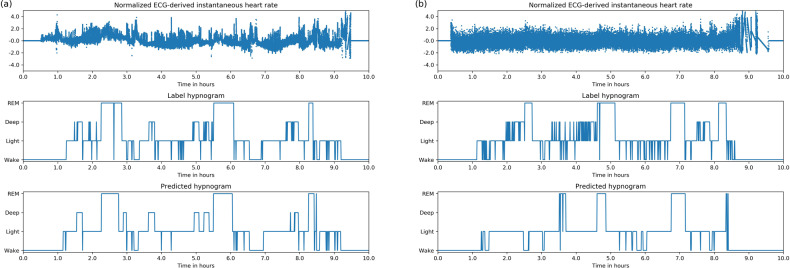
Clinical sleep evaluations currently require multimodal data collection and manual review by human experts, making them expensive and unsuitable for longer term studies. Sleep staging using cardiac rhythm is an active area of research because it can be measured much more easily using a wide variety of both medical and consumer-grade devices. In this study, we applied deep learning methods to create an algorithm for automated sleep stage scoring using the instantaneous heart rate (IHR) time series extracted from the electrocardiogram (ECG). We trained and validated an algorithm on over 10,000 nights of data from the Sleep Heart Health Study (SHHS) and Multi-Ethnic Study of Atherosclerosis (MESA). The algorithm has an overall performance of 0.77 accuracy and 0.66 kappa against the reference stages on a held-out portion of the SHHS dataset for classifying every 30 s of sleep into four classes: wake, light sleep, deep sleep, and rapid eye movement (REM). Moreover, we demonstrate that the algorithm generalizes well to an independent dataset of 993 subjects labeled by American Academy of Sleep Medicine (AASM) licensed clinical staff at Massachusetts General Hospital that was not used for training or validation. Finally, we demonstrate that the stages predicted by our algorithm can reproduce previous clinical studies correlating sleep stages with comorbidities such as sleep apnea and hypertension as well as demographics such as age and gender.
目前,临床睡眠评估需要多模态数据收集并由专家进行人工审查,这使得评估成本高昂且不适用于长期研究。利用心律进行睡眠分期是一个活跃的研究领域,因为使用各种医疗和消费级设备都能更轻松地测量心律。在本研究中,我们应用深度学习方法,基于从心电图(ECG)提取的瞬时心率(IHR)时间序列创建了一种自动睡眠阶段评分算法。我们使用来自睡眠心脏健康研究(SHHS)和动脉粥样硬化多族裔研究(MESA)的超过10000个夜晚的数据对算法进行了训练和验证。在SHHS数据集的一个留出部分上,该算法针对将每30秒的睡眠分为清醒、浅睡眠、深睡眠和快速眼动(REM)四个类别的参考阶段,总体准确率为0.77,kappa系数为0.66。此外,我们证明该算法能很好地推广到由麻省总医院获得美国睡眠医学学会(AASM)许可的临床工作人员标注的993名受试者的独立数据集,该数据集未用于训练或验证。最后,我们证明我们算法预测的阶段能够重现先前将睡眠阶段与睡眠呼吸暂停和高血压等合并症以及年龄和性别等人口统计学特征相关联的临床研究。