Center for Infectious Diseases, Second Affiliated Hospital of Air Force Medical University, Xi'an, Shaanxi, China.
J Glob Health. 2020 Dec;10(2):020510. doi: 10.7189/jogh.10.020510.
As an emergent and fulminant infectious disease, Corona Virus Disease 2019 (COVID-19) has caused a worldwide pandemic. The early identification and timely treatment of severe patients are crucial to reducing the mortality of COVID-19. This study aimed to investigate the clinical characteristics and early predictors for severe COVID-19, and to establish a prediction model for the identification and triage of severe patients.
All confirmed patients with COVID-19 admitted by the Second Affiliated Hospital of Air Force Medical University were enrolled in this retrospective non-interventional study. The patients were divided into a mild group and a severe group, and the clinical data were compared between the two groups. Univariate and multivariate analysis were used to identify the independent early predictors for severe COVID-19, and the prediction model was constructed by multivariate logistic regression analysis. Receiver operating characteristic (ROC) curve was used to evaluate the predictive value of the prediction model and each early predictor.
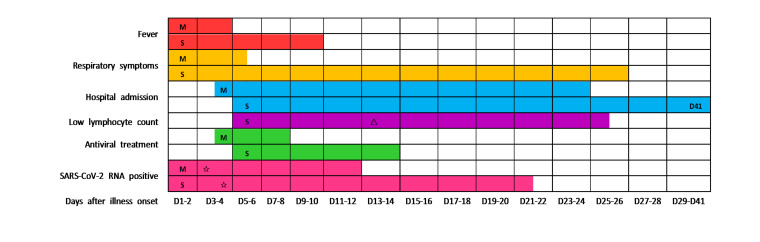
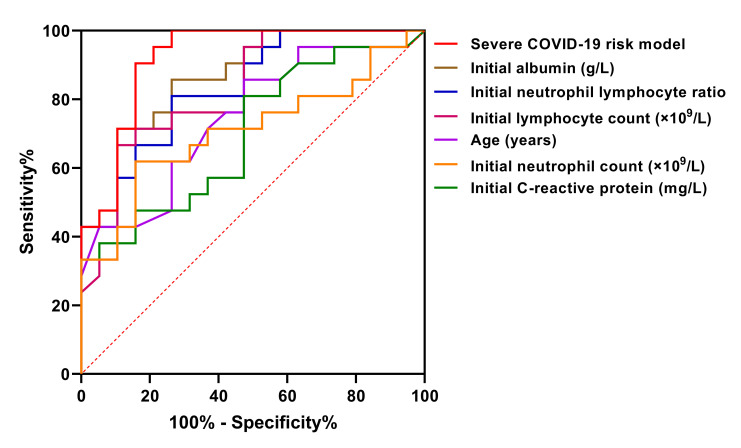
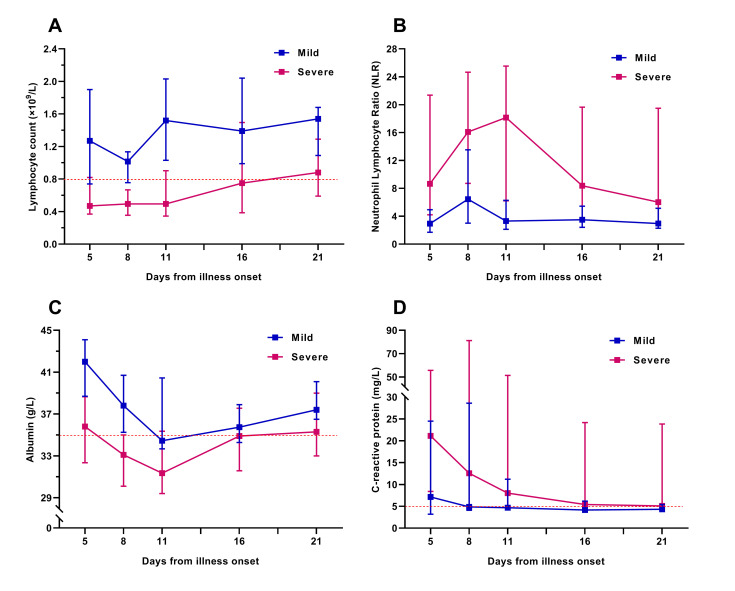
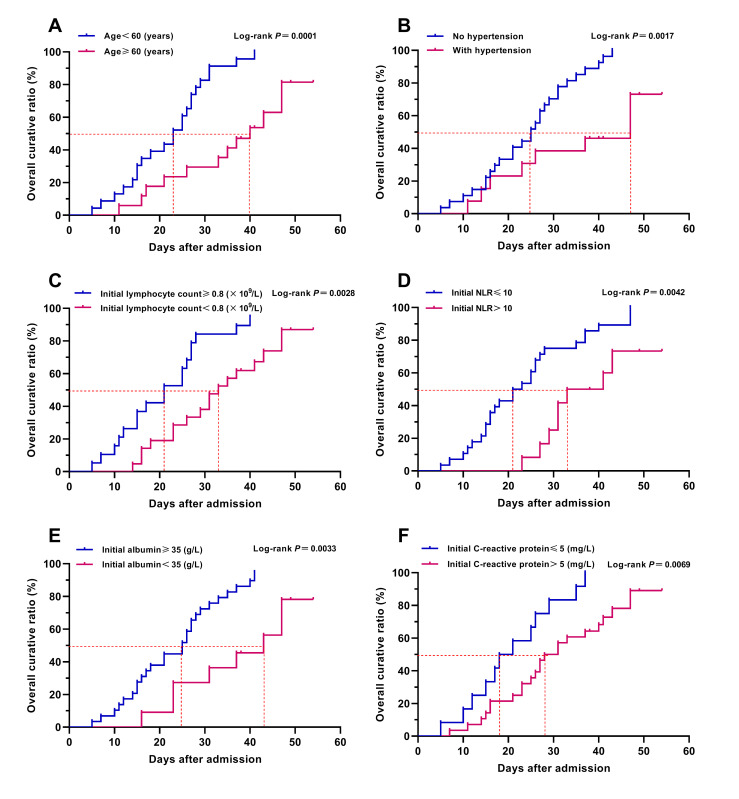
A total of 40 patients were enrolled in this study, of whom 19 were mild and 21 were severe. The proportions of patients with venerable age (≥60 years old), comorbidities, and hypertension in severe patients were higher than that of the mild ( < 0.05). The duration of fever and respiratory symptoms, and the interval from illness onset to viral clearance were longer in severe patients ( < 0.05). Most patients received at least one form of oxygen treatments, while severe patients required more mechanical ventilation ( < 0.05). Univariate and multivariate analysis showed that venerable age, hypertension, lymphopenia, hypoalbuminemia and elevated neutrophil lymphocyte ratio (NLR) were the independent high-risk factors for severe COVID-19. ROC curves demonstrated significant predictive value of age, lymphocyte count, albumin and NLR for severe COVID-19. The sensitivity and specificity of the newly constructed prediction model for predicting severe COVID-19 was 90.5% and 84.2%, respectively, and whose positive predictive value, negative predictive value and crude agreement were all over 85%.
The severe COVID-19 risk model might help clinicians quickly identify severe patients at an early stage and timely take optimal therapeutic schedule for them.
作为一种突发的、烈性传染病,2019 年冠状病毒病(COVID-19)已在全球范围内引发大流行。早期识别和及时治疗重症患者对于降低 COVID-19 的死亡率至关重要。本研究旨在探讨重症 COVID-19 的临床特征和早期预测因素,并建立一种用于识别和分诊重症患者的预测模型。
本回顾性非干预性研究纳入了空军军医大学第二附属医院收治的所有确诊 COVID-19 患者。将患者分为轻症组和重症组,比较两组患者的临床资料。采用单因素和多因素分析识别重症 COVID-19 的独立早期预测因素,并通过多因素逻辑回归分析构建预测模型。采用受试者工作特征(ROC)曲线评估预测模型和各早期预测因素的预测价值。
本研究共纳入 40 例患者,其中轻症 19 例,重症 21 例。重症患者高龄(≥60 岁)、合并症和高血压的比例高于轻症(<0.05)。重症患者发热和呼吸道症状持续时间以及从发病到病毒清除的间隔时间较长(<0.05)。大多数患者接受了至少一种形式的氧疗,而重症患者需要更多的机械通气(<0.05)。单因素和多因素分析显示,高龄、高血压、淋巴细胞减少、低白蛋白血症和升高的中性粒细胞与淋巴细胞比值(NLR)是重症 COVID-19 的独立高危因素。ROC 曲线表明年龄、淋巴细胞计数、白蛋白和 NLR 对重症 COVID-19 有显著的预测价值。新构建的预测模型预测重症 COVID-19 的敏感性和特异性分别为 90.5%和 84.2%,阳性预测值、阴性预测值和粗一致性均超过 85%。
重症 COVID-19 风险模型有助于临床医生在早期快速识别重症患者,并及时为其制定最佳治疗方案。