School of Sport, Exercise and Nutrition, College of Health, Massey University, Auckland 0745, New Zealand.
Nutrients. 2020 Sep 3;12(9):2692. doi: 10.3390/nu12092692.
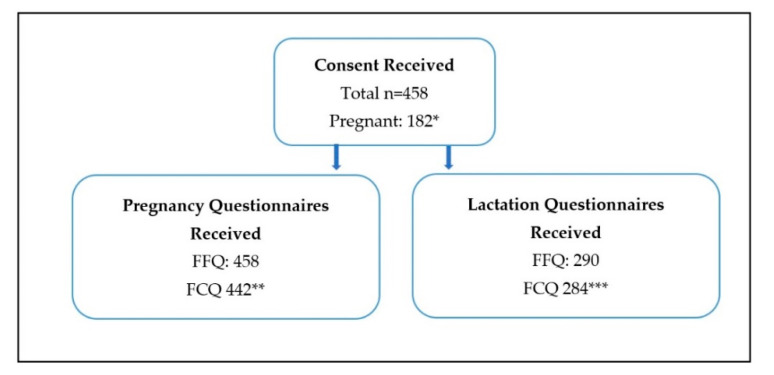
Dietary recommendations during pregnancy and lactation have become increasingly complex, and sources of information more numerous but not always reliable, potentially causing confusion and unsafe choices. Women were recruited during pregnancy or within six months postpartum and completed questionnaires on dietary choices, food safety, and sources of nutrition information. Women ( = 458) from around New Zealand participated in the study. They consumed a wide range of foods and beverages and reported various dietary changes. In pregnancy, women commonly avoided alcohol (92%), raw milk products (86%), and raw, smoked, or pre-cooked seafood and fish (84%), and made changes due to food safety concerns. Influential advice was acquired from a range of sources including midwives (37%) and the New Zealand pregnancy and breastfeeding guidelines (25%) during pregnancy. Food avoidance was less common in lactation. However, fewer women consumed milk products during lactation (64%) than pregnancy (93%). Potentially unreliable sources were used more frequently in lactation including alternative health practitioners (26%) and family or friends (12%), and dietary changes were often made in response to infant symptoms without supporting evidence. This study highlighted a need for good communication of evidence-based recommendations to women, especially during lactation.
孕期和哺乳期的饮食建议变得越来越复杂,信息来源也越来越多,但并不总是可靠的,这可能会导致困惑和不安全的选择。研究招募了孕期或产后 6 个月内的女性,并让她们完成了关于饮食选择、食品安全和营养信息来源的问卷。来自新西兰各地的 458 名女性参与了这项研究。她们食用了各种各样的食物和饮料,并报告了各种饮食变化。在孕期,女性通常避免饮酒(92%)、生奶制品(86%)、生的、熏制或预煮的海鲜和鱼类(84%),并因食品安全问题而改变饮食。在孕期,来自各种来源的有影响力的建议包括助产士(37%)和新西兰孕期和哺乳期指南(25%)。哺乳期的食物回避现象则不那么常见。然而,哺乳期女性摄入奶制品的比例(64%)低于孕期(93%)。在哺乳期,包括替代健康从业者(26%)和家人或朋友(12%)在内的不太可靠的来源被更频繁地使用,而且饮食变化往往是针对婴儿症状做出的,没有证据支持。这项研究强调了向女性,特别是哺乳期女性传达基于证据的建议的必要性。