Animal Production Research Institute, Sakha Station, Kafr El-Sheikh, Egypt.
Department of Animal Production, Faculty of Agriculture, Kafrelsheikh University, Kafr El-Sheikh, Egypt.
Vet Med Sci. 2021 Jan;7(1):226-235. doi: 10.1002/vms3.345. Epub 2020 Sep 9.
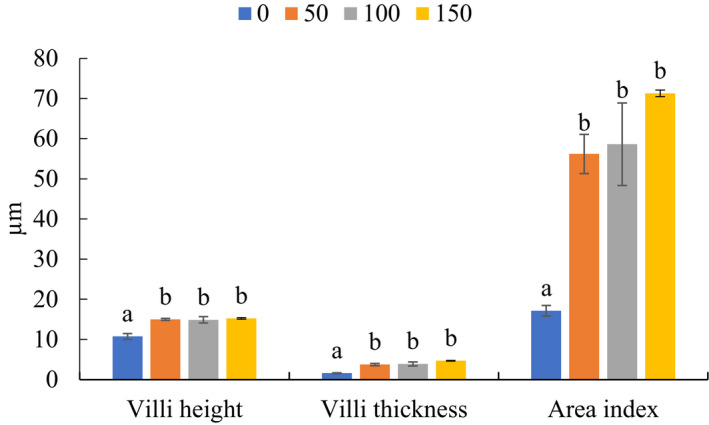
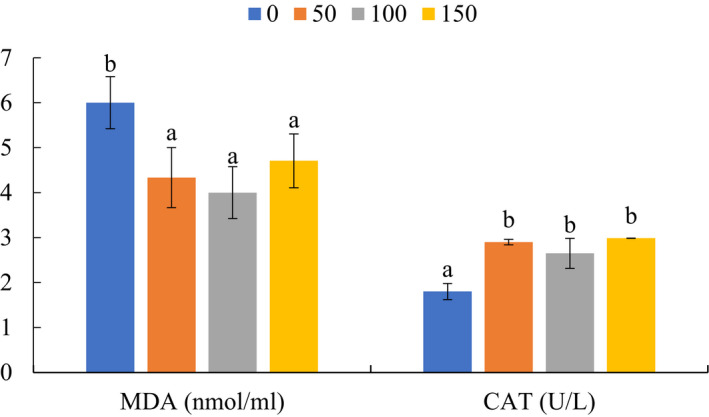
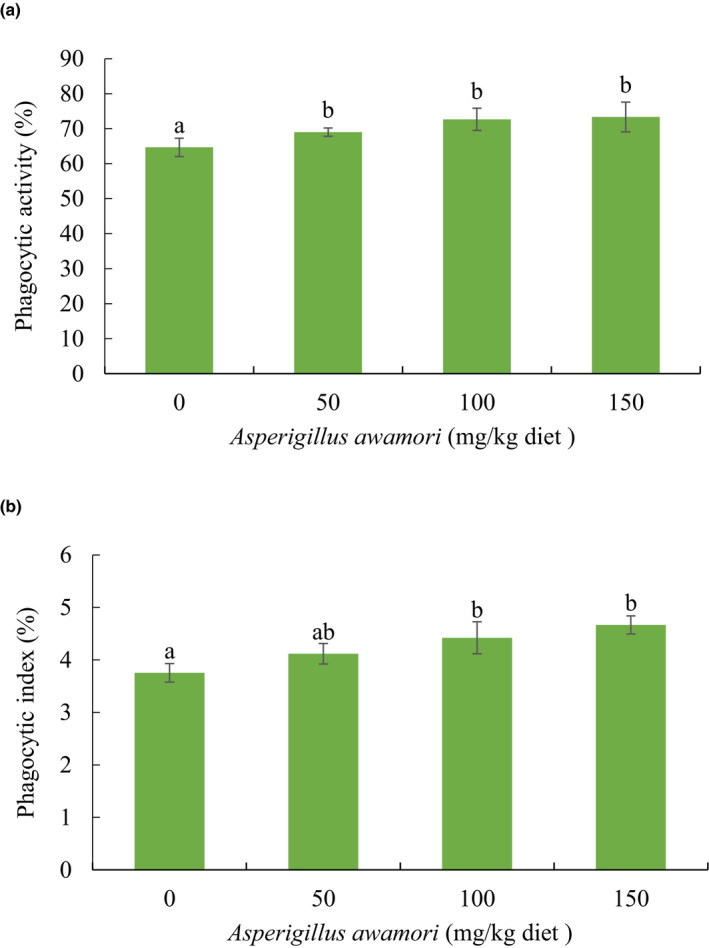
In this study, we explored the effects of dietary administration of Aspergillus awamori on the growth, intestinal histomorphology, immune parameters and antioxidant enzyme activity of growing rabbits. The rabbits of 5 weeks of age (body weight, 855 ± 5.53 g) were allotted into four groups (12 rabbits per group) and fed four experimental diets enriched with A. awamori at 0, 50, 100 and 150 mg per kg diet for 8 weeks. After the feeding trial, an equal number of male APRI rabbits (3 months old; 4 groups, 5 rabbits per group) were housed in metabolism cages and fed the test diets for 14 days for the digestibility trial. All A. awamori-enriched diets induced a significant increase in the average body weight and weight gain of rabbits and significantly decreased the feed conversion ratio. In rabbits fed with A. awamori at 100 or 150 mg per kg diet, protein, lipid and fibber digestibility coefficients significantly increased compared with the control group. Intestinal villi measurements (length and thickness) were also enhanced in all rabbits fed with A. awamori. Adding A. awamori as a food supplement generally did not affect rabbit haematology and blood biochemistry values; however, at 150 mg per kg diet, it significantly increased the levels of haemoglobin and total protein, as well as red blood cell count. Furthermore, all enriched diets significantly increased rabbits' phagocytic activity and their phagocytic index. Rabbits fed with A. awamori also showed decreased malondialdehyde but increased catalase activity. In conclusion, A. awamori administered as feed supplement at 100-150 mg per kg of growing rabbits' diet enhances their growth, intestinal health and nutrient digestibility, and it raises the levels of their immune and antioxidative responses.
在这项研究中,我们探讨了食用曲霉菌对生长兔的生长、肠道组织形态、免疫参数和抗氧化酶活性的影响。将 5 周龄(体重 855±5.53g)的兔子分为四组(每组 12 只),并分别用添加了 0、50、100 和 150mg/kg 曲霉菌的四种实验饲料喂养 8 周。喂养试验结束后,将数量相等的雄性 APRI 兔(3 月龄;4 组,每组 5 只)饲养在代谢笼中,用试验饲料喂养 14 天进行消化试验。所有添加曲霉菌的饲料均显著提高了兔子的平均体重和体重增加,并显著降低了饲料转化率。在添加 100 或 150mg/kg 曲霉菌的兔子中,蛋白质、脂质和纤维的消化系数与对照组相比显著增加。所有添加曲霉菌的兔子的肠道绒毛测量(长度和厚度)也得到了增强。添加曲霉菌作为饲料补充剂通常不会影响兔子的血液学和血液生化值;然而,在 150mg/kg 日粮中,它显著增加了血红蛋白和总蛋白以及红细胞计数。此外,所有添加曲霉菌的日粮都显著提高了兔子的吞噬活性和吞噬指数。添加曲霉菌的兔子的丙二醛水平降低,而过氧化氢酶活性增加。综上所述,作为生长兔饲料补充剂添加的曲霉菌在 100-150mg/kg 时可增强其生长、肠道健康和营养消化率,并提高其免疫和抗氧化反应水平。