Tun Steven, Spainhower Caleb James, Cottrill Cameron Lee, Lakhani Hari Vishal, Pillai Sneha S, Dilip Anum, Chaudhry Hibba, Shapiro Joseph I, Sodhi Komal
Departments of Medicine, Surgery and Biomedical Sciences, Marshall University Joan C. Edwards School of Medicine, Huntington, WV, United States.
Front Pharmacol. 2020 Aug 13;11:1234. doi: 10.3389/fphar.2020.01234. eCollection 2020.
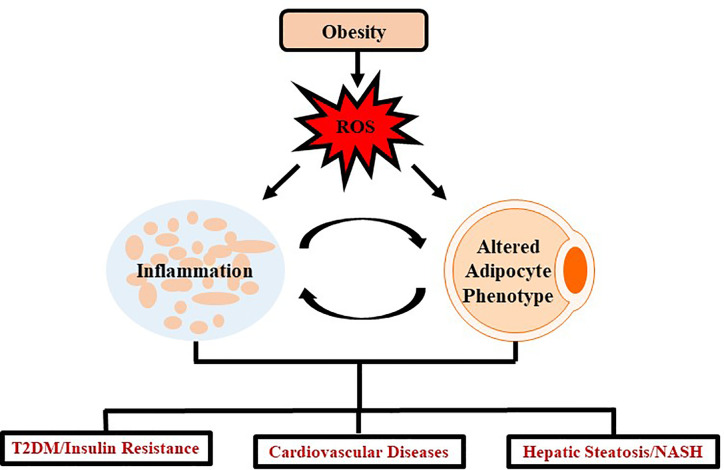
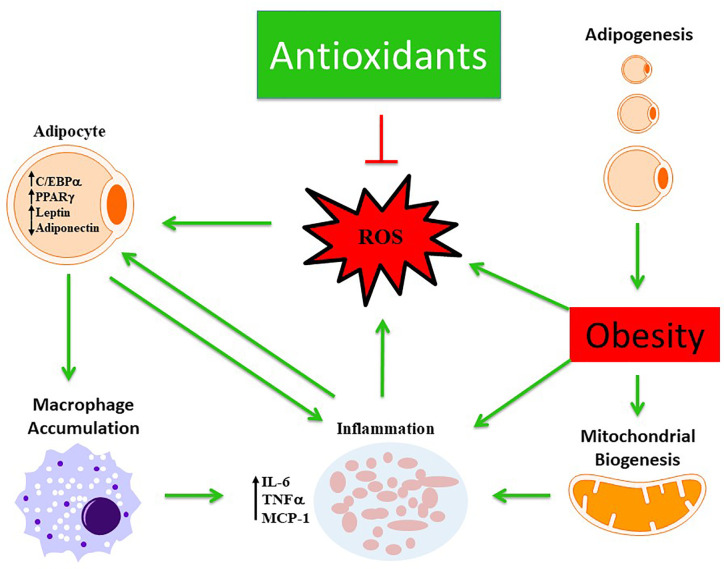
Obesity has been a worldwide epidemic for decades. Despite the abundant increase in knowledge regarding the etiology and pathogenesis of obesity, the prevalence continues to rise with estimates predicting considerably higher numbers by the year 2030. Obesity is characterized by an abnormal lipid accumulation, however, the physiological consequences of obesity are far more concerning. The development of the obesity phenotype constitutes dramatic alterations in adipocytes, along with several other cellular mechanisms which causes substantial increase in systemic oxidative stress mediated by reactive oxygen species (ROS). These alterations promote a chronic state of inflammation in the body caused by the redox imbalance. Together, the systemic oxidative stress and chronic inflammation plays a vital role in maintaining the obese state and exacerbating onset of cardiovascular complications, Type II diabetes mellitus, dyslipidemia, non-alcoholic steatohepatitis, and other conditions where obesity has been linked as a significant risk factor. Because of the apparent role of oxidative stress in the pathogenesis of obesity, there has been a growing interest in attenuating the pro-oxidant state in obesity. Hence, this review aims to highlight the therapeutic role of antioxidants, agents that negate pro-oxidant state of cells, in ameliorating obesity and associated comorbidities. More specifically, this review will explore how various antioxidants target unique and diverse pathways to exhibit an antioxidant defense mechanism.
几十年来,肥胖一直是一种全球性的流行病。尽管关于肥胖的病因和发病机制的知识有了大量增加,但肥胖的患病率仍在持续上升,据估计到2030年肥胖人数将大幅增加。肥胖的特征是脂质异常积累,然而,肥胖的生理后果更令人担忧。肥胖表型的形成伴随着脂肪细胞的显著改变,以及其他几种细胞机制,这些机制导致由活性氧(ROS)介导的全身氧化应激大幅增加。这些改变促进了由氧化还原失衡引起的身体慢性炎症状态。全身氧化应激和慢性炎症共同在维持肥胖状态以及加剧心血管并发症、II型糖尿病、血脂异常、非酒精性脂肪性肝炎和其他肥胖被认为是重要危险因素的疾病的发病方面起着至关重要的作用。由于氧化应激在肥胖发病机制中明显的作用,人们对减轻肥胖中的促氧化状态的兴趣日益浓厚。因此,本综述旨在强调抗氧化剂(即消除细胞促氧化状态的物质)在改善肥胖及相关合并症方面的治疗作用。更具体地说,本综述将探讨各种抗氧化剂如何针对独特和多样的途径来展现抗氧化防御机制。