Jaipuria Institute of Management, Jaipur, India.
JMIR Public Health Surveill. 2020 Oct 15;6(4):e19833. doi: 10.2196/19833.
With increasing numbers of patients with COVID-19 globally, China and the World Health Organization have been blamed by some for the spread of this disease. Consequently, instances of racism and hateful acts have been reported around the world. When US President Donald Trump used the term "Chinese Virus," this issue gained momentum, and ethnic Asians are now being targeted. The online situation looks similar, with increases in hateful comments and posts.
The aim of this paper is to analyze the increasing instances of cyber racism during the COVID-19 pandemic, by assessing emotions and sentiments associated with tweets on Twitter.
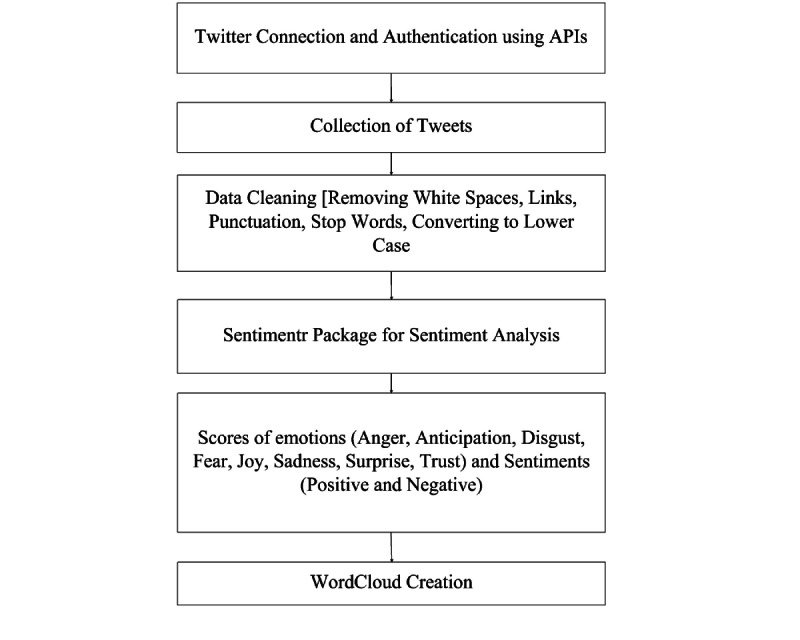
In total, 16,000 tweets from April 11-16, 2020, were analyzed to determine their associated sentiments and emotions. Statistical analysis was carried out using R. Twitter API and the sentimentr package were used to collect tweets and then evaluate their sentiments, respectively. This research analyzed the emotions and sentiments associated with terms like "Chinese Virus," "Wuhan Virus," and "Chinese Corona Virus."
The results suggest that the majority of the analyzed tweets were of negative sentiment and carried emotions of fear, sadness, anger, and disgust. There was a high usage of slurs and profane words. In addition, terms like "China Lied People Died," "Wuhan Health Organization," "Kung Flu," "China Must Pay," and "CCP is Terrorist" were frequently used in these tweets.
This study provides insight into the rise in cyber racism seen on Twitter. Based on the findings, it can be concluded that a substantial number of users are tweeting with mostly negative sentiments toward ethnic Asians, China, and the World Health Organization.
随着全球 COVID-19 患者数量的增加,中国和世界卫生组织(WHO)被一些人指责导致了这种疾病的传播。因此,世界各地都出现了种族主义和仇恨行为的报道。当美国总统唐纳德·特朗普(Donald Trump)使用“中国病毒”一词时,这个问题引起了轩然大波,亚洲裔现在成为了攻击目标。网络上的情况看起来也差不多,仇恨言论和帖子数量有所增加。
本文旨在通过评估与 Twitter 上的推文相关的情绪和情感,分析 COVID-19 大流行期间网络种族主义日益增多的现象。
共分析了 2020 年 4 月 11 日至 16 日的 16000 条推文,以确定其相关情感和情绪。使用 R 进行了统计分析。使用 Twitter API 和 sentimentr 包分别收集推文并评估其情感。本研究分析了与“中国病毒”、“武汉病毒”和“中国冠状病”等术语相关的情绪和情感。
结果表明,大多数分析的推文情绪都是负面的,带有恐惧、悲伤、愤怒和厌恶的情绪。有大量的侮辱性和亵渎性的词语被使用。此外,在这些推文中经常使用“中国撒谎,人民死亡”、“武汉卫生组织”、“功夫流感”、“中国必须赔偿”和“中共是恐怖主义”等术语。
本研究深入了解了 Twitter 上网络种族主义的兴起。根据研究结果,可以得出结论,大量用户在推特上发布的信息主要是对亚洲人、中国和世界卫生组织的负面情绪。