Gu Inah, Brownmiller Cindi, Stebbins Nathan B, Mauromoustakos Andy, Howard Luke, Lee Sun-Ok
Department of Food Science, University of Arkansas, 2650 N. Young Ave., Fayetteville, AR 72704, USA.
Agricultural Statistics Laboratory, University of Arkansas, Fayetteville, AR 72701, USA.
Antioxidants (Basel). 2020 Sep 15;9(9):871. doi: 10.3390/antiox9090871.
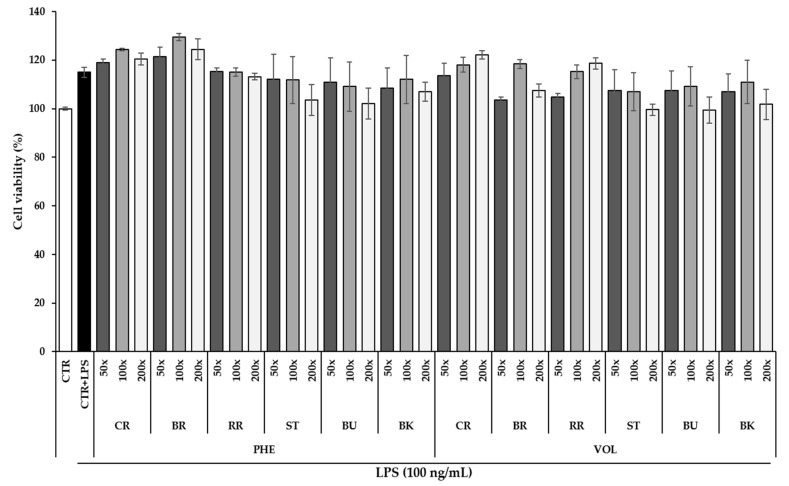
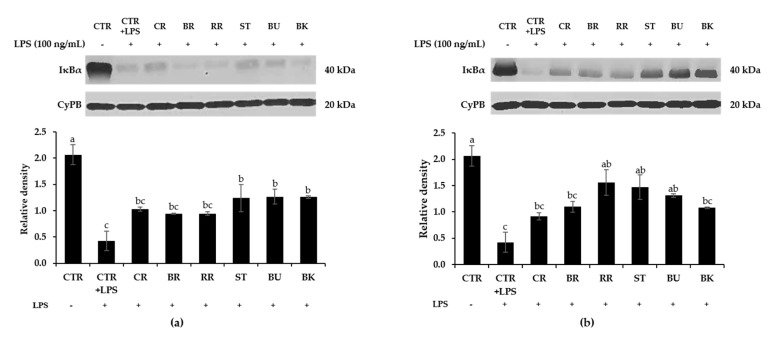
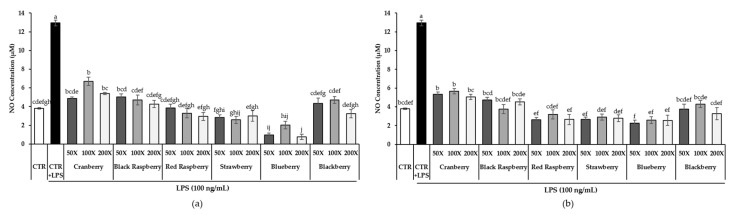
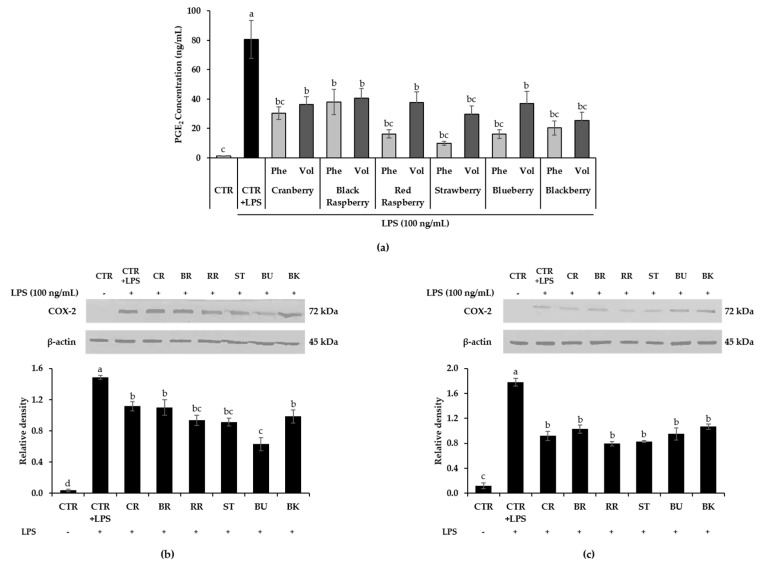
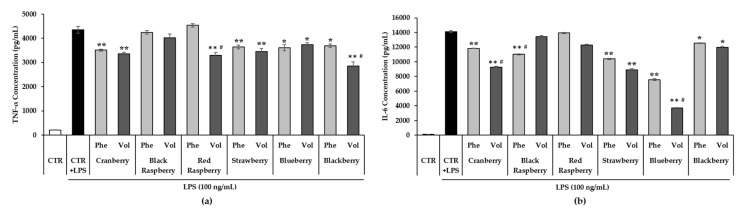
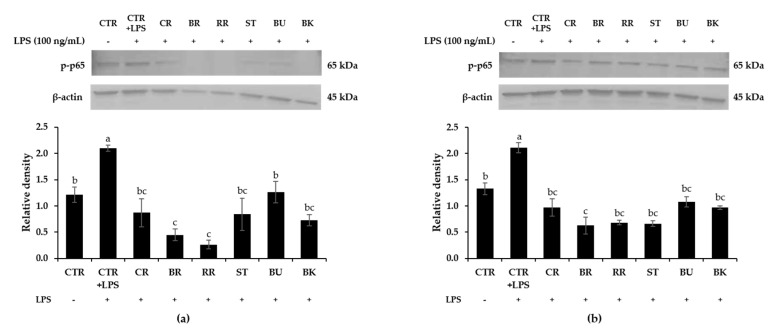
Berries are a rich source of phytochemicals, especially phenolics well known for protective activity against many chronic diseases. Berries also contain a complex mixture of volatile compounds that are responsible for the unique aromas of berries. However, there is very limited information on the composition and potential health benefits of berry volatiles. In this study, we isolated phenolic and volatile fractions from six common berries and characterized them by HPLC/HPLC-MS and GC/GC-MS, respectively. Berry phenolic and volatile fractions were evaluated for an anti-inflammatory effect using lipopolysaccharide (LPS)-stimulated RAW264.7 macrophage cells by measuring levels of pro-inflammatory cytokines and the nuclear factor-kappa B (NF-κB) signaling pathway. Results showed that LPS-induced excessive production of nitric oxide (NO), prostaglandin E (PGE), cyclooxygenase-2 (COX-2), interleukin-6 (IL-6) and tumor necrosis factor-α (TNF-α), which were inhibited by berry phenolic and volatile extracts. Moreover, berry phenolic and volatile extracts reduced the nuclear translocation of NF-κB by blocking the phosphorylation of p65 and degradation of IκBα. These findings showed that berry volatiles from six berries had comparable anti-inflammatory effects to berry phenolics through the suppression of pro-inflammatory mediators and cytokines expression via NF-κB down-regulation, despite being present in the fruit at a lower concentration.
浆果是植物化学物质的丰富来源,尤其是酚类物质,它们以对多种慢性疾病具有保护作用而闻名。浆果还含有复杂的挥发性化合物混合物,这些化合物赋予了浆果独特的香气。然而,关于浆果挥发性成分的组成和潜在健康益处的信息非常有限。在本研究中,我们从六种常见浆果中分离出酚类和挥发性成分,并分别通过HPLC/HPLC-MS和GC/GC-MS对其进行表征。通过测量促炎细胞因子水平和核因子-κB(NF-κB)信号通路,使用脂多糖(LPS)刺激的RAW264.7巨噬细胞评估浆果酚类和挥发性成分的抗炎作用。结果表明,LPS诱导一氧化氮(NO)、前列腺素E(PGE)、环氧化酶-2(COX-2)、白细胞介素-6(IL-6)和肿瘤坏死因子-α(TNF-α)过度产生,而浆果酚类和挥发性提取物可抑制这些物质的产生。此外,浆果酚类和挥发性提取物通过阻断p65的磷酸化和IκBα的降解,减少了NF-κB的核转位。这些发现表明,六种浆果的挥发性成分通过下调NF-κB抑制促炎介质和细胞因子的表达,从而具有与浆果酚类相当的抗炎作用,尽管其在果实中的浓度较低。