Division of Genetics, Department of Pediatrics, Institute for Genomic Medicine, Program in Immunology, University of California San Diego, La Jolla, CA, USA.
Department of Biology, University of California San Diego, La Jolla, CA, USA.
EMBO J. 2020 Nov 2;39(21):e106057. doi: 10.15252/embj.2020106057. Epub 2020 Oct 5.
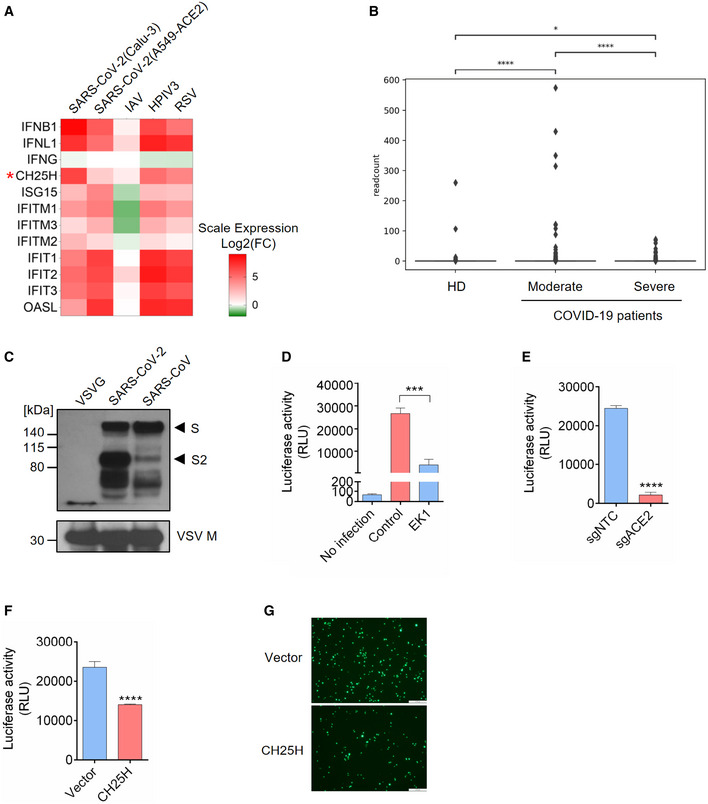
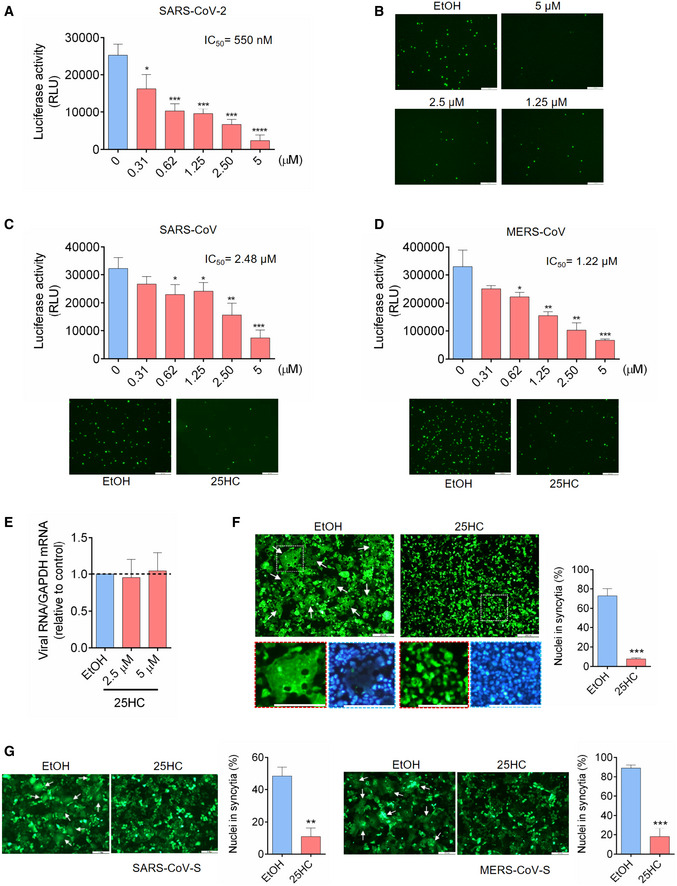
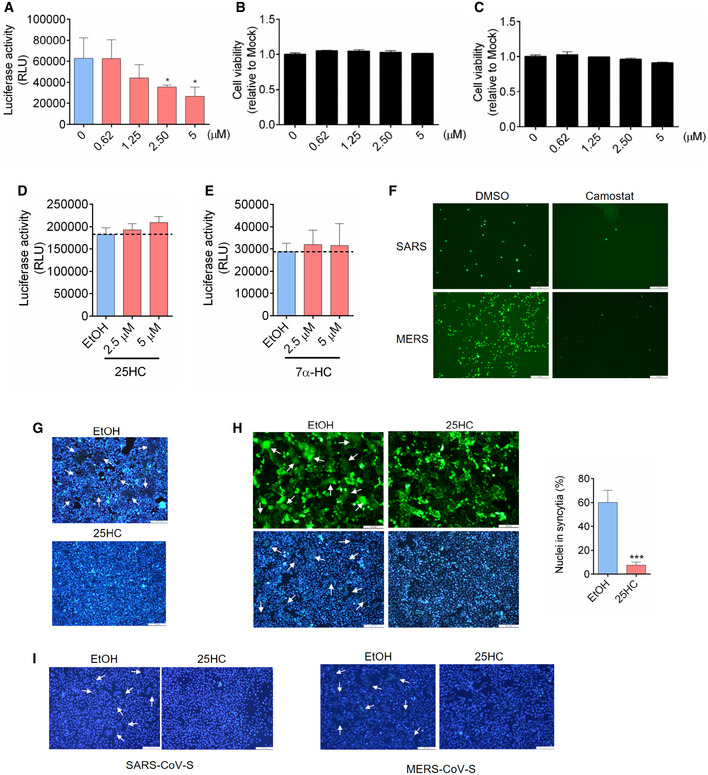
Coronavirus disease 2019 (COVID-19) is caused by SARS-CoV-2 and has spread across the globe. SARS-CoV-2 is a highly infectious virus with no vaccine or antiviral therapy available to control the pandemic; therefore, it is crucial to understand the mechanisms of viral pathogenesis and the host immune responses to SARS-CoV-2. SARS-CoV-2 is a new member of the betacoronavirus genus like other closely related viruses including SARS-CoV and Middle East respiratory syndrome coronavirus (MERS-CoV). Both SARS-CoV and MERS-CoV have caused serious outbreaks and epidemics in the past eighteen years. Here, we report that one of the interferon-stimulated genes (ISGs), cholesterol 25-hydroxylase (CH25H), is induced by SARS-CoV-2 infection in vitro and in COVID-19-infected patients. CH25H converts cholesterol to 25-hydrocholesterol (25HC) and 25HC shows broad anti-coronavirus activity by blocking membrane fusion. Furthermore, 25HC inhibits USA-WA1/2020 SARS-CoV-2 infection in lung epithelial cells and viral entry in human lung organoids. Mechanistically, 25HC inhibits viral membrane fusion by activating the ER-localized acyl-CoA:cholesterol acyltransferase (ACAT) which leads to the depletion of accessible cholesterol from the plasma membrane. Altogether, our results shed light on a potentially broad antiviral mechanism by 25HC through depleting accessible cholesterol on the plasma membrane to suppress virus-cell fusion. Since 25HC is a natural product with no known toxicity at effective concentrations, it provides a potential therapeutic candidate for COVID-19 and emerging viral diseases in the future.
新型冠状病毒病(COVID-19)由 SARS-CoV-2 引起,已在全球范围内传播。SARS-CoV-2 是一种高度传染性病毒,目前尚无疫苗或抗病毒疗法可用于控制大流行;因此,了解病毒发病机制和宿主对 SARS-CoV-2 的免疫反应至关重要。SARS-CoV-2 是β冠状病毒属的新成员,与其他密切相关的病毒(包括 SARS-CoV 和中东呼吸综合征冠状病毒(MERS-CoV))一样。SARS-CoV 和 MERS-CoV 过去十八年来都曾引发过严重的爆发和流行。在这里,我们报告称,干扰素刺激基因(ISGs)之一的胆固醇 25-羟化酶(CH25H)可被 SARS-CoV-2 体外感染和 COVID-19 感染患者诱导。CH25H 将胆固醇转化为 25-羟胆固醇(25HC),通过阻断膜融合显示出广泛的抗冠状病毒活性。此外,25HC 可抑制肺上皮细胞中的 USA-WA1/2020 SARS-CoV-2 感染和人肺类器官中的病毒进入。从机制上讲,25HC 通过激活内质网定位的酰基辅酶 A:胆固醇酰基转移酶(ACAT)来抑制病毒膜融合,从而导致质膜上可利用的胆固醇耗尽。总之,我们的结果阐明了 25HC 通过耗尽质膜上可利用的胆固醇来抑制病毒-细胞融合的潜在广泛抗病毒机制。由于 25HC 是一种天然产物,在有效浓度下没有已知的毒性,因此为 COVID-19 和未来新发病毒性疾病提供了一种有潜力的治疗候选药物。