Department of Microbiology, Faculty of Science, Mahidol University, Bangkok, Thailand.
Department of Clinical Pathology, Faculty of Medicine, Vajira Hospital, Navamindradhiraj University, Bangkok, Thailand.
PLoS One. 2020 Sep 18;15(9):e0239488. doi: 10.1371/journal.pone.0239488. eCollection 2020.
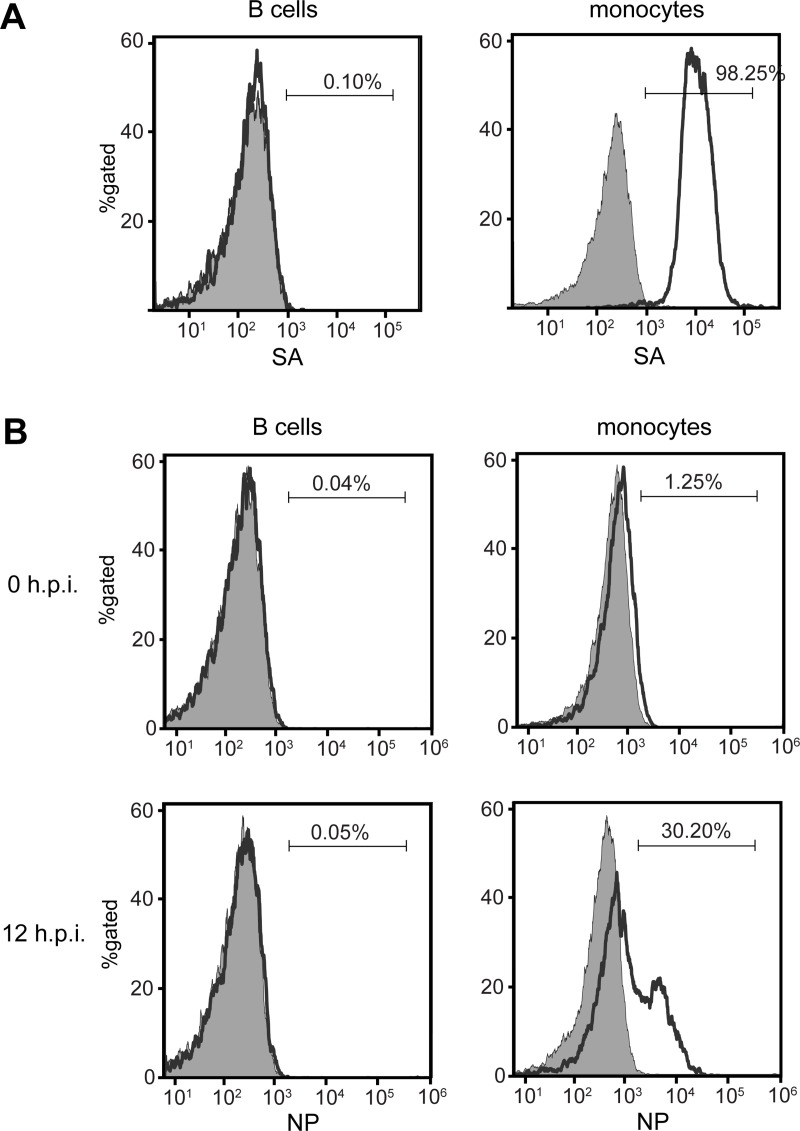
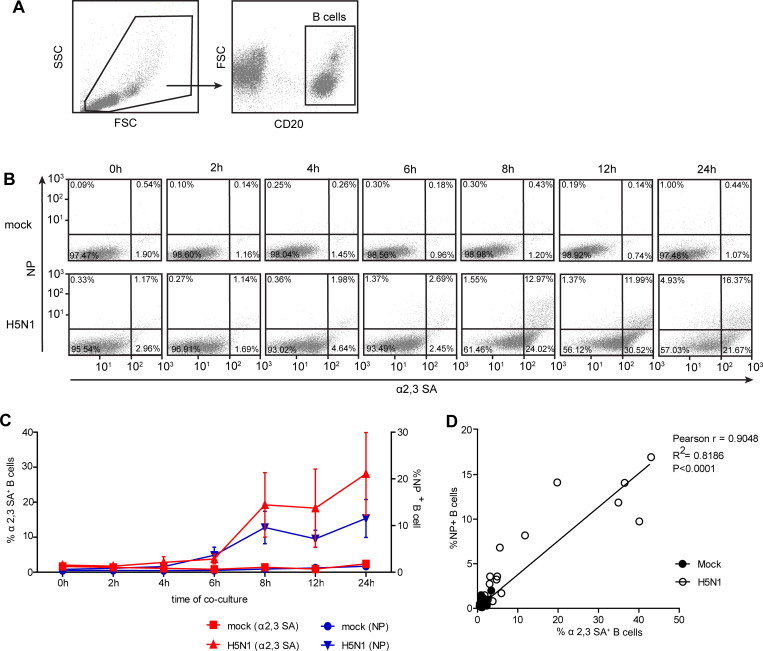
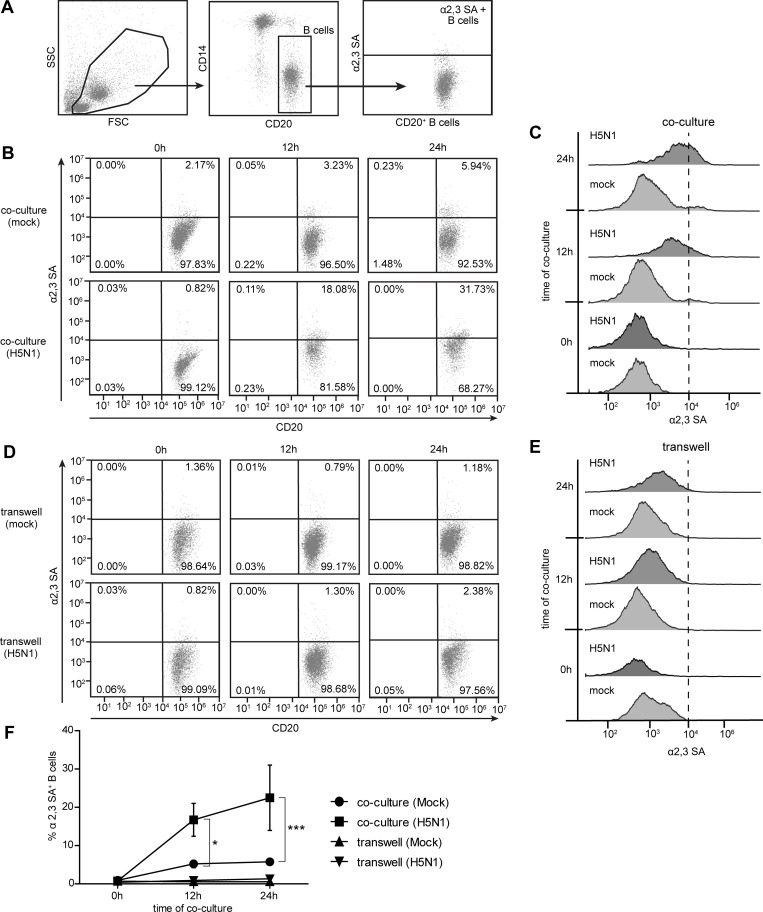
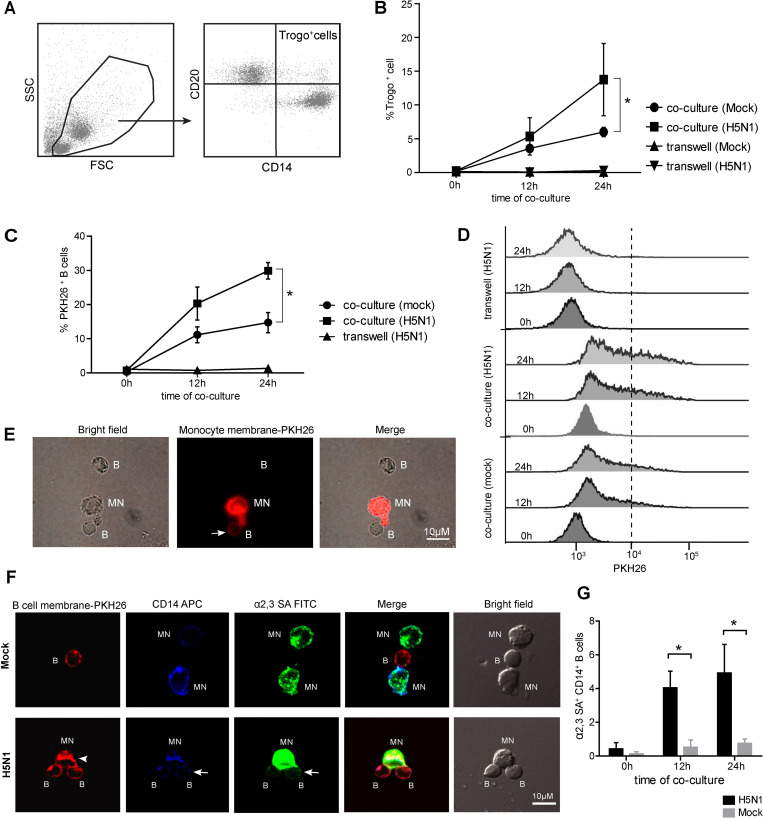
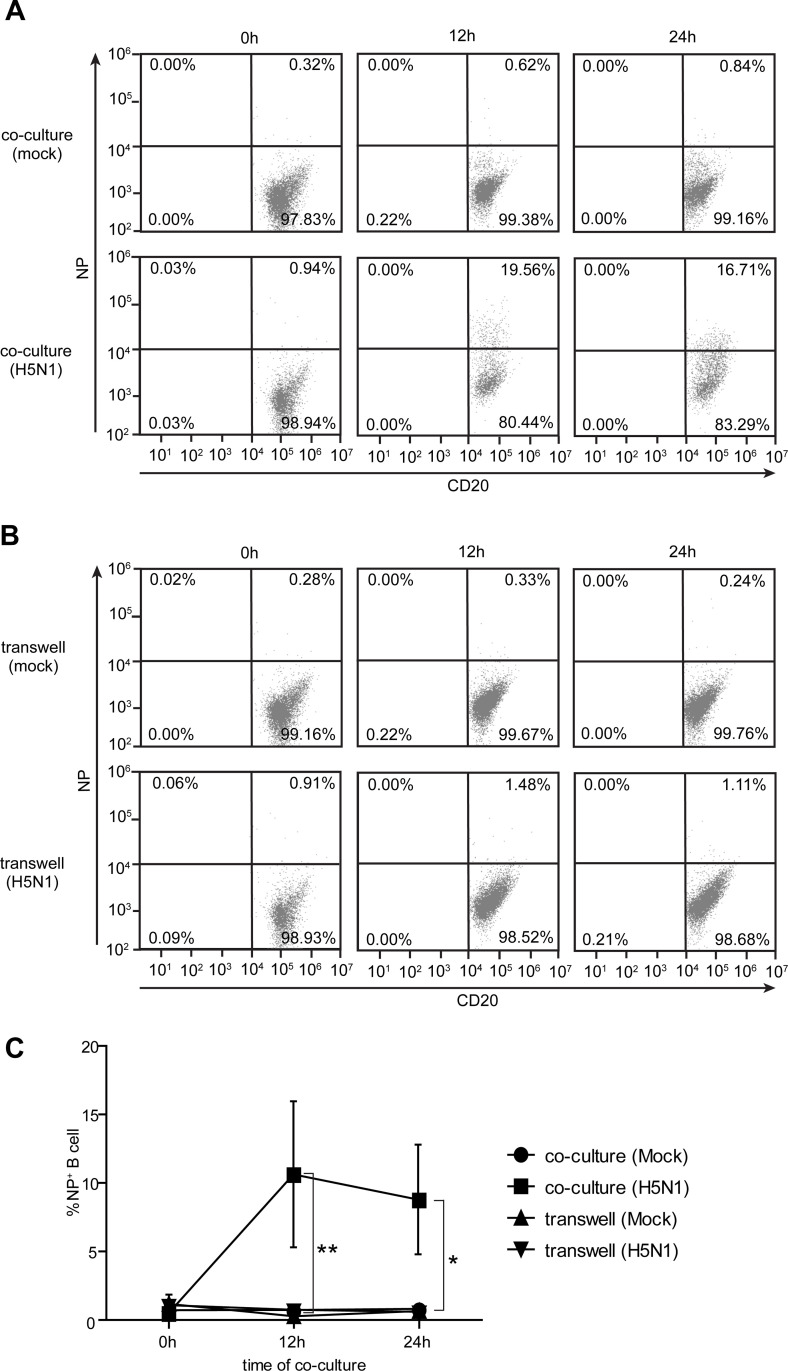
The immunopathogenesis of H5N1 virus has been studied intensively since it caused cross-species infection and induced high mortality to human. We previously observed the interaction between monocytes and B cells, which increased the susceptibility of B cell to H5N1 virus infection after a co-culture. Levels of α2,3 sialic acid (avian flu receptor) were also significantly increased on B cell surface in this co-culture model with unclear explanation. In this study, we aimed to determine the possible mechanism that responded for this increase in α2,3 sialic acid on B cells. Acquisition of α2,3 SA by B cells via cell contact-dependent trogocytosis was proposed. Results showed that the lack of α2,3 SA was detected on B cell surface, and B cells acquired membrane-bound α2,3 SA molecules from monocytes in H5N1-infected co-cultures. Occurrence of membrane exchange mainly relied on H5N1 infection and cell-cell contact as opposed to a mock infection and transwell. The increase in α2,3 SA on B cell surface mediated by trogocytosis was associated with the enhanced susceptibility to H5N1 infection. These observations thus provide the evidence that H5N1 influenza virus may utilize trogocytosis to expand its cell tropism and spread to immune cells despite the lack of avian flu receptor.
自 H5N1 病毒引发跨物种感染并导致高死亡率以来,人们对其免疫发病机制进行了深入研究。我们之前观察到单核细胞和 B 细胞之间的相互作用,在共培养后,这种相互作用增加了 B 细胞对 H5N1 病毒感染的易感性。在这个共培养模型中,B 细胞表面的α2,3 唾液酸(禽流感受体)水平也显著增加,但原因尚不清楚。在这项研究中,我们旨在确定可能的机制,以解释 B 细胞上α2,3 唾液酸增加的原因。通过细胞接触依赖性胞饮作用,B 细胞获得α2,3 SA。结果表明,在 H5N1 感染的共培养物中,B 细胞表面检测不到α2,3 SA,而 B 细胞从单核细胞中获得了膜结合的α2,3 SA 分子。膜交换的发生主要依赖于 H5N1 感染和细胞-细胞接触,而不是模拟感染和 Transwell。通过胞饮作用介导的 B 细胞表面α2,3 SA 的增加与对 H5N1 感染的易感性增强有关。这些观察结果为 H5N1 流感病毒可能利用胞饮作用来扩大其细胞嗜性并传播到免疫细胞提供了证据,尽管缺乏禽流感受体。