Chen Yongjiu, Ma Juan, Xu Ming, Liu Sijin
State Key Laboratory of Environmental Chemistry and Ecotoxicology, Research Center for Eco-Environmental Sciences, Chinese Academy of Sciences, Beijing 100085, China.
University of Chinese Academy of Sciences, Beijing 100049, China.
Nano Today. 2020 Dec;35:100976. doi: 10.1016/j.nantod.2020.100976. Epub 2020 Sep 18.
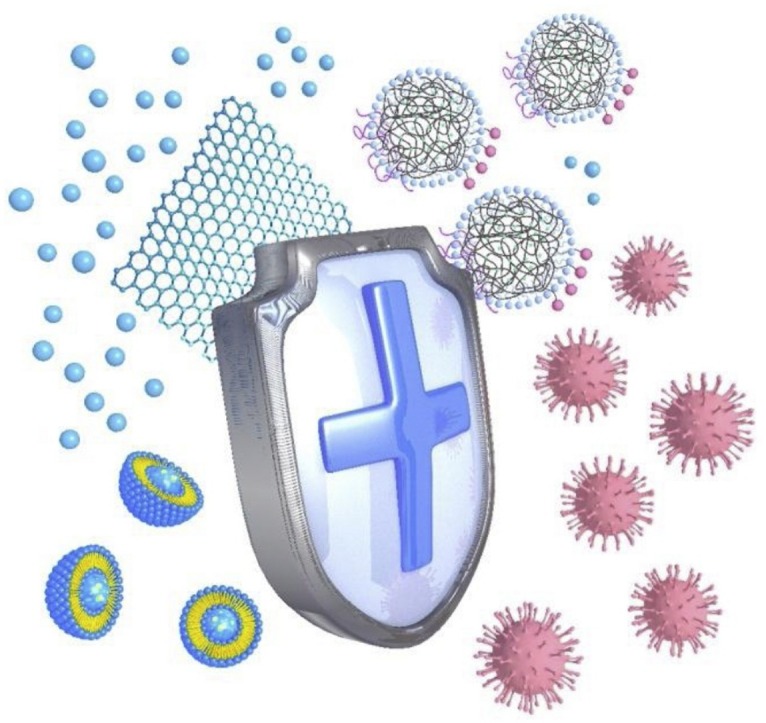
The recent COVID-19 outbreak has increasingly engaged researchers in the search for effective antiviral drugs as well as therapeutic treatment options. The shortcomings of existing antiviral agents such as narrow spectrum and low bioavailability, can be overcome through the use of engineered nanomaterials, which, therefore, are considered as a significant next-generation therapeutic option. Thus, the development of novel antiviral nanoagents will certainly help address several future challenges and knowledge gaps.
近期的新冠疫情使越来越多的研究人员致力于寻找有效的抗病毒药物以及治疗方案。现有抗病毒药物存在诸如谱窄和生物利用度低等缺点,而通过使用工程纳米材料可以克服这些缺点,因此,工程纳米材料被视为重要的下一代治疗选择。因此,新型抗病毒纳米制剂的开发必将有助于应对未来的若干挑战和知识空白。