University of Washington School of Medicine, Department of Emergency Medicine, Seattle, Washington.
University of Texas Southwestern Medical School, Department of Emergency Medicine, Dallas, Texas.
West J Emerg Med. 2020 Aug 21;21(5):1160-1169. doi: 10.5811/westjem.2020.6.47123.
Despite the increasing diversity of individuals entering medicine, physicians from racial and sexual minority groups continue to experience bias and discrimination in the workplace. The objective of this study was to determine the current experiences and perceptions of discrimination on the basis of race and sexual orientation among academic emergency medicine (EM) faculty.
We conducted a cross-sectional survey of a convenience sample of EM faculty across six programs. Survey items included the Overt Gender Discrimination at Work (OGDW) Scale adapted for race and sexual orientation, and the frequency and source of experienced and observed discrimination. Group comparisons were made using t-tests or chi-square analyses, and relationships between race or sexual orientation, and we evaluated physicians' experiences using correlation analyses.
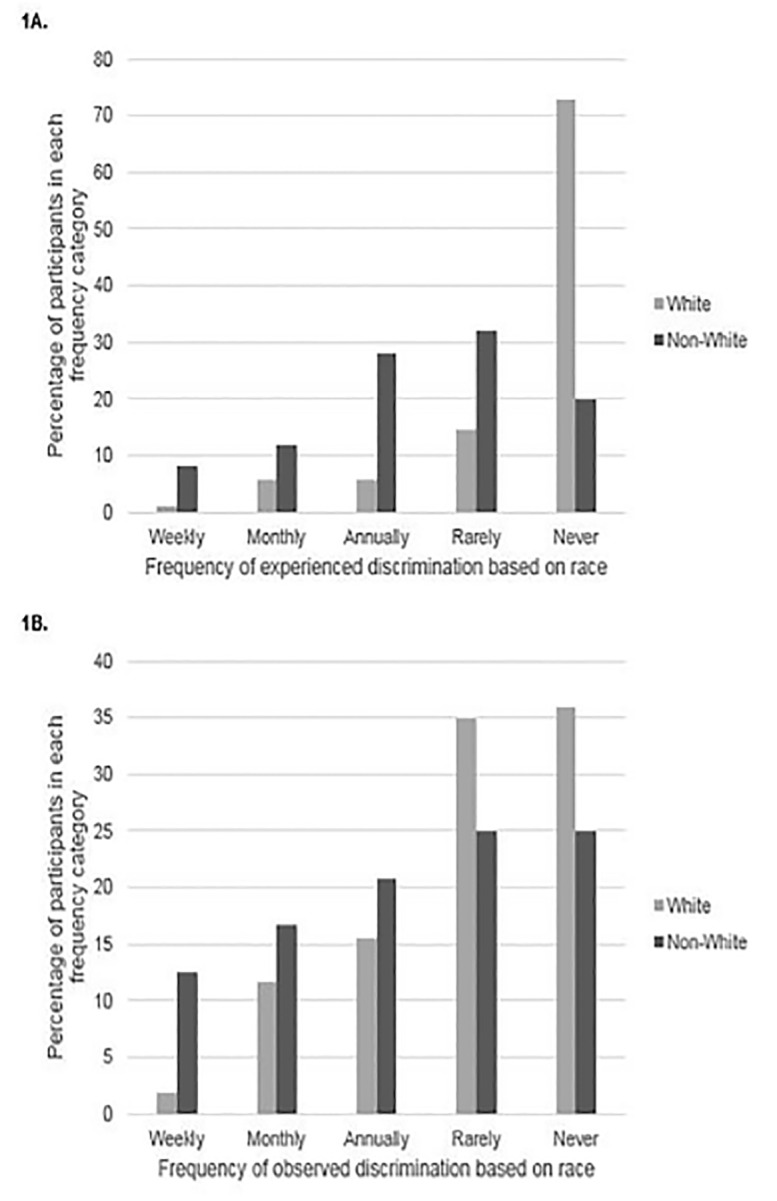
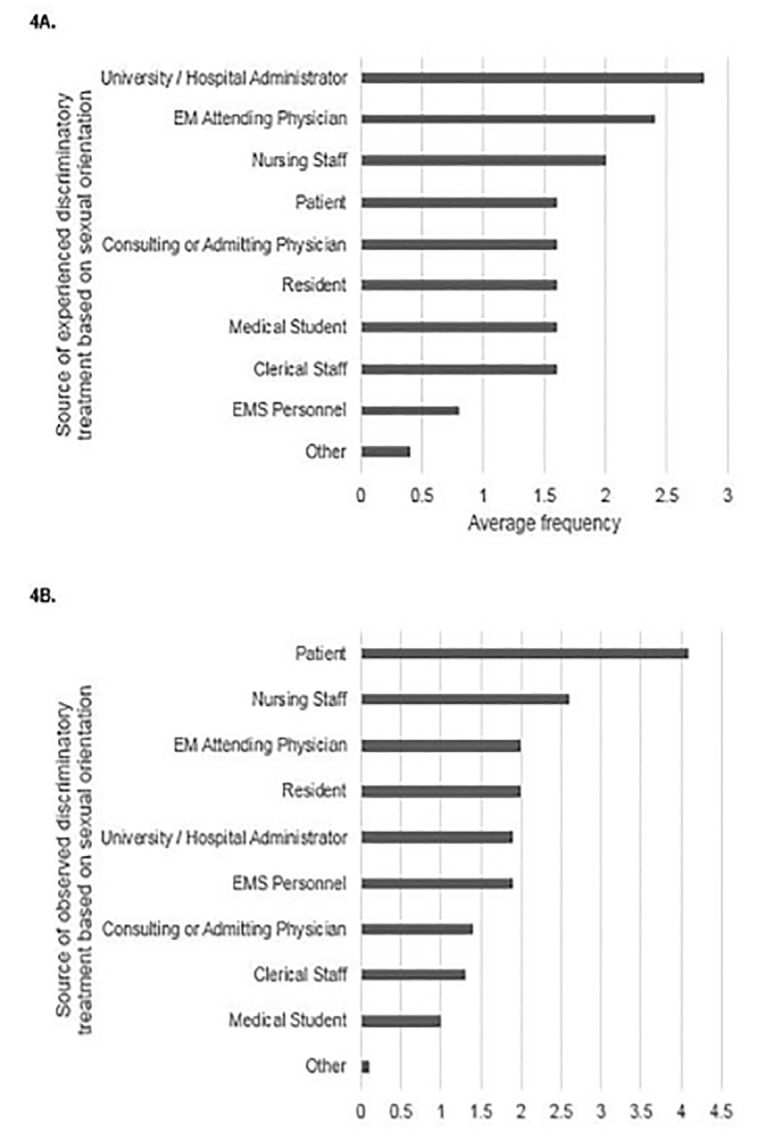
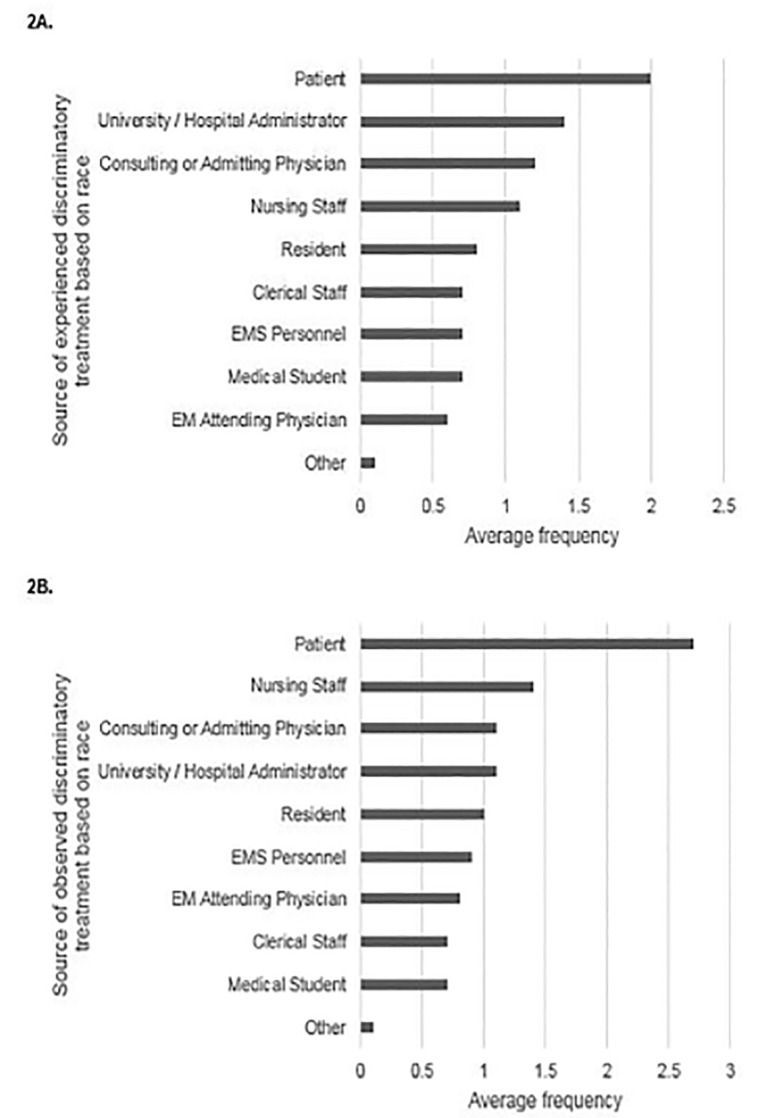
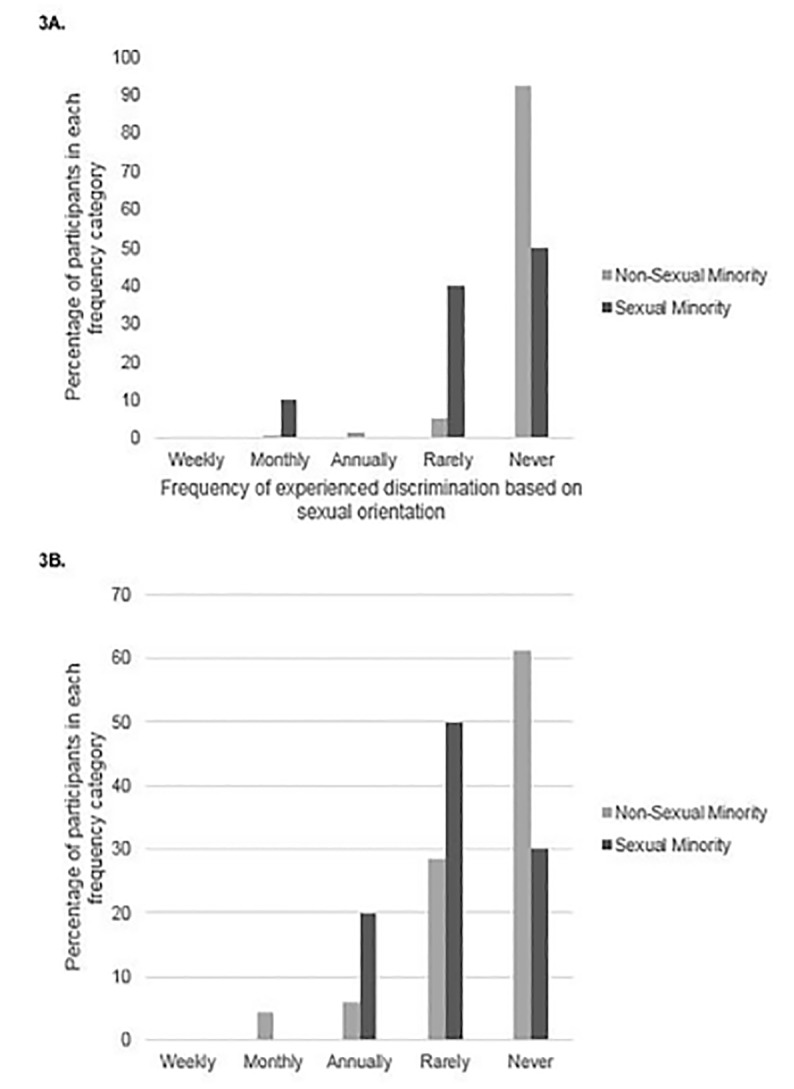
A total of 141 out of 352 (40.1%) subjects completed at least a portion of the survey. Non-White physicians reported higher mean racial OGDW scores than their White counterparts (13.4 vs 8.6; 95% confidence interval (CI) for difference, -7.7 - -2.9). Non-White EM faculty were also more likely to report having experienced discriminatory treatment based on race than were White EM faculty (48.0% vs 12.6%; CI for difference, 16.6% - 54.2%), although both groups were equally likely to report having observed race-based discrimination of another physician. EM faculty who identified as sexual minorities reported higher mean sexual minority OGDW scores than their heterosexual counterparts (11.1 vs 7.1; 95% CI for difference, -7.3 - -0.6). There were no significant differences between sexual minority and heterosexual faculty in their reports of experiencing or observing discrimination based on sexual orientation.
EM faculty from racial and sexual minority groups perceived more discrimination based on race or sexual orientation in their workplace than their majority counterparts. EM faculty regardless of race or sexual orientation were similar in their observations of discriminatory treatment of another physician based on race or sexual orientation.
尽管越来越多的人进入医学领域,但少数族裔和性少数群体的医生在工作场所仍会经历偏见和歧视。本研究的目的是确定学术急诊医学(EM)教师群体中基于种族和性取向的当前歧视经历和看法。
我们对六个项目的 EM 教师进行了便利样本的横断面调查。调查项目包括针对种族和性取向改编的工作中的显性性别歧视量表(OGDW),以及经历和观察到的歧视的频率和来源。使用 t 检验或卡方分析进行组间比较,并使用相关分析评估种族或性取向与医生经历之间的关系。
在 352 名受访者中,共有 141 名(40.1%)至少完成了部分调查。非裔美国医生的种族 OGDW 得分平均值高于白人同行(13.4 比 8.6;差异的 95%置信区间[CI]为-7.7 至-2.9)。非裔美国 EM 教师也比白人 EM 教师更有可能报告基于种族的歧视性待遇(48.0%比 12.6%;差异的 CI 为 16.6%至 54.2%),尽管两组都同样有可能报告观察到另一位医生的基于种族的歧视。自我认同为性少数群体的 EM 教师的性少数 OGDW 得分平均值高于异性恋同行(11.1 比 7.1;差异的 95%CI 为-7.3 至-0.6)。性少数群体和异性恋教师在基于性取向的经历或观察到的歧视方面没有显著差异。
在工作场所,少数族裔和性少数群体的 EM 教师比多数族裔同行感知到更多基于种族或性取向的歧视。无论种族或性取向如何,EM 教师在观察到另一位医生基于种族或性取向的歧视性待遇方面相似。