Department of Psychiatry, The Second Affiliated Hospital, Zhejiang University School of Medicine, Hangzhou, China.
Department of Surgical Oncology, The Second Affiliated Hospital, Zhejiang University School of Medicine, Hangzhou, China.
Front Immunol. 2020 Aug 20;11:1818. doi: 10.3389/fimmu.2020.01818. eCollection 2020.
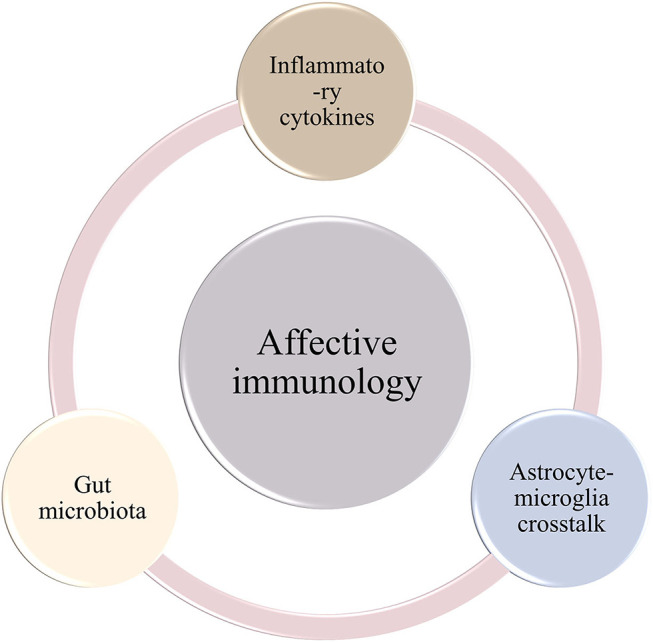
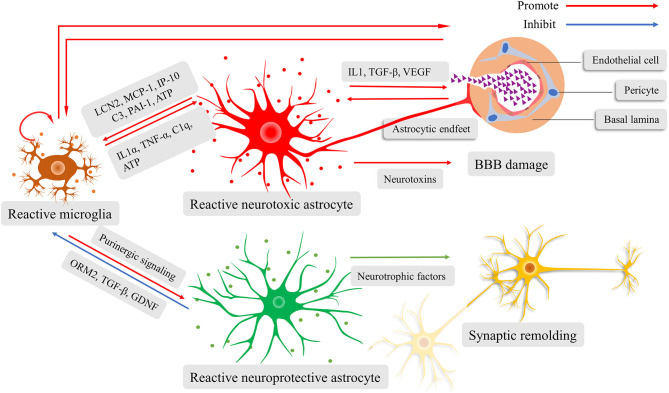
Emerging evidence demonstrates the critical role of the immune response in the mechanisms relating to mood disorders, such as major depression (MDD) and bipolar disorder (BD). This has cast a spotlight on a specialized branch committed to the research of dynamics of the fine interaction between emotion (or affection) and immune response, which has been termed as "affective immunology." Inflammatory cytokines and gut microbiota are actively involved in affective immunology. Furthermore, abnormalities of the astrocytes and microglia have been observed in mood disorders from both postmortem and molecular imaging studies; however, the underlying mechanisms remain elusive. Notably, the crosstalk between astrocyte and microglia acts as a mutual and pivotal intermediary factor modulating the immune response posed by inflammatory cytokines and gut microbiota. In this study, we propose the "altered astrocyte-microglia crosstalk (AAMC)" hypothesis which suggests that the astrocyte-microglia crosstalk regulates emotional alteration through mediating immune response, and thus, contributing to the development of mood disorders.
新兴证据表明,免疫反应在与情绪障碍(如重度抑郁症[MDD]和双相情感障碍[BD])相关的机制中起着关键作用。这使得人们关注到一个专门致力于研究情感(或情感)和免疫反应之间精细相互作用动态的分支,这被称为“情感免疫学”。炎性细胞因子和肠道微生物群积极参与情感免疫学。此外,从尸检和分子成像研究中观察到情绪障碍中星形胶质细胞和小胶质细胞的异常;然而,潜在的机制仍不清楚。值得注意的是,星形胶质细胞和小胶质细胞之间的串扰作为调节由炎性细胞因子和肠道微生物群引起的免疫反应的相互和关键中介因子。在这项研究中,我们提出了“改变的星形胶质细胞-小胶质细胞串扰(AAMC)”假说,该假说表明星形胶质细胞-小胶质细胞串扰通过调节免疫反应来调节情绪变化,从而有助于情绪障碍的发展。