Ruzauskas Modestas, Bartkiene Elena, Stankevicius Arunas, Bernatoniene Jurga, Zadeike Daiva, Lele Vita, Starkute Vytaute, Zavistanaviciute Paulina, Grigas Juozas, Zokaityte Egle, Pautienius Arnoldas, Juodeikiene Grazina, Jakstas Valdas
Microbiology and Virology Institute, Lithuanian University of Health Sciences, Tilžes g. 18, LT-47181 Kaunas, Lithuania.
Department of Anatomy and Physiology, Immunology Laboratory, Lithuanian University of Health Sciences, Tilzes g. 18, LT-47181 Kaunas, Lithuania.
Animals (Basel). 2020 Sep 24;10(10):1734. doi: 10.3390/ani10101734.
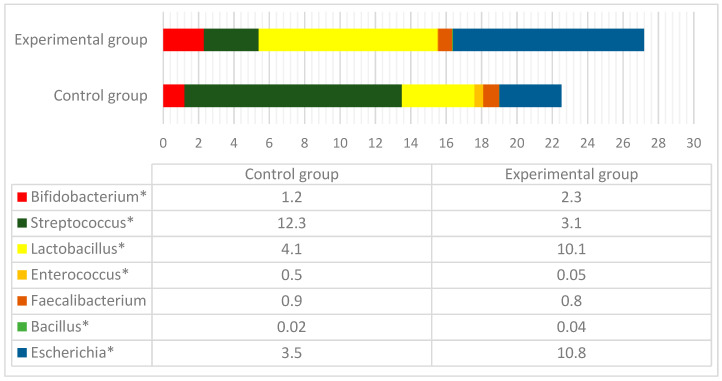
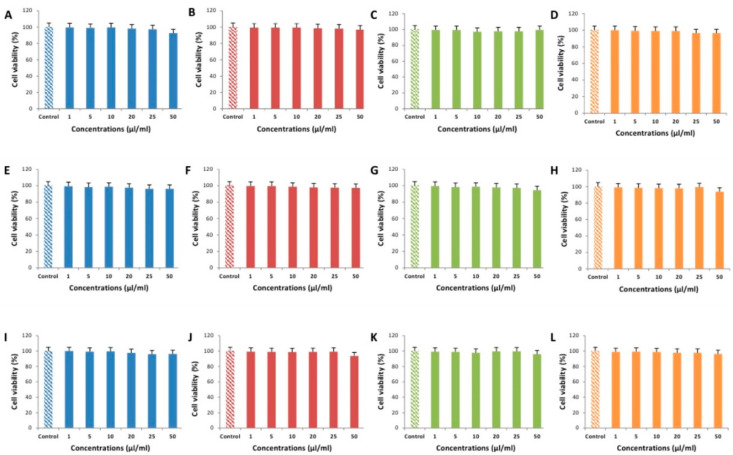
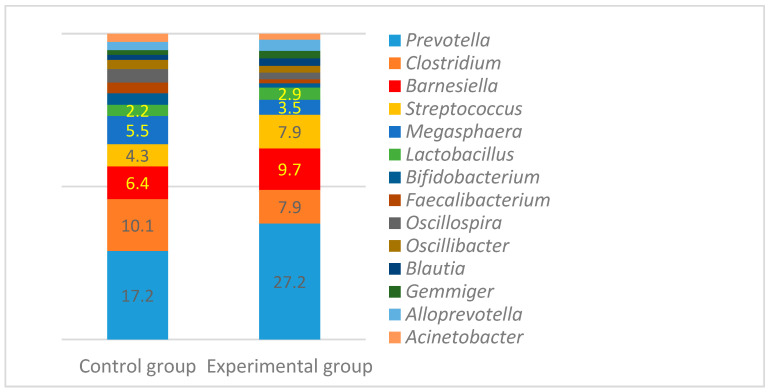
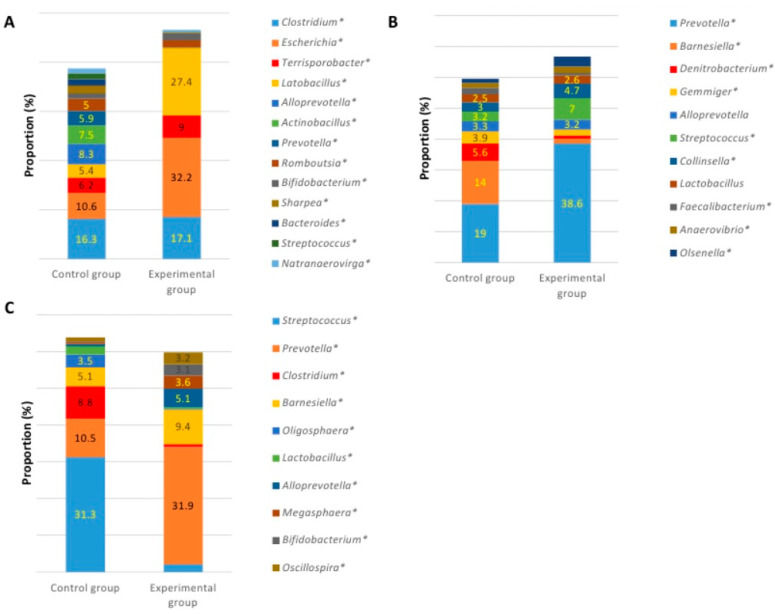
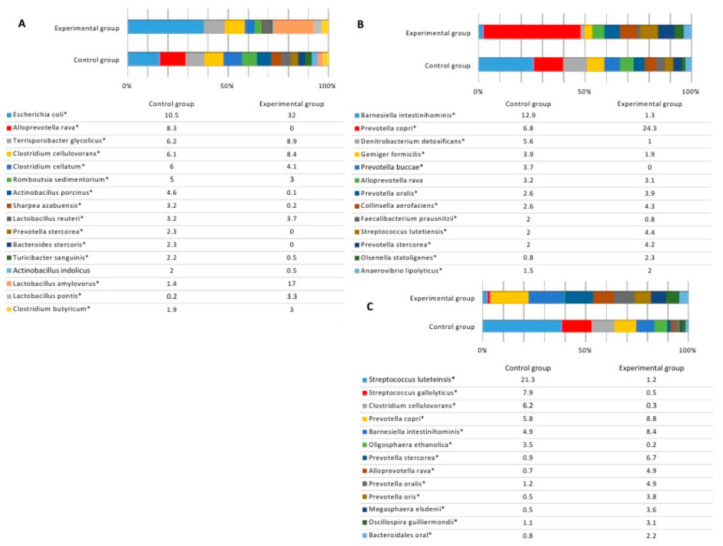
In recent years, the intake of ultra-processed foods has increased dramatically worldwide. Missing natural foods in the diet raise the need of biologically active food components that could compensate for this deficiency and help maintain proper immune status. This study used pigs as an animal model for the assessment of the impact of consumption of plant extract combined with and essential oils on microbial profile in intestines. A single group of weaned pigs received basal diet, while the other group basal diet supplemented with plant extract and two essential oils in the form of bilayer tablets prepared using "liquid/solid" phase technology. Metagenomic sequencing was performed with the aim to investigate changes of microbial communities in ileum, caecum, and colon. The results demonstrated that the combination of essential oils was non cytotoxic, and had a positive effect on the microbial composition in the large intestine of pigs due to significant increase in the number of probiotic bacteria. The amount of was 2.5 times and 1.9 times higher in the animal group fed with supplement. The combination, however, had some negative impact on the variety of minor species in the distal part of the ileum. Additional studies need to be performed to obtain knowledge on how combinations of essential oils can change bacterial variety in the proximal part of the gastrointestinal tract.
近年来,全球范围内超加工食品的摄入量急剧增加。饮食中缺乏天然食物,这就增加了对生物活性食品成分的需求,这些成分可以弥补这种不足,并有助于维持适当的免疫状态。本研究以猪作为动物模型,评估食用植物提取物与两种精油对肠道微生物谱的影响。一组断奶仔猪接受基础日粮,另一组基础日粮补充以“液/固”相技术制备的双层片剂形式的植物提取物和两种精油。进行宏基因组测序,旨在研究回肠、盲肠和结肠中微生物群落的变化。结果表明,精油组合无细胞毒性,由于益生菌数量显著增加,对猪大肠中的微生物组成有积极影响。在喂食补充剂的动物组中,[某种益生菌名称]的数量分别高出2.5倍和1.9倍。然而,该组合对回肠远端的一些次要物种的多样性有一定负面影响。需要进行更多研究,以了解精油组合如何改变胃肠道近端的细菌多样性。