Department of Clinical Neuroscience, Karolinska Institutet, 171 77, Stockholm, Sweden.
Center of Neurodevelopmental Disorders (KIND), Centre for Psychiatry Research; Department of Women's and Children's Health, Karolinska Institutet &, Stockholm Health Care Services, Region Stockholm, 113 30, Stockholm, Sweden.
BMC Psychiatry. 2020 Sep 29;20(1):470. doi: 10.1186/s12888-020-02868-7.
Some aggressive acts committed by individuals with psychotic spectrum disorders (PSD) are understandable in the context of interpersonal conflict or goal attainment, yet others are unpredictable, arising from delusions or hallucinations (psychotically driven aggressive acts, PDA). It is unknown if there are underlying differences in cognitive or perceptive social cognition in relation to aggression motivation in PSD.
We compared differences in social cognition performance between 49 individuals with PSD who had committed PDA with those exhibiting other types of aggression (n = 31) (non-PDA) and to community controls (n = 81) on the Swedish version of Double Movie for the Assessment of Social Cognition - Multiple Choice (DMASC-MC). Participants with PSD had more than 3 months of clinical stability and substance use abstention and stable antipsychotic medication doses. General intellectual ability was assessed with the information and matrix reasoning subtests of the Wechsler Intelligence Scales.
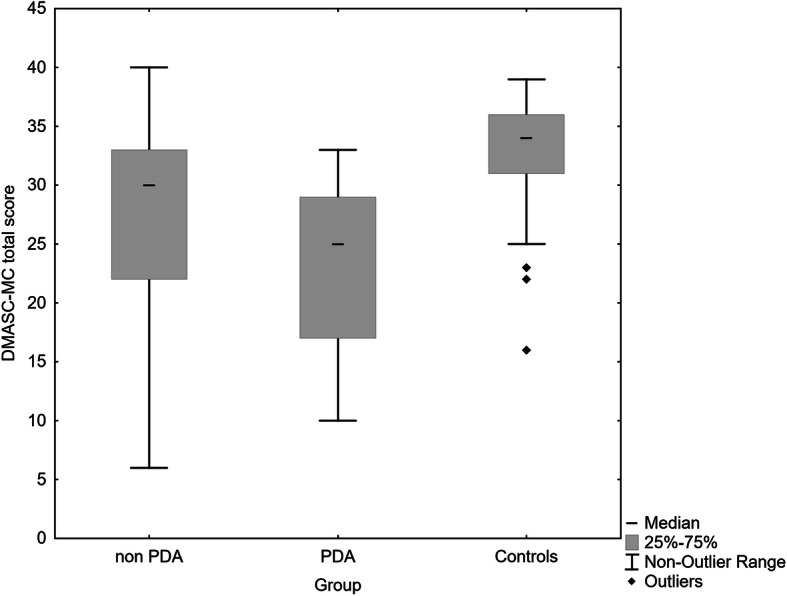
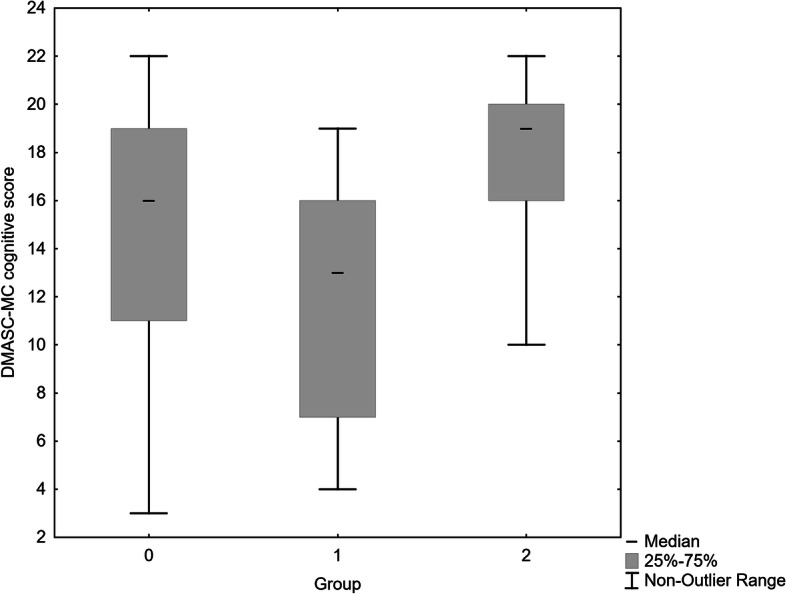
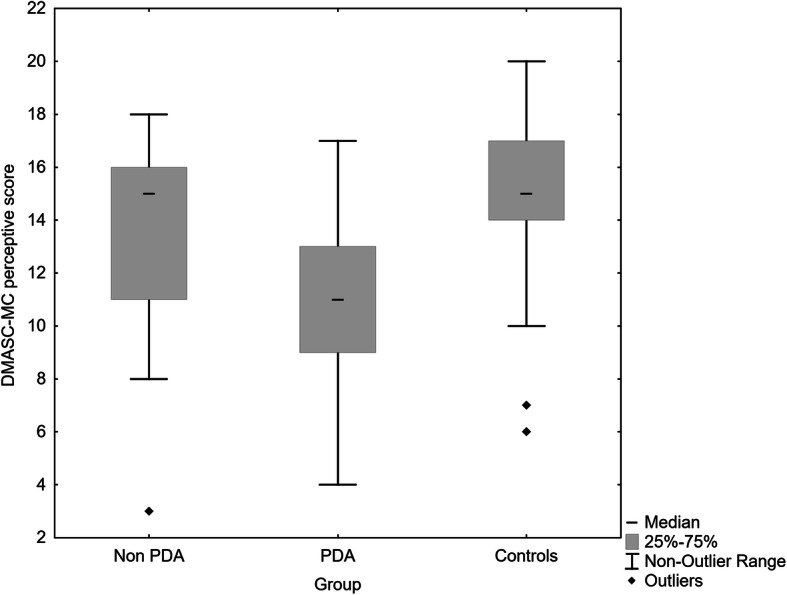
The PSD group with a history of PDA exhibited lower total and perceptive social cognition scores on the DMASC-MC than the non-PDA group and controls. In addition, they also showed lower cognitive scores compared to typical controls. Lower total scores were associated with lower scores on Wechsler intelligence subtests information and matrix reasoning. Taking this into account, the PDA group still had lower social cognition scores. There were no associations of antipsychotic medication dosages, positive or negative symptoms with social cognition scores. Higher antipsychotic dosage at the time of DMASC-MC testing and social cognition scores predicted a past history of PDA.
We conclude that impaired social cognition, particularly perceptive social cognition, is associated with PDA in individuals with PSD.
一些具有精神病谱系障碍(PSD)的个体实施的某些攻击行为在人际冲突或目标实现的情况下是可以理解的,但其他一些攻击行为则是不可预测的,源于妄想或幻觉(精神病驱动的攻击行为,PDA)。目前尚不清楚 PSD 患者的攻击性动机与认知或感知社会认知方面是否存在潜在差异。
我们比较了 49 名 PSD 患者的社会认知表现差异,这些患者有过 PDA(n=49),与表现出其他类型攻击行为(n=31)(非 PDA)的患者,以及 81 名社区对照组(n=81)的差异。 PSD 患者有超过 3 个月的临床稳定期,且无物质滥用和稳定的抗精神病药物剂量。一般智力能力通过韦氏智力测验的信息和矩阵推理子测验进行评估。
有 PDA 病史的 PSD 组在 DMASC-MC 的总得分和感知社会认知得分上均低于非 PDA 组和对照组。此外,他们的认知得分也低于典型对照组。较低的总分与韦氏智力测验信息和矩阵推理子测验的得分较低有关。考虑到这一点,PDA 组的社会认知得分仍然较低。抗精神病药物剂量、阳性或阴性症状与社会认知得分之间均无关联。DMASC-MC 测试时较高的抗精神病药物剂量和社会认知得分预测有 PDA 病史。
我们得出结论,感知社会认知受损,特别是感知社会认知受损,与 PSD 个体中的 PDA 有关。