Kumar Bachheti Rakesh, Fikadu Alemu, Bachheti Archana, Husen Azamal
Department of Industrial Chemistry, Addis Ababa Science and Technology University, Addis Ababa, P.O. Box #16417, Ethiopia.
Department of Environment Science, Dehradun 248002, Uttarakhand, India.
Saudi J Biol Sci. 2020 Oct;27(10):2551-2562. doi: 10.1016/j.sjbs.2020.05.012. Epub 2020 May 11.
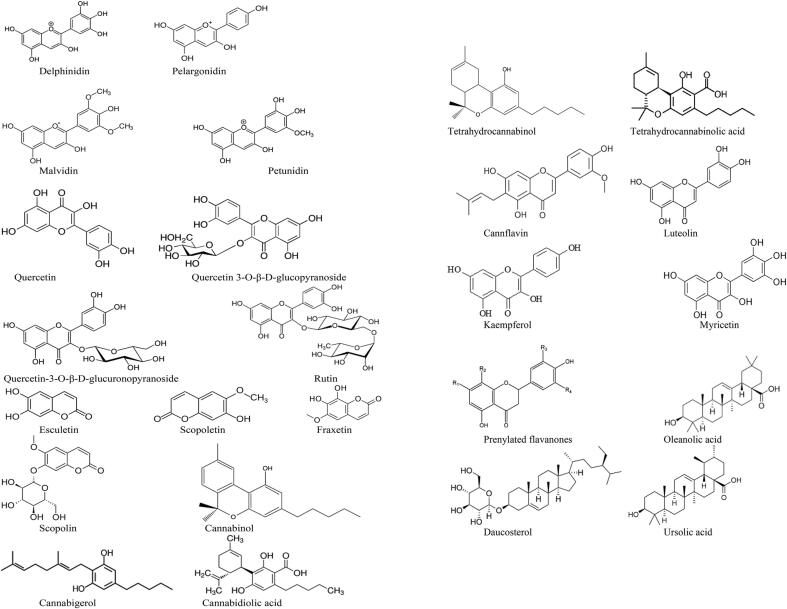
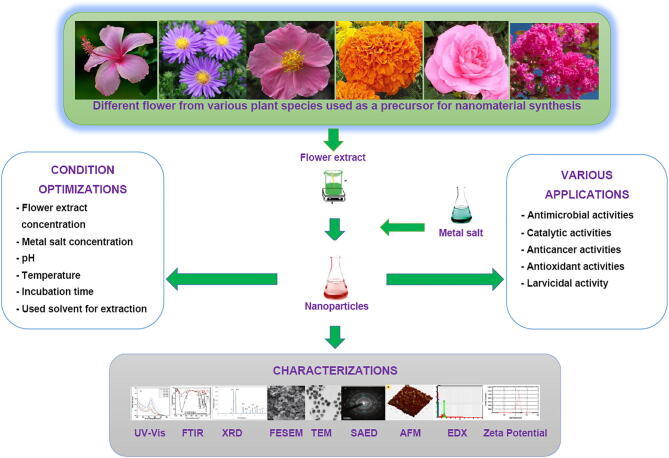
Nanotechnology is evolving as a significant discipline of research with various applications. It includes the materials and their applications having one dimension in the range of 1-100 nm. Many chemical and physical protocol have been utilized for the nanoparticles (NPs) fabrication. These protocols are costly, hazardous and consumes high energy. Thus, researchers are inclined towards biological synthesis of NPs using plant and or herbal extract as these methods are simple, sustainable, ecofriendly and cost-effective. Flower is an important part of plants, and contained several phytochemicals such as flavonoids, terpenoids, coumarins, sterol and xanthones which acts as an important precursor for NPs synthesis. These compounds acted as reducing as well as stablishing agent during fabrication processes. They have been thoroughly characterized by various techniques. The fabricated NPs have shown potential antimicrobial activity against bacterial and fungal infections. They have been also used as potential therapeutic agent for human breast cancer, gastric adenocarcinoma cell, colorectal adenocarcinoma cell and pancreas ductal adenocarcinoma cells. Overall, the aim of this review article to facilitates the recent understanding of flower-mediated NPs fabrication (a sustainable and ecofriendly resource), their application in different disciplines and challenges.
纳米技术正在发展成为一门具有各种应用的重要研究学科。它包括一维尺寸在1-100纳米范围内的材料及其应用。许多化学和物理方法已被用于制造纳米颗粒(NPs)。这些方法成本高、危险且能耗大。因此,研究人员倾向于使用植物和/或草药提取物进行纳米颗粒的生物合成,因为这些方法简单、可持续、环保且具有成本效益。花是植物的重要组成部分,含有多种植物化学物质,如黄酮类化合物、萜类化合物、香豆素、甾醇和呫吨酮,这些物质是纳米颗粒合成的重要前体。这些化合物在制造过程中既作为还原剂又作为稳定剂。它们已通过各种技术进行了全面表征。制备的纳米颗粒已显示出对细菌和真菌感染的潜在抗菌活性。它们还被用作治疗人类乳腺癌、胃腺癌、结肠腺癌和胰腺导管腺癌细胞的潜在治疗剂。总的来说,这篇综述文章的目的是促进对花介导的纳米颗粒制造(一种可持续且环保的资源)、其在不同学科中的应用以及挑战的最新理解。