Lee You Jeong, Song Kwangho, Cha Song-Hyun, Cho Seonho, Kim Yeong Shik, Park Youmie
College of Pharmacy and Inje Institute of Pharmaceutical Sciences and Research, Inje University, 197 Inje-ro, Gimhae, Gyeongnam 50834, Korea.
College of Pharmacy and Natural Products Research Institute, Seoul National University, 1 Gwanak-ro, Gwanak-gu, Seoul 08826, Korea.
Nanomaterials (Basel). 2019 May 31;9(6):819. doi: 10.3390/nano9060819.
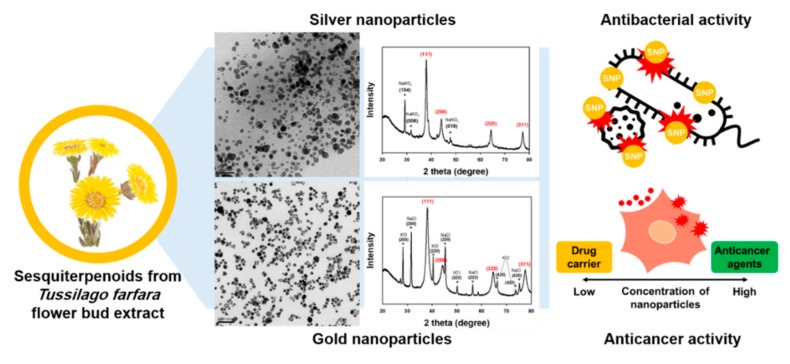
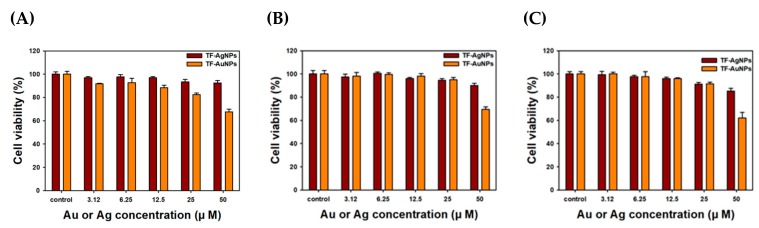
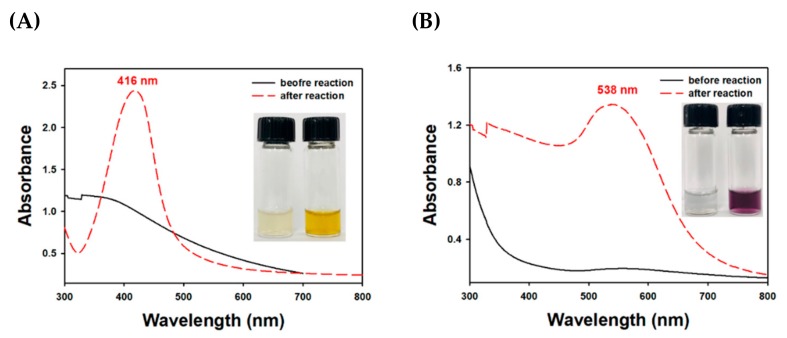
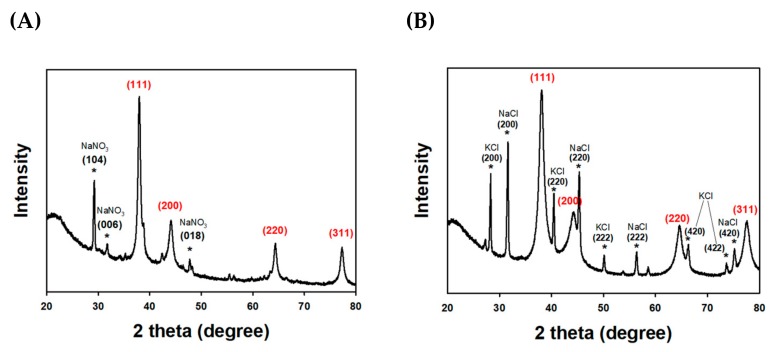
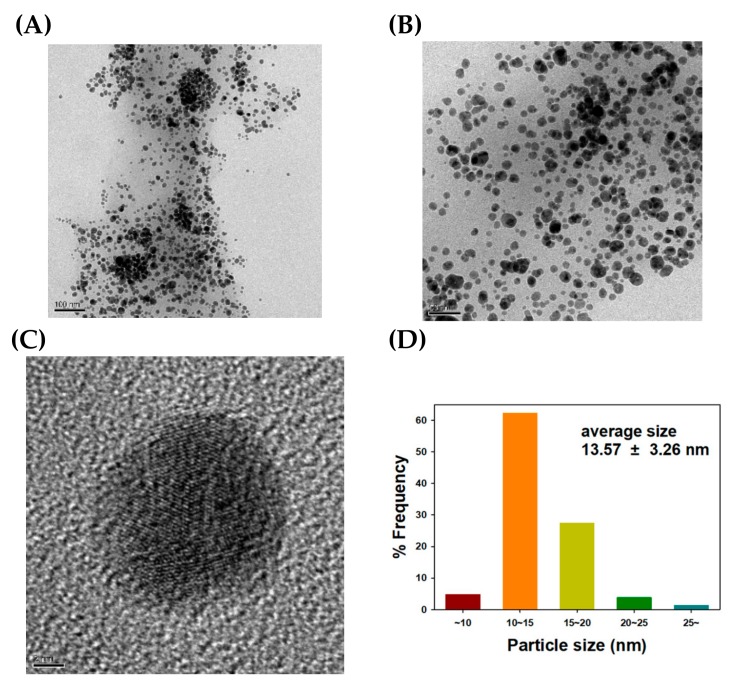
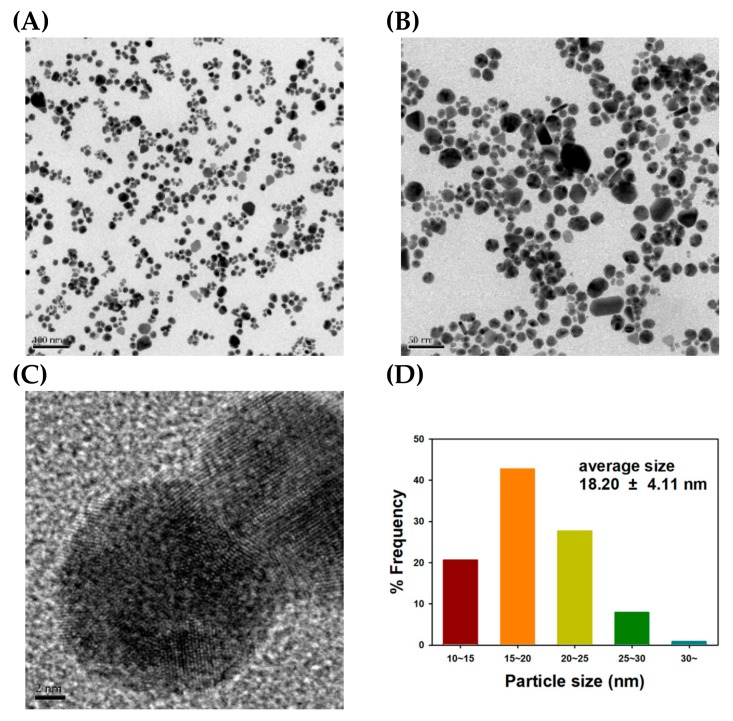
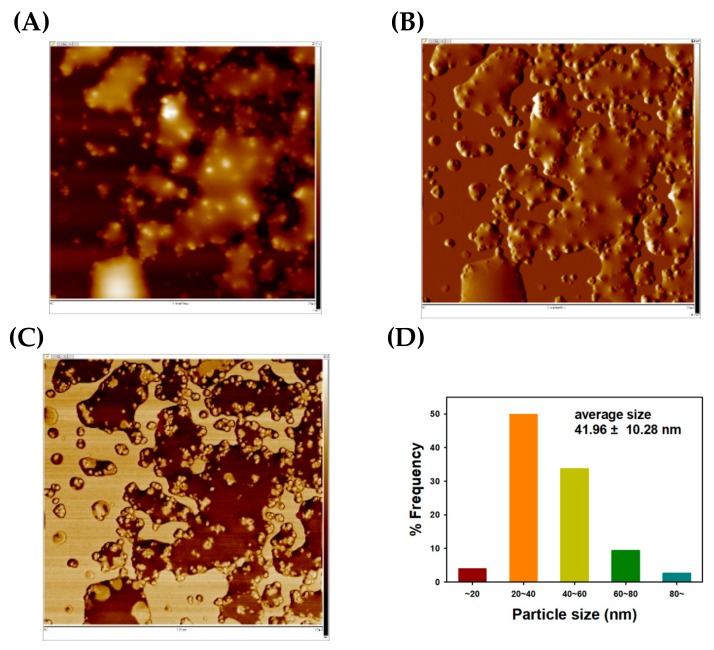
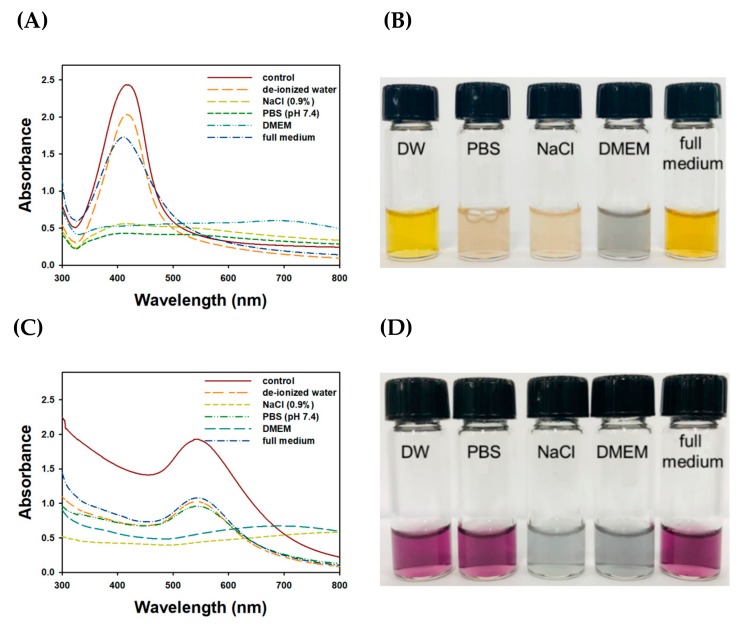
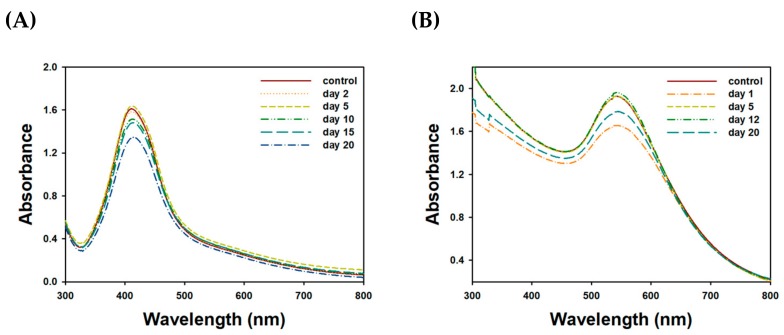
Sesquiterpenoids from the flower bud extract of were effectively utilized as a reducing agent for eco-friendly synthesis of silver and gold nanoparticles. The silver and gold nanoparticles had a characteristic surface plasmon resonance at 416 nm and 538 nm, respectively. Microscopic images revealed that both nanoparticles were spherical, and their size was measured to be 13.57 ± 3.26 nm for the silver nanoparticles and 18.20 ± 4.11 nm for the gold nanoparticles. The crystal structure was determined to be face-centered cubic by X-ray diffraction. Colloidal stability of the nanoparticle solution was retained in a full medium, which was used in the cell culture experiment. The antibacterial activity result demonstrated that the silver nanoparticles showed better activity (two- to four-fold enhancement) than the extract alone on both Gram-positive and Gram-negative bacteria. Interestingly, the highest antibacterial activity was obtained against vancomycin-resistant Enterococci Van-A type . Cytotoxicity on cancer cell lines confirmed that gold nanoparticles were more cytotoxic than silver nanoparticles. The highest cytotoxicity was observed on human pancreas ductal adenocarcinoma cells. Therefore, both nanoparticles synthesized with the sesquiterpenoids from flower bud extract can be applicable as drug delivery vehicles of anticancer or antibacterial agents for future nanomedicine applications.
从[具体植物名称]花芽提取物中提取的倍半萜类化合物被有效地用作还原剂,用于银和金纳米粒子的环保合成。银纳米粒子和金纳米粒子分别在416 nm和538 nm处具有特征性的表面等离子体共振。显微镜图像显示,两种纳米粒子均为球形,银纳米粒子的尺寸测量为13.57±3.26 nm,金纳米粒子的尺寸测量为18.20±4.11 nm。通过X射线衍射确定晶体结构为面心立方。纳米粒子溶液的胶体稳定性在完全培养基中得以保持,该培养基用于细胞培养实验。抗菌活性结果表明,银纳米粒子在革兰氏阳性菌和革兰氏阴性菌上均表现出比单独提取物更好的活性(增强两到四倍)。有趣的是,对耐万古霉素肠球菌Van - A型表现出最高的抗菌活性。对癌细胞系的细胞毒性证实,金纳米粒子比银纳米粒子具有更高的细胞毒性。在人胰腺导管腺癌细胞上观察到最高的细胞毒性。因此,用[具体植物名称]花芽提取物中的倍半萜类化合物合成的两种纳米粒子均可作为抗癌或抗菌药物的药物递送载体,用于未来的纳米医学应用。