Hereward James P, Cai Xuhong, Matias Ambrocio Melvin A, Walter Gimme H, Xu Chenxi, Wang Yongmo
School of Biological Sciences The University of Queensland Brisbane Queensland Australia.
Hubei Insect Resources Utilization and Sustainable Pest Management Key Laboratory College of Plant Science and Technology Huazhong Agricultural University Wuhan Hubei China.
Evol Appl. 2020 Jul 11;13(9):2449-2459. doi: 10.1111/eva.13047. eCollection 2020 Oct.
Brown planthoppers () are the most serious insect pests of rice, one of the world's most important staple crops. They reproduce year-round in the tropical parts of their distribution, but cannot overwinter in the temperate areas where they occur, and invade seasonally from elsewhere. Decades of research have not revealed their source unambiguously.
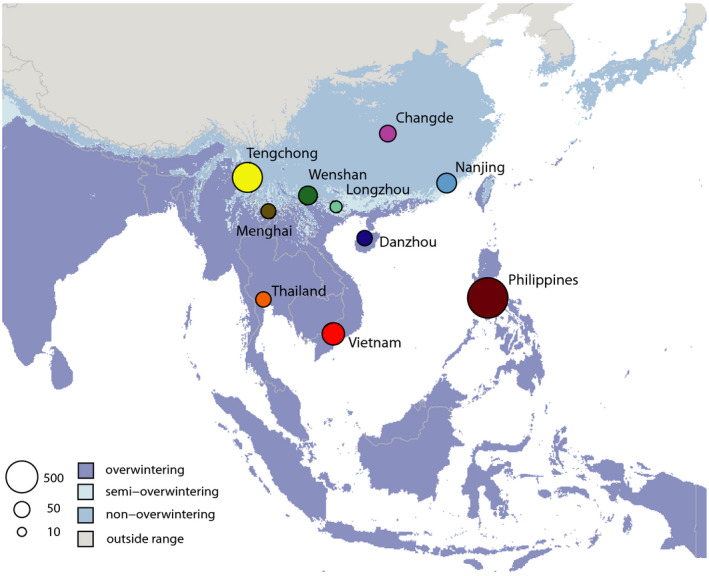
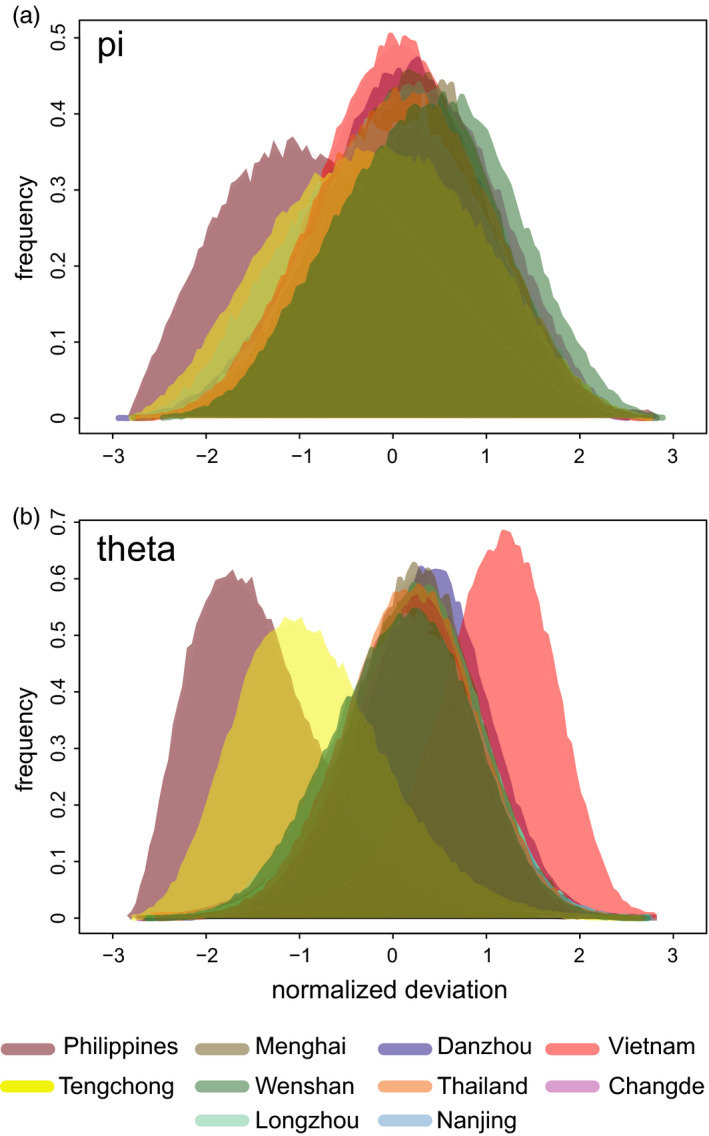
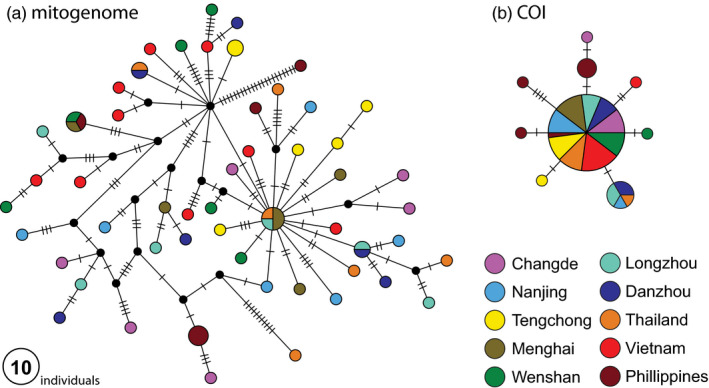
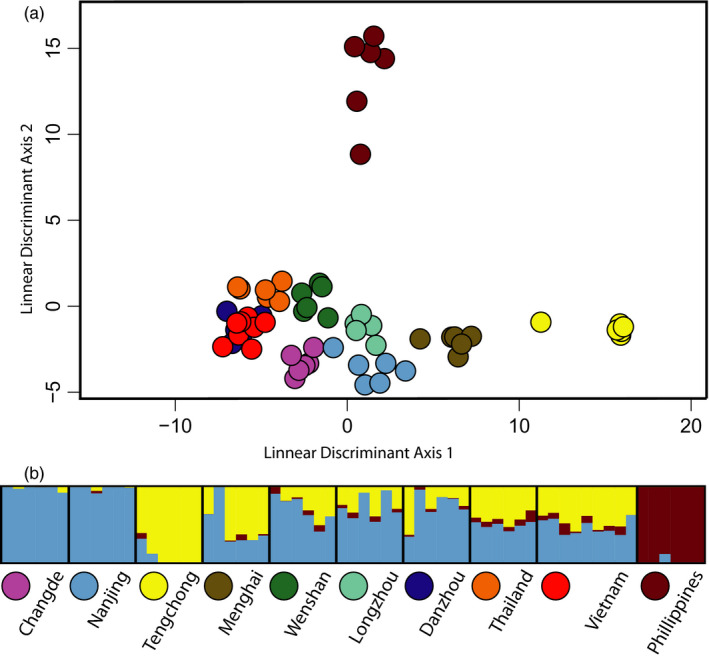
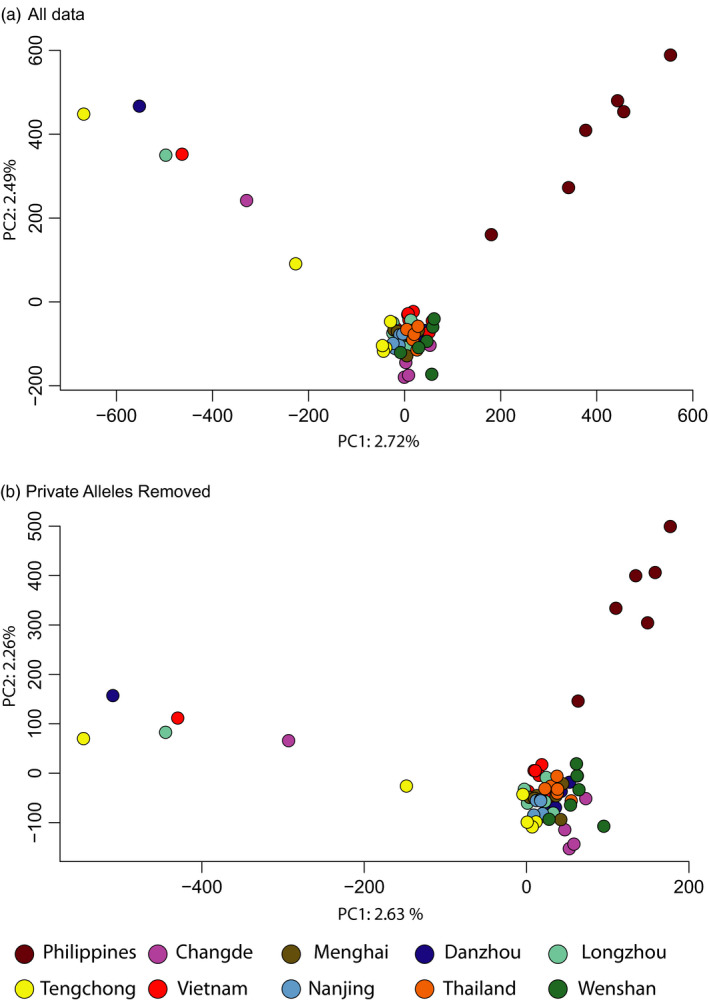
We sequenced the genomes of brown planthopper populations from across temperate and tropical parts of their distribution and show that the Indochinese peninsula is the major source of migration into temperate China. The Philippines, once considered a key source, is not significant, with little evidence for their migration into China. We find support for immigration from the west of China contributing to these regional dynamics.
The lack of connectivity between the Philippine population and the mainland Chinese populations explains the different evolution of Imidacloprid resistance in these populations. This study highlights the promise of whole-genome sequence data to understand migration when gene flow is high-a situation that has been difficult to resolve using traditional genetic markers.
褐飞虱是世界上最重要的主粮作物之一水稻的最严重害虫。它们在其分布的热带地区全年繁殖,但无法在其出现的温带地区越冬,而是季节性地从其他地方迁入。数十年的研究尚未明确揭示它们的来源。
我们对分布于温带和热带地区的褐飞虱种群进行了基因组测序,结果表明印度支那半岛是迁入中国温带地区的主要来源地。菲律宾曾被认为是一个关键来源地,但并非如此,几乎没有证据表明它们迁入了中国。我们发现来自中国西部的迁入对这些区域动态有贡献的证据。
菲律宾种群与中国大陆种群之间缺乏连通性,这解释了这些种群对吡虫啉抗性的不同进化情况。这项研究凸显了在基因流动频繁时,利用全基因组序列数据来理解迁徙的前景——而这种情况使用传统遗传标记一直难以解决。