Mancabelli Leonardo, Tarracchini Chiara, Milani Christian, Lugli Gabriele Andrea, Fontana Federico, Turroni Francesca, van Sinderen Douwe, Ventura Marco
Laboratory of Probiogenomics, Department of Chemistry, Life Sciences and Environmental Sustainability, University of Parma, Parma, Italy.
APC Microbiome Institute and School of Microbiology, Bioscience Institute, National University of Ireland, Cork, Ireland.
Comput Struct Biotechnol J. 2020 Sep 15;18:2480-2493. doi: 10.1016/j.csbj.2020.08.028. eCollection 2020.
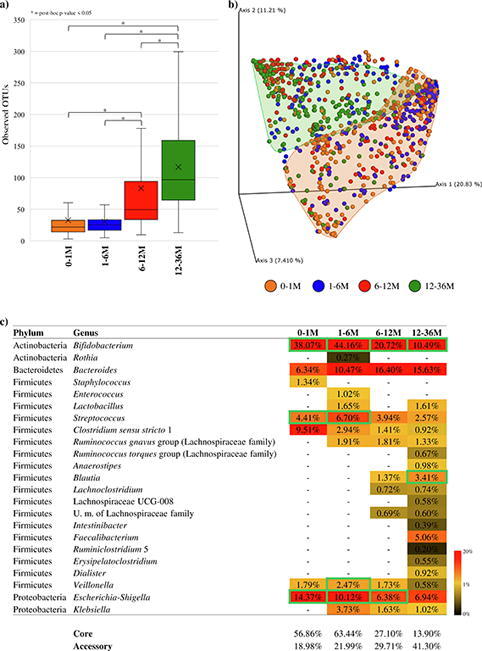
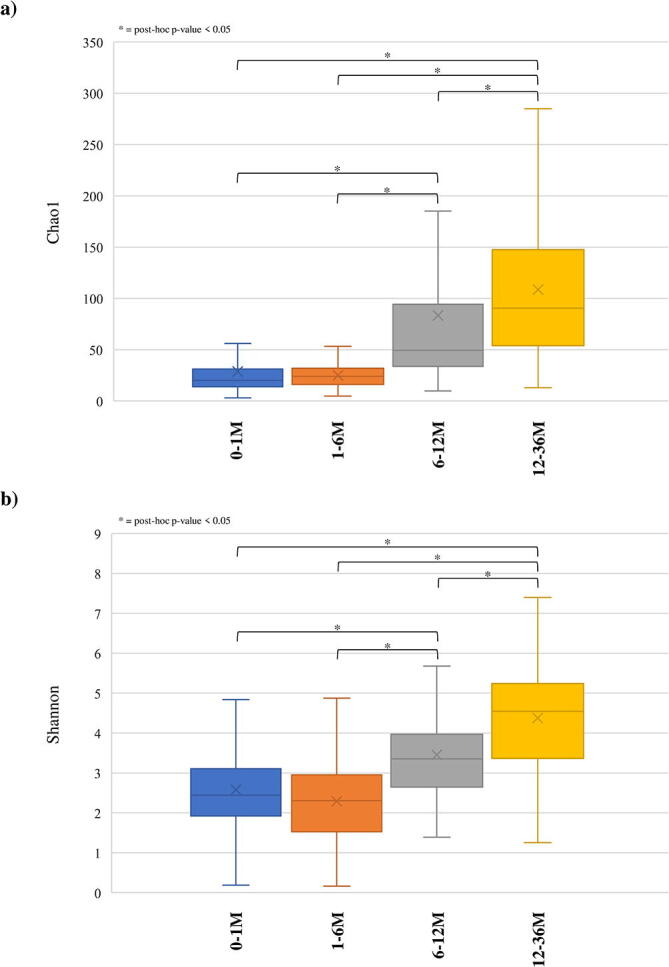
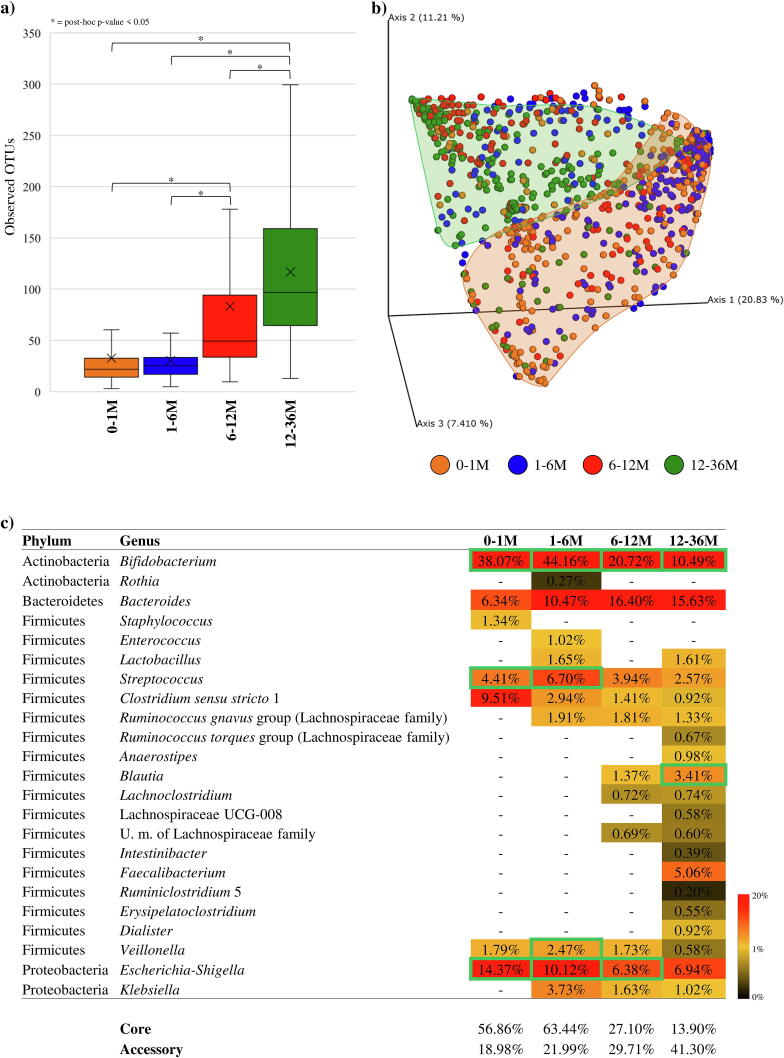
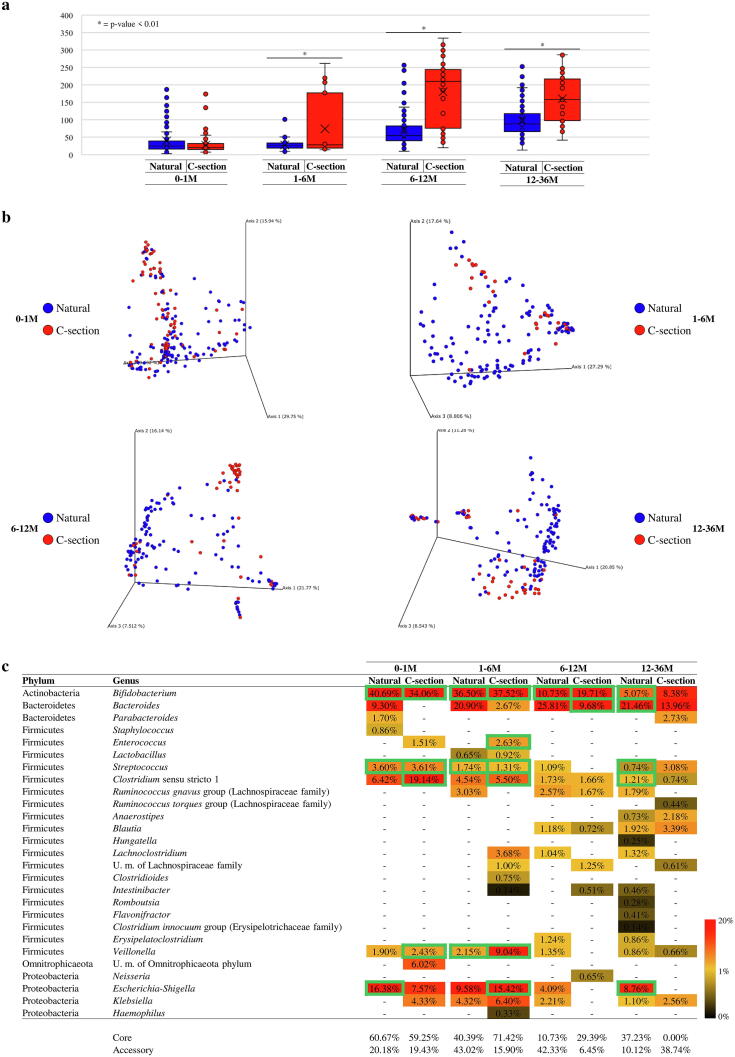
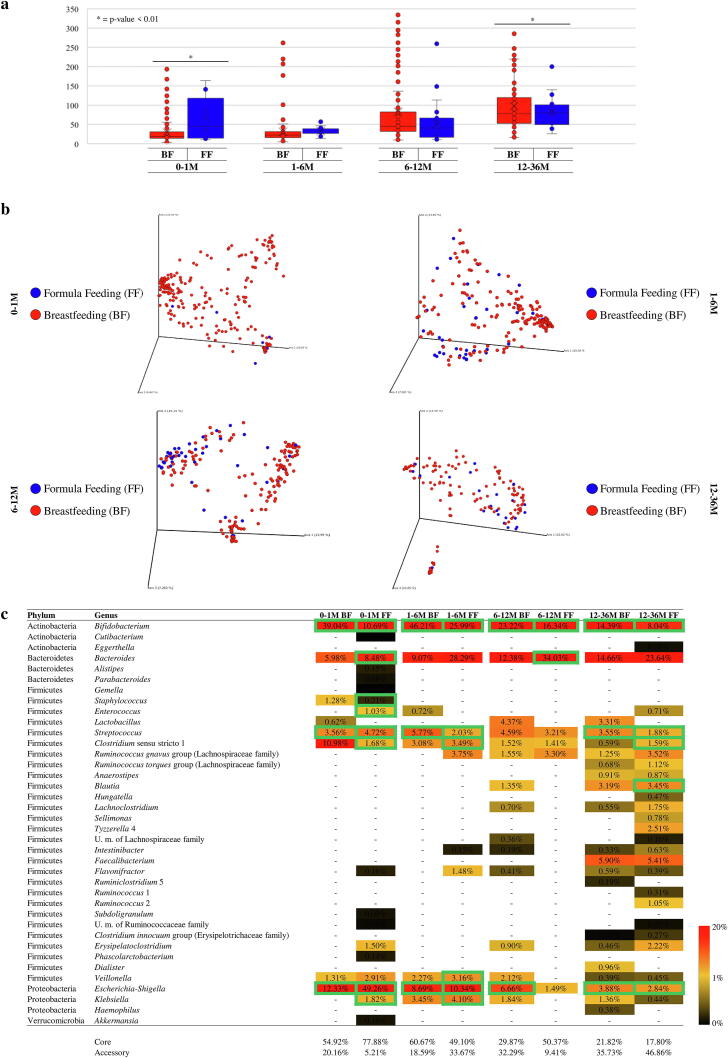
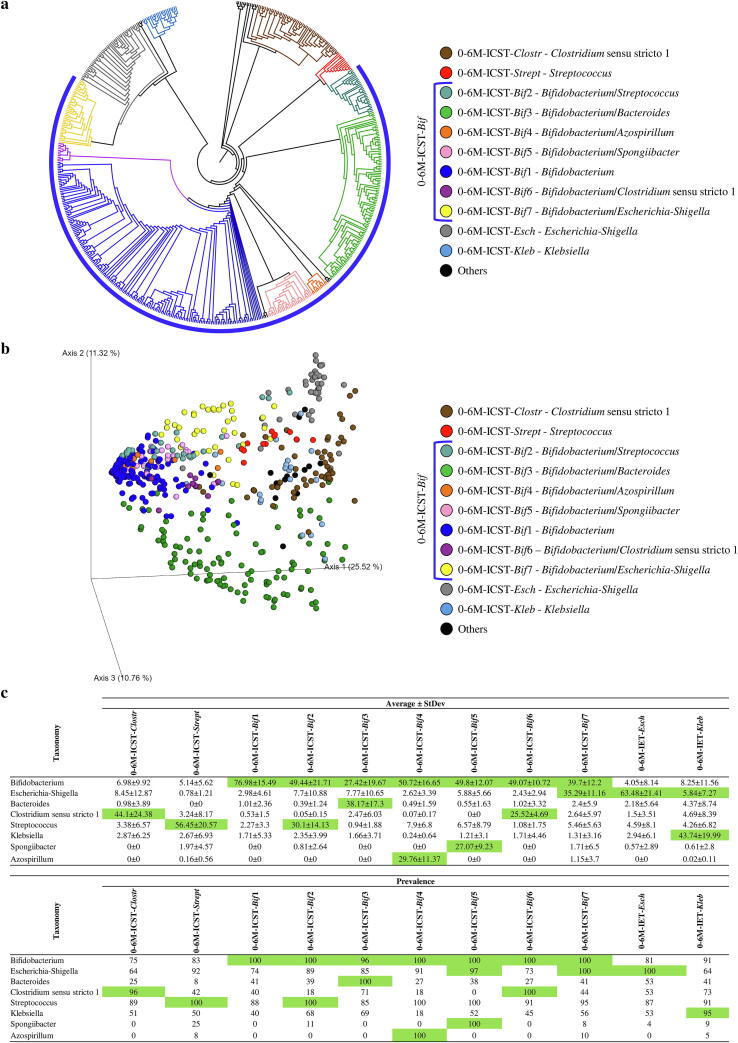
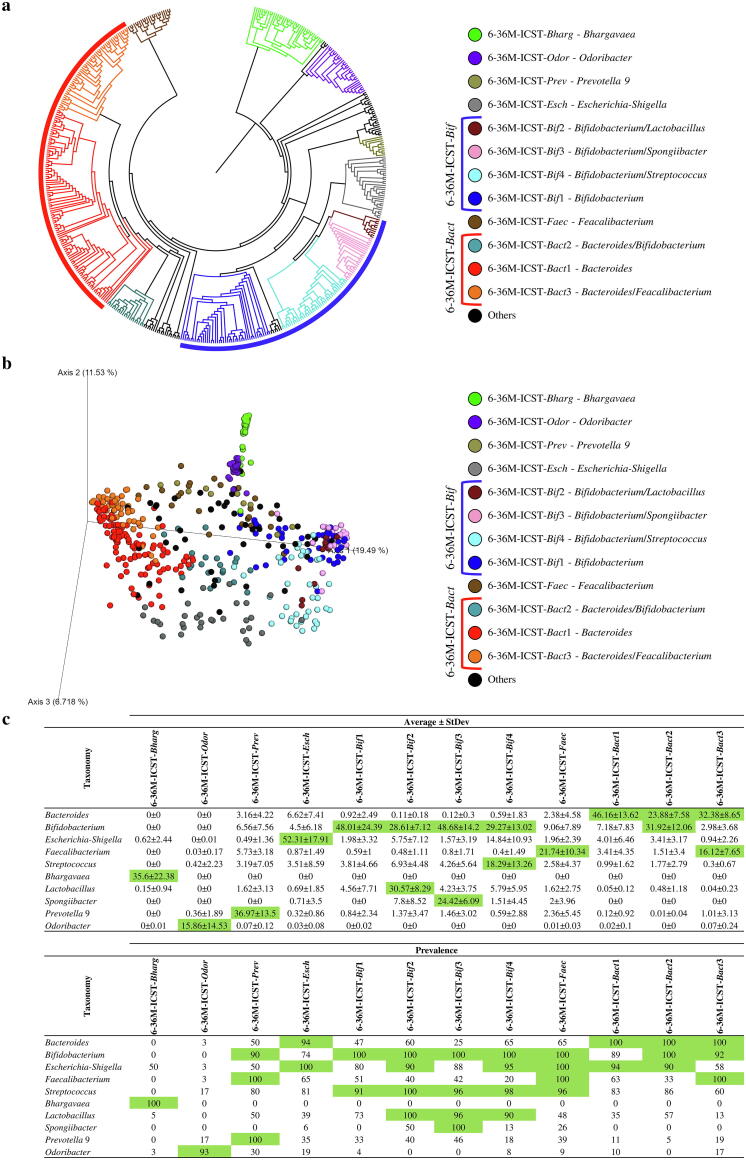
Appropriate development of the intestinal microbiota during infancy is known to be important for human health. In fact, aberrant alterations of the microbial composition during childhood may cause short- and/or long-term negative health effects. Many factors influence the initial assembly and subsequent progression of the gut microbiota of a neonate, such as feeding type, delivery mode, gestational age, maternal metabolic status and antibiotic exposure. In the current study, the composition of the infant gut core-microbiota was explored, revealing particular variations of this core-microbiota during the first three years as influenced by delivery mode and feeding type. A multi-population cohort meta-analysis was performed by selecting 15 publicly available datasets pertaining to taxonomic profiles of 1035 fecal samples of healthy infants, as obtained by means of a 16S rRNA gene-based profiling approach. Interestingly, this multi-population cohort meta-analysis revealed great microbial complexity and specific taxonomic shifts in children older than six months, suggesting a major impact by the introduction of solid foods which prompts progression of infant gut microbiota towards that typical of adults. The taxonomic data sets employed in this multi-population cohort meta-analysis possess the statistical robustness to allow the identification of infant community state types (ICSTs). Our analysis therefore reveals the existence of specific taxonomic patterns that correspond to particular nutritional and developmental stages of early life, and that had previously been obscured by the high variability typical of such infant gut microbiota.
众所周知,婴儿期肠道微生物群的适当发育对人类健康至关重要。事实上,儿童期微生物组成的异常改变可能会导致短期和/或长期的负面健康影响。许多因素会影响新生儿肠道微生物群的初始组装和后续发展,如喂养方式、分娩方式、胎龄、母亲代谢状况和抗生素暴露。在本研究中,我们探索了婴儿肠道核心微生物群的组成,发现受分娩方式和喂养方式影响,该核心微生物群在头三年存在特定变化。通过选择15个公开可用的数据集进行多人群队列荟萃分析,这些数据集涉及1035份健康婴儿粪便样本的分类学概况,这些样本是通过基于16S rRNA基因的分析方法获得的。有趣的是,这项多人群队列荟萃分析揭示了六个月以上儿童中巨大的微生物复杂性和特定的分类学变化,这表明引入固体食物产生了重大影响,促使婴儿肠道微生物群向成人典型的微生物群发展。本多人群队列荟萃分析中使用的分类学数据集具有统计稳健性,能够识别婴儿群落状态类型(ICST)。因此,我们的分析揭示了与生命早期特定营养和发育阶段相对应的特定分类学模式的存在,而这些模式此前因婴儿肠道微生物群典型的高变异性而被掩盖。