Sciensano, Avian Virology and Immunology Service, AI/ND Reference Laboratory for Belgium and GD Luxembourg, Brussels, Belgium.
Federal Agency for the Safety of the Food Chain, General Direction Control Policy, The Belgian Federal Government, Brussels, Belgium.
Transbound Emerg Dis. 2021 Jul;68(4):2147-2160. doi: 10.1111/tbed.13863. Epub 2020 Oct 16.
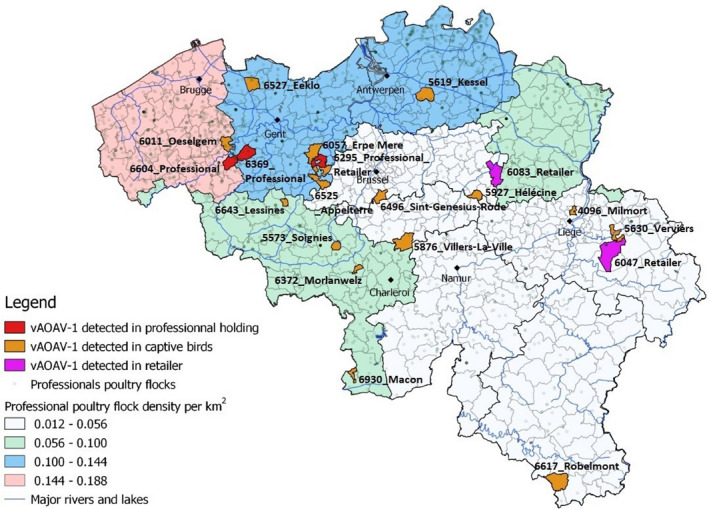
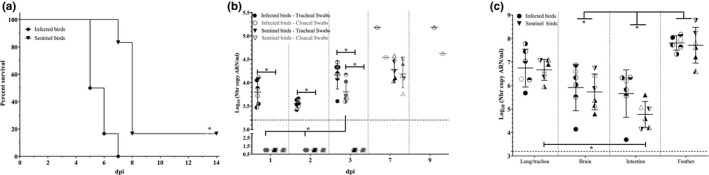
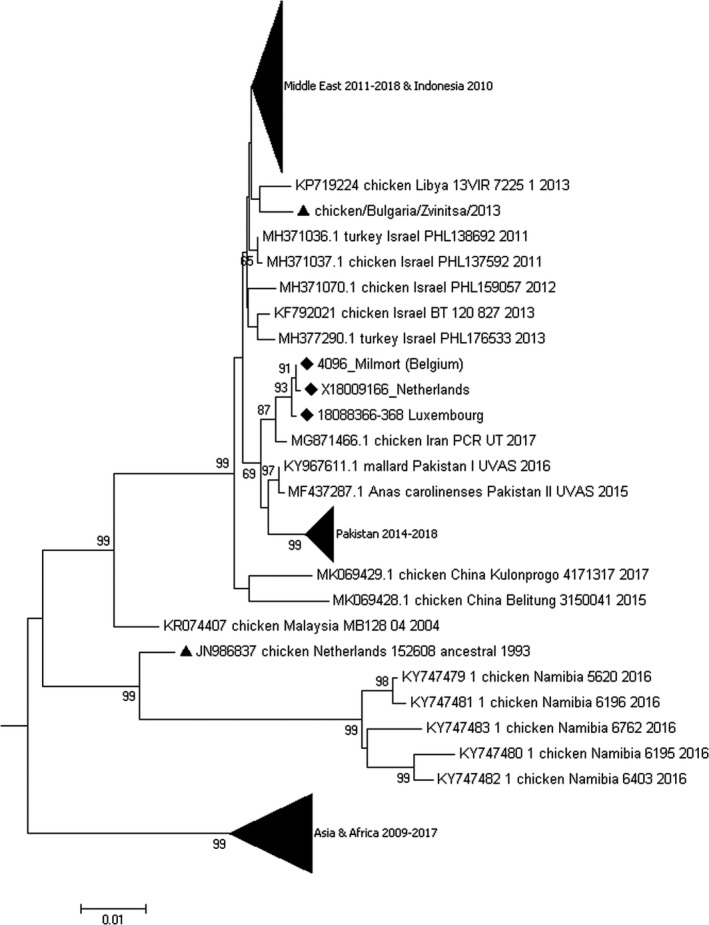
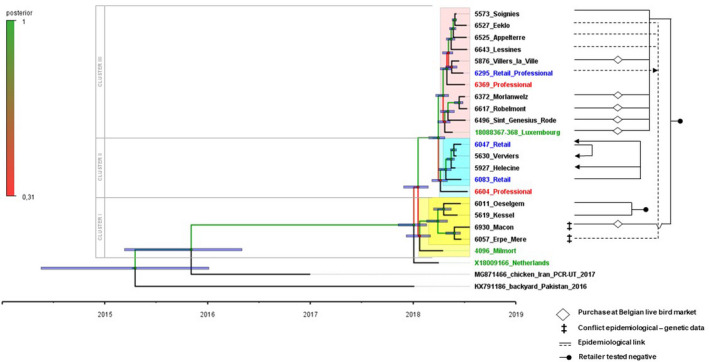
After two decades free of Newcastle disease, Belgium encountered a velogenic avian orthoavulavirus type 1 epizootic in 2018. In Belgium, 20 cases were diagnosed, of which 15 occurred in hobby flocks, 2 in professional poultry flocks and 3 in poultry retailers. The disease also disseminated from Belgium towards the Grand Duchy of Luxembourg by trade. Independently, the virus was detected once in the Netherlands, almost simultaneously to the first Belgian detection. As such Newcastle disease emerged in the entire BeNeLux region. Both the polybasic sequence of the fusion gene cleavage site and the intracerebral pathotyping assay demonstrated the high pathogenicity of the strain. This paper represents the first notification of this specific VII.2 subgenotype in the North-West of Europe. Time-calibrated full genome phylogenetic analysis indicated the silent or unreported circulation of the virus prior to the emergence of three genetic clusters in the BeNeLux region without clear geographical or other epidemiological correlation. The Dutch strain appeared as an outgroup to the Belgian and Luxembourgian strains in the time-correlated genetic analysis and no epidemiological link could be identified between the Belgian and Dutch outbreaks. In contrast, both genetic and epidemiological outbreak investigation data linked the G.D. Luxembourg case to the Belgian outbreak. The genetic links between Belgian viruses from retailers and hobby flocks only partially correlated with epidemiological data. Two independent introductions into the professional poultry sector were identified, although their origin could not be determined. Animal experiments using 6-week- old specific pathogen-free chickens indicated a systemic infection and efficient transmission of the virus. The implementation of re-vaccination in the professional sector, affected hobby and retailers, as well as the restriction on assembly and increased biosecurity measures, possibly limited the epizootic and resulted in the disappearance of the virus. These findings emphasize the constant need for awareness and monitoring of notifiable viruses in the field.
经过二十年没有新城疫的时间后,比利时于 2018 年遭遇了一场强毒力的禽正黏病毒 1 型暴发。在比利时,共诊断出 20 例病例,其中 15 例发生在业余禽群中,2 例发生在专业家禽禽群中,3 例发生在家禽零售商中。该疾病还通过贸易从比利时传播到卢森堡大公国。独立地,荷兰也检测到该病毒一次,几乎与比利时的首次检测同时发生。因此,新城疫出现在整个比荷卢地区。融合基因切割位点的多碱性序列和脑内病原分型测定均证明了该毒株的高致病性。本文代表了该特定 VII.2 亚基因型在西北欧的首次通报。时间校准的全基因组系统进化分析表明,在比荷卢地区出现三个遗传群之前,病毒一直在沉默或未被报告,并且没有明确的地理或其他流行病学相关性。在时间相关的遗传分析中,荷兰毒株与比利时和卢森堡毒株相比,作为一个外群出现,并且在比利时和荷兰暴发之间没有发现流行病学联系。相比之下,遗传和流行病学暴发调查数据将卢森堡大公国的病例与比利时的暴发联系起来。零售商和业余禽群的比利时病毒的遗传联系仅部分与流行病学数据相关。在专业家禽部门中发现了两次独立的传入,尽管其来源无法确定。使用 6 周龄无特定病原体鸡进行的动物实验表明,病毒会引起全身性感染和有效的传播。在专业部门重新接种疫苗的实施,影响了业余和零售商,以及集会限制和增加的生物安全措施,可能限制了疫情的发生,并导致病毒消失。这些发现强调了在现场不断需要对通报病毒保持认识和监测。