Faculty of Epidemiology and Population Health, London School of Hygiene and Tropical Medicine, London, UK.
Faculty of Public Health and Policy, London School of Hygiene and Tropical Medicine, London, UK.
BMC Med. 2020 Oct 5;18(1):316. doi: 10.1186/s12916-020-01779-4.
Many low- and middle-income countries have implemented control measures against coronavirus disease 2019 (COVID-19). However, it is not clear to what extent these measures explain the low numbers of recorded COVID-19 cases and deaths in Africa. One of the main aims of control measures is to reduce respiratory pathogen transmission through direct contact with others. In this study, we collect contact data from residents of informal settlements around Nairobi, Kenya, to assess if control measures have changed contact patterns, and estimate the impact of changes on the basic reproduction number (R).
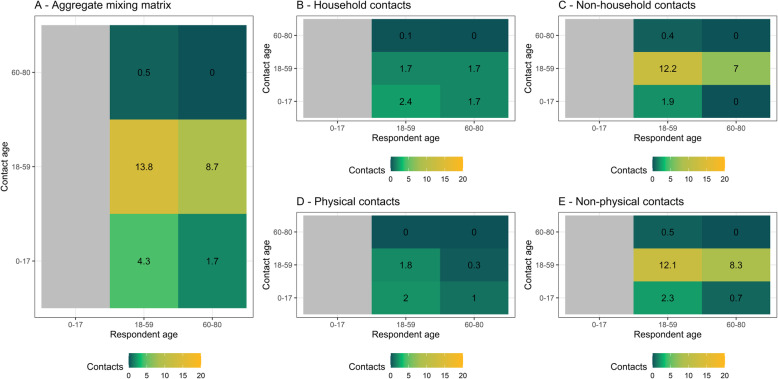
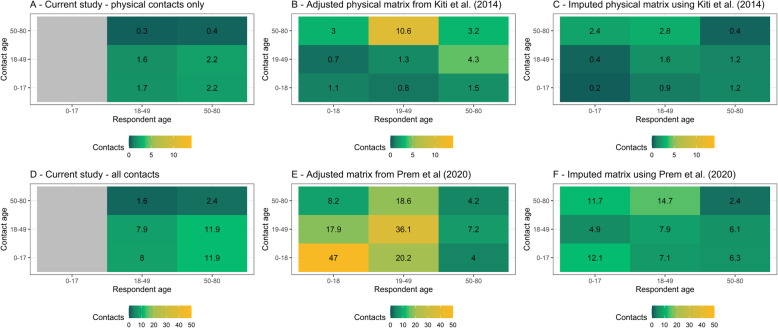
We conducted a social contact survey with 213 residents of five informal settlements around Nairobi in early May 2020, 4 weeks after the Kenyan government introduced enhanced physical distancing measures and a curfew between 7 pm and 5 am. Respondents were asked to report all direct physical and non-physical contacts made the previous day, alongside a questionnaire asking about the social and economic impact of COVID-19 and control measures. We examined contact patterns by demographic factors, including socioeconomic status. We described the impact of COVID-19 and control measures on income and food security. We compared contact patterns during control measures to patterns from non-pandemic periods to estimate the change in R.
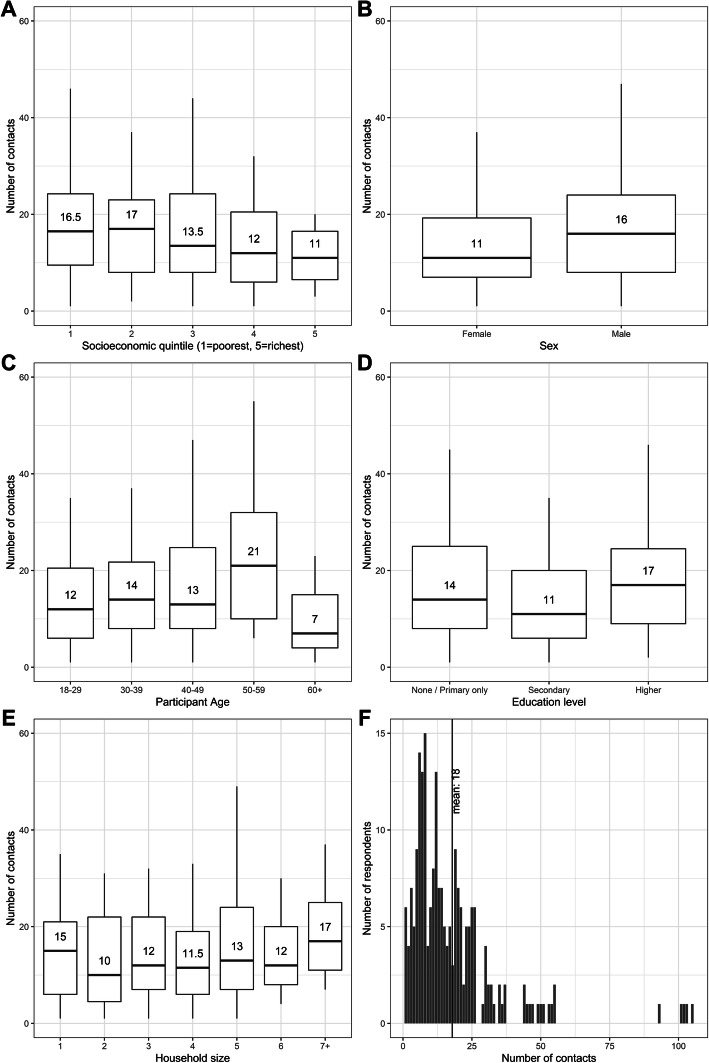
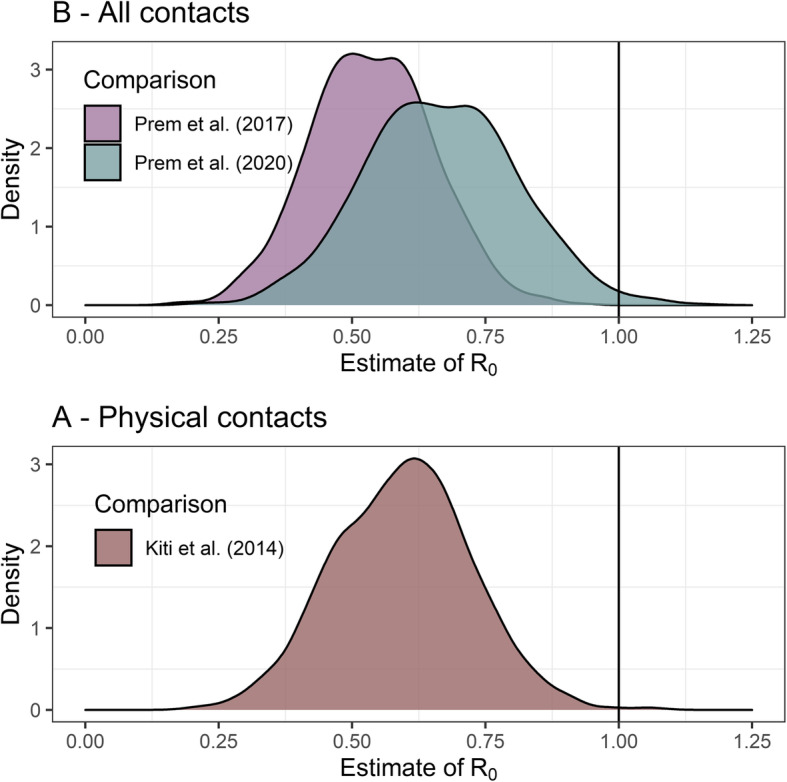
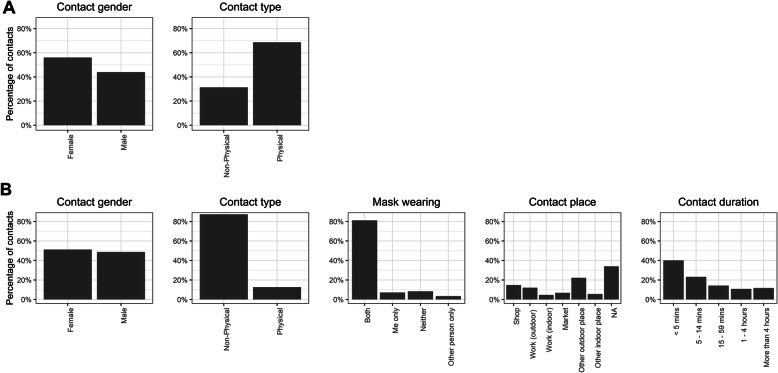
We estimate that control measures reduced physical contacts by 62% and non-physical contacts by either 63% or 67%, depending on the pre-COVID-19 comparison matrix used. Masks were worn by at least one person in 92% of contacts. Respondents in the poorest socioeconomic quintile reported 1.5 times more contacts than those in the richest. Eighty-six percent of respondents reported a total or partial loss of income due to COVID-19, and 74% reported eating less or skipping meals due to having too little money for food.
COVID-19 control measures have had a large impact on direct contacts and therefore transmission, but have also caused considerable economic and food insecurity. Reductions in R are consistent with the comparatively low epidemic growth in Kenya and other sub-Saharan African countries that implemented similar, early control measures. However, negative and inequitable impacts on economic and food security may mean control measures are not sustainable in the longer term.
许多中低收入国家已实施针对 2019 年冠状病毒病(COVID-19)的控制措施。然而,这些措施在多大程度上解释了非洲记录的 COVID-19 病例和死亡人数较少的情况尚不清楚。控制措施的主要目的之一是通过与他人的直接接触来减少呼吸道病原体的传播。在这项研究中,我们从肯尼亚内罗毕周围的非正规住区居民那里收集接触数据,以评估控制措施是否改变了接触模式,并估计变化对基本繁殖数(R)的影响。
我们于 2020 年 5 月初在内罗毕周围的五个非正规住区进行了一项社会接触调查,当时肯尼亚政府在 4 周前引入了加强的身体距离措施和晚上 7 点至凌晨 5 点的宵禁。被调查者被要求报告前一天的所有直接身体和非身体接触,并填写一份关于 COVID-19 和控制措施的社会经济影响的问卷。我们按人口统计学因素(包括社会经济地位)检查了接触模式。我们描述了 COVID-19 和控制措施对收入和粮食安全的影响。我们将控制措施期间的接触模式与非大流行时期的模式进行了比较,以估计 R 的变化。
我们估计,控制措施使身体接触减少了 62%,非身体接触减少了 63%或 67%,具体取决于使用的 COVID-19 前比较矩阵。至少有一个人戴口罩的接触者占 92%。最贫穷的五分之一社会经济阶层的受访者报告的接触次数比最富有的五分之一多 1.5 倍。86%的受访者报告由于 COVID-19 而全部或部分收入损失,而 74%的受访者因资金不足而少吃或不吃餐。
COVID-19 控制措施对直接接触和因此的传播产生了重大影响,但也造成了相当大的经济和粮食不安全。R 的减少与肯尼亚和其他实施类似早期控制措施的撒哈拉以南非洲国家相对较低的疫情增长相符。然而,对经济和粮食安全的负面影响和不平等可能意味着从长期来看,控制措施是不可持续的。