Murphy Justin, Devue Christel, Corballis Paul M, Grimshaw Gina M
School of Psychology, Victoria University of Wellington, Wellington, New Zealand.
School of Psychology and Centre for Brain Research, University of Auckland, Auckland, New Zealand.
Front Hum Neurosci. 2020 Aug 18;14:318. doi: 10.3389/fnhum.2020.00318. eCollection 2020.
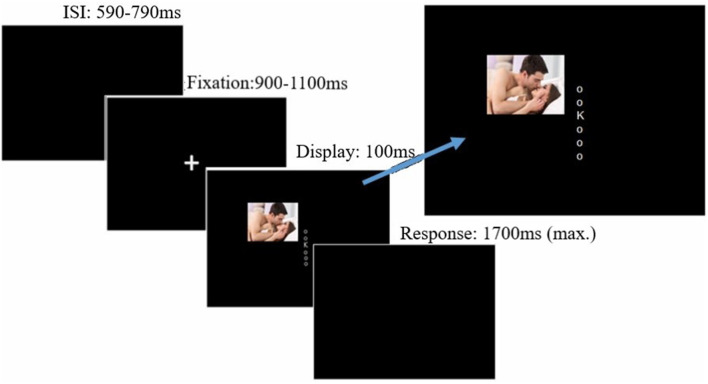
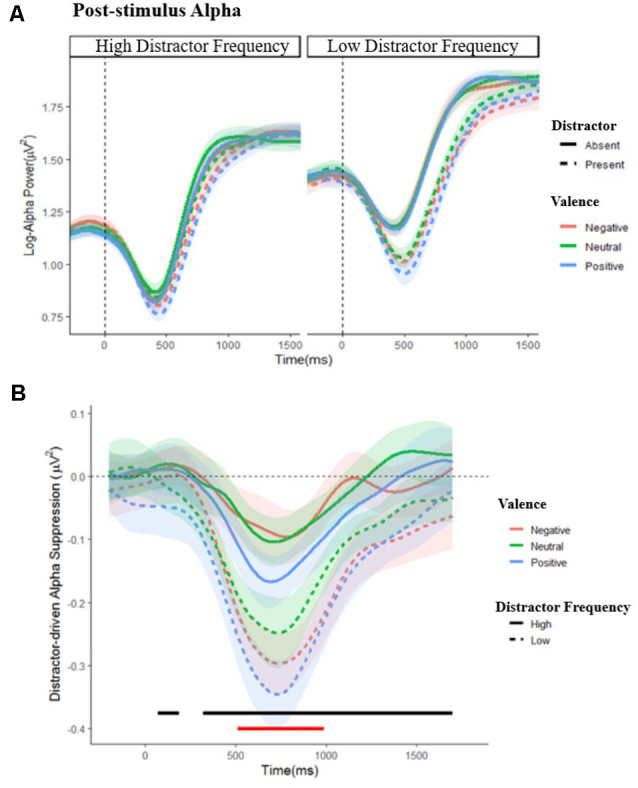
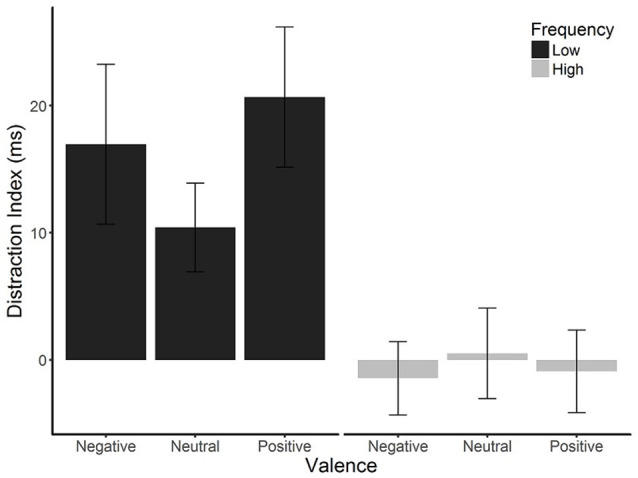
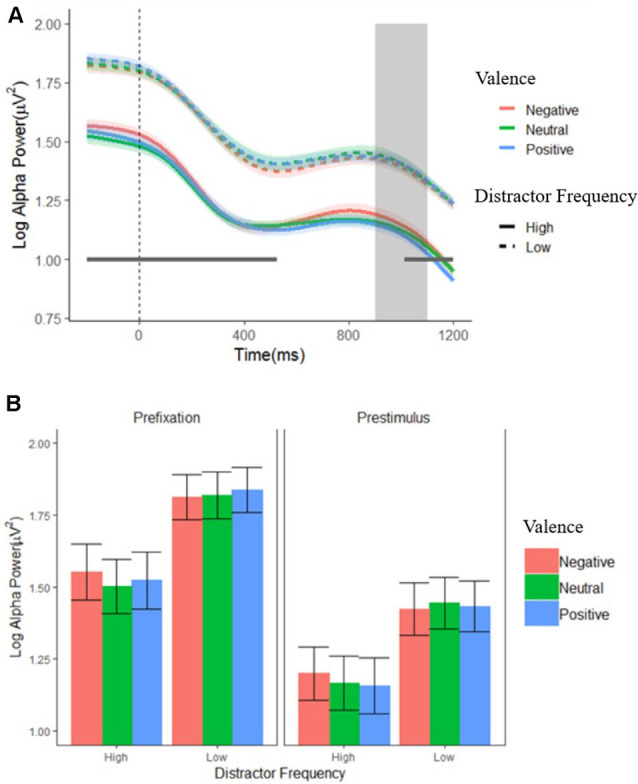
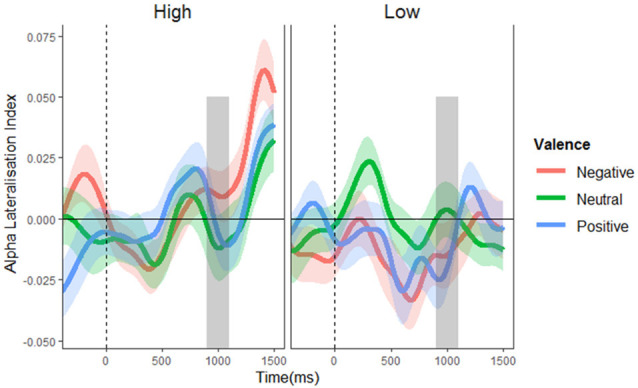
Biased attention towards emotional stimuli is adaptive, as it facilitates responses to important threats and rewards. An unfortunate consequence is that emotional stimuli can become potent distractors when they are irrelevant to current goals. How can this distraction be overcome despite the bias to attend to emotional stimuli? Recent studies show that distraction by irrelevant flankers is reduced when distractor frequency is high, even if they are emotional. A parsimonious explanation is that the expectation of frequent distractors promotes the use of proactive control, whereby attentional control settings can be altered to minimize distraction before it occurs. It is difficult, however, to infer proactive control on the basis of behavioral data alone. We therefore measured neural indices of proactive control while participants performed a target-detection task in which irrelevant peripheral distractors (either emotional or neutral) could appear either frequently (on 75% of trials) or rarely (on 25% of trials). We measured alpha power during the pre-stimulus period to assess proactive control and during the post-stimulus period to determine the consequences of control for subsequent processing. Pre-stimulus alpha power was tonically suppressed in the high, compared to low, distractor frequency condition, regardless of expected distractor valence, indicating sustained use of proactive control. In contrast, post-stimulus alpha suppression was reduced in the high-frequency condition, suggesting that proactive control reduced the need for post-stimulus adjustments. Our findings indicate that a sustained proactive control strategy accounts for the reduction in both emotional and non-emotional distraction when distractors are expected to appear frequently.
对情绪刺激的偏向性注意是适应性的,因为它有助于对重要威胁和奖励做出反应。一个不幸的后果是,当情绪刺激与当前目标无关时,它们可能会成为强大的干扰因素。尽管存在关注情绪刺激的偏向,如何克服这种干扰呢?最近的研究表明,当干扰物频率较高时,无关侧翼干扰物造成的干扰会减少,即使它们是情绪化的。一个简洁的解释是,对频繁出现干扰物的预期促进了主动控制的使用,通过这种方式,注意力控制设置可以在干扰发生之前进行调整,以尽量减少干扰。然而,仅根据行为数据很难推断出主动控制。因此,我们在参与者执行目标检测任务时测量了主动控制的神经指标,在该任务中,无关的外周干扰物(无论是情绪化的还是中性的)可能频繁出现(在75%的试验中)或很少出现(在25%的试验中)。我们在刺激前阶段测量了阿尔法波功率以评估主动控制,并在刺激后阶段测量以确定控制对后续处理的影响。与低干扰物频率条件相比,在高干扰物频率条件下,刺激前的阿尔法波功率受到持续抑制,无论预期干扰物的效价如何,这表明持续使用了主动控制。相比之下,在高频条件下,刺激后的阿尔法波抑制减少,这表明主动控制减少了刺激后调整的需要。我们的研究结果表明,当预期干扰物频繁出现时,持续的主动控制策略可以解释情绪和非情绪干扰的减少。