Xie Shiwei, Liu Yongjian, Tian Lixia, Niu Jin, Tan Beiping
Laboratory of Aquatic Animal Nutrition and Feed, Fisheries College, Guangdong Ocean University, Zhanjiang, China.
School of Life Sciences, Institute of Aquatic Economic Animals, Sun Yat-sen University, Guangzhou, China.
Front Physiol. 2020 Aug 18;11:1024. doi: 10.3389/fphys.2020.01024. eCollection 2020.
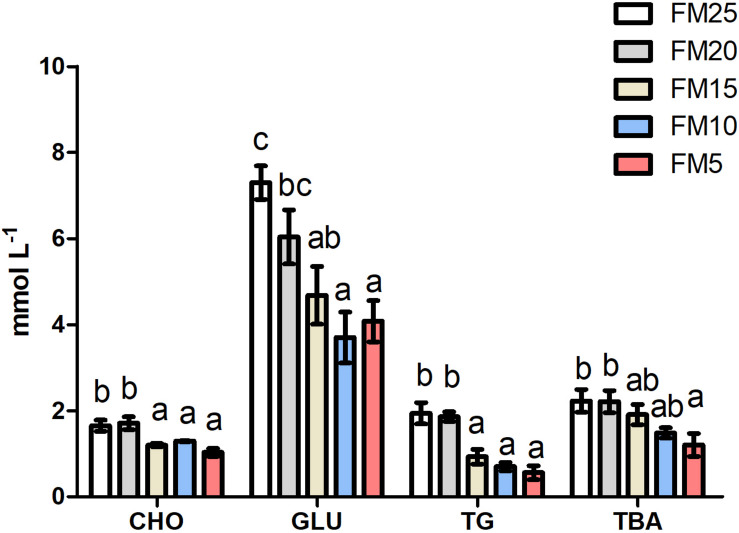
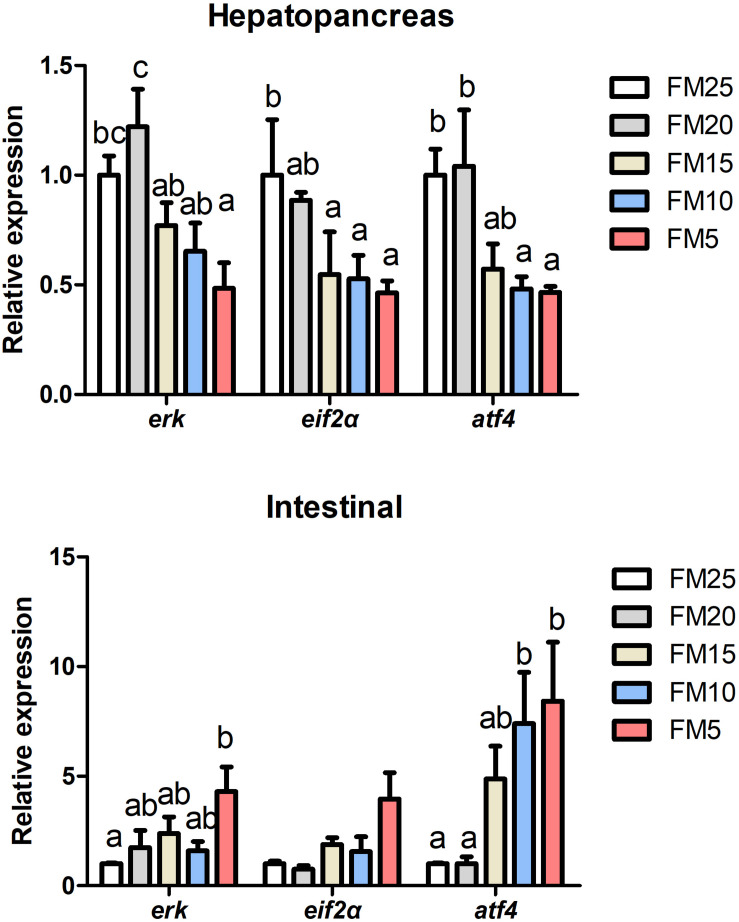
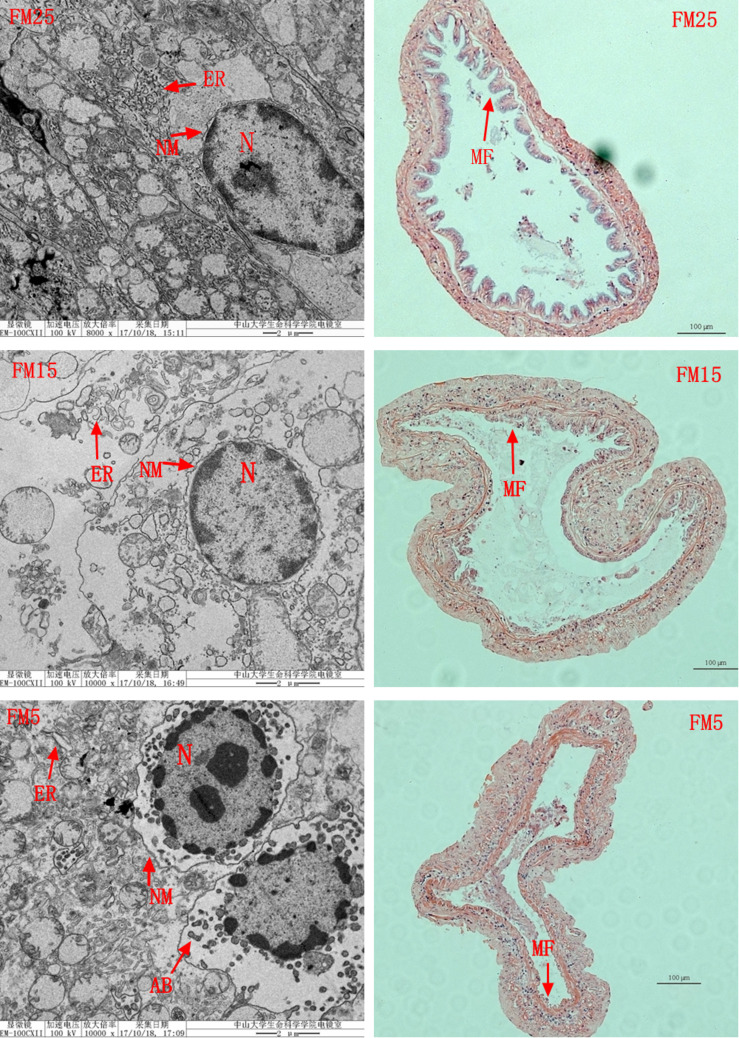
This study mainly evaluated the low dietary fish-meal (FM) on growth performance, immune competence and metabolomics response of juvenile Pacific white shrimp, reared at low salinity (7‰). Five experimental diets with graded levels (25, 20, 15, 10, and 5%) of FM were formulated. Weight gain, feed utilization and survival were decreased with the decreasing FM levels. When dietary FM decreased, glucose, cholesterol, total bile acids, and triglyceride in hemolymph decreased. Fatty acid synthesis was promoted and fatty acid lipolysis was reduced in hepatopancreas of shrimp fed low dietary FM. Endoplasmic reticulum (ER) stress related genes expression in hepatopancreas were down-regulated and in intestine were upregulated by low dietary FM. β expression in intestine increased with the dietary FM levels, while mRNA levels of in hepatopancreas showed the opposite tendency. Hematoxylin and eosin (H&E) stain and transmission electron microscope analysis of intestinal samples indicated that low FM diets induced intestinal morphological damage, ER swollen and chromatin condensation. UPLC-Q/TOF-MS analysis indicated that degree of unsaturation of the fatty acid chains of phospholipids in hemolymph decreased with the decreasing dietary FM levels. Lysophospholipids and bile acids metabolism were disturbed by high levels of FM sparing in diet. These results indicated when dietary FM contents decreased, ER stress of shrimp was induced. The decreased unsaturated degree of phospholipids, decreased contents of lysophospholipids, altered lipid metabolism and ER stress may responsible for the impaired growth performance and health of shrimp fed a low FM diet.
本研究主要评估了低鱼粉日粮对低盐度(7‰)养殖的太平洋白对虾幼虾生长性能、免疫能力和代谢组学反应的影响。配制了五种鱼粉水平(25%、20%、15%、10%和5%)呈梯度变化的实验日粮。随着鱼粉水平的降低,增重、饲料利用率和存活率均下降。日粮鱼粉减少时,血淋巴中的葡萄糖、胆固醇、总胆汁酸和甘油三酯含量降低。低鱼粉日粮喂养的对虾肝胰腺中脂肪酸合成增加,脂肪酸脂解减少。低鱼粉日粮使肝胰腺中内质网(ER)应激相关基因表达下调,而使肠道中相关基因表达上调。肠道中β的表达随日粮鱼粉水平的升高而增加,而肝胰腺中mRNA水平则呈相反趋势。肠道样本的苏木精-伊红(H&E)染色和透射电子显微镜分析表明,低鱼粉日粮会导致肠道形态损伤、内质网肿胀和染色质浓缩。超高效液相色谱-四极杆/飞行时间质谱(UPLC-Q/TOF-MS)分析表明,随着日粮鱼粉水平的降低,血淋巴中磷脂脂肪酸链的不饱和度降低。日粮中高水平的鱼粉替代会扰乱溶血磷脂和胆汁酸代谢。这些结果表明,当日粮鱼粉含量降低时,会诱导对虾内质网应激。磷脂不饱和度降低、溶血磷脂含量减少、脂质代谢改变和内质网应激可能是导致低鱼粉日粮喂养的对虾生长性能受损和健康状况不佳的原因。