Department of Biomedicine, Health & Life Convergence Sciences, BK21 Four, Mokpo National University, Muan-gun, Jeonnam 58554, Korea.
College of Pharmacy, Chungnam National University, Daejeon 34134, Korea.
Biomolecules. 2020 Oct 1;10(10):1401. doi: 10.3390/biom10101401.
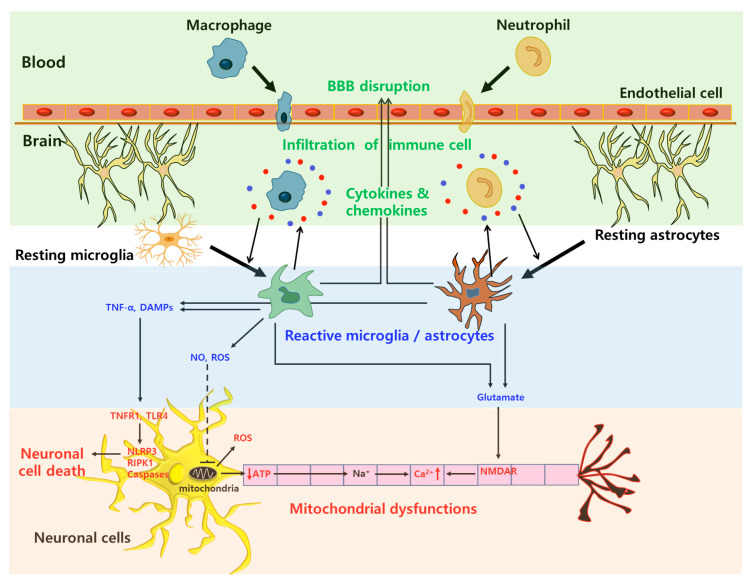
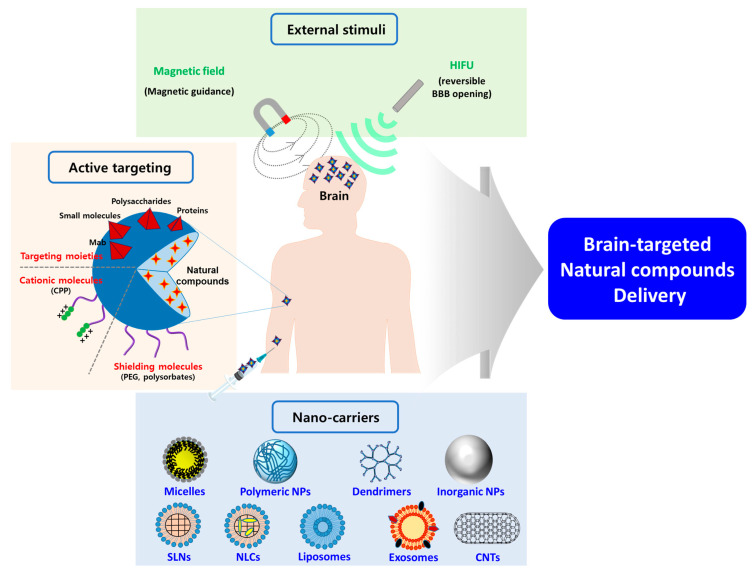
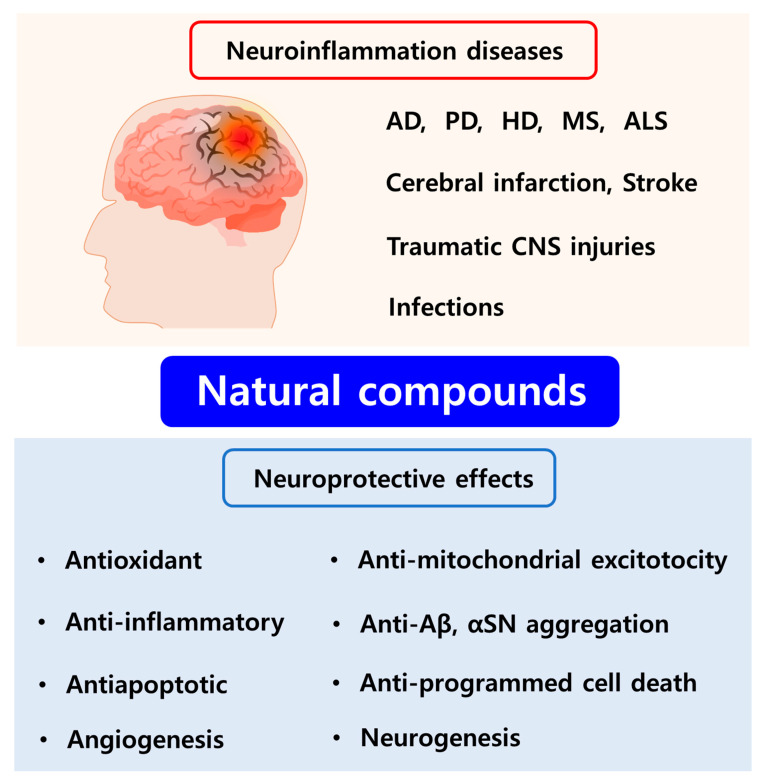
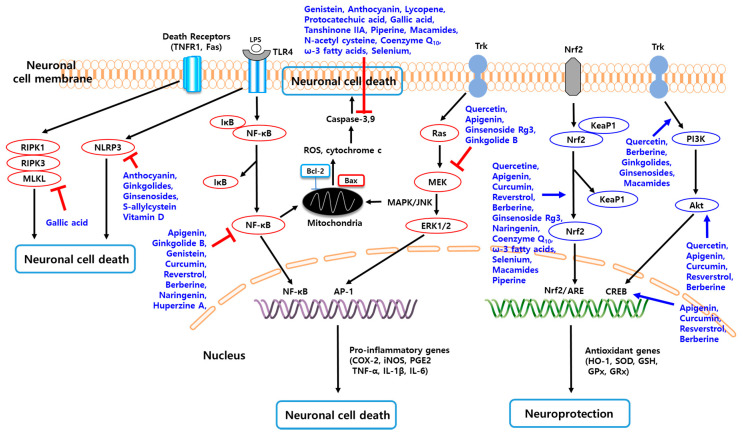
Neuroinflammation, which is involved in various inflammatory cascades in nervous tissues, can result in persistent and chronic apoptotic neuronal cell death and programmed cell death, triggering various degenerative disorders of the central nervous system (CNS). The neuroprotective effects of natural compounds against neuroinflammation are mainly mediated by their antioxidant, anti-inflammatory, and antiapoptotic properties that specifically promote or inhibit various molecular signal transduction pathways. However, natural compounds have several limitations, such as their pharmacokinetic properties and stability, which hinder their clinical development and use as medicines. This review discusses the molecular mechanisms of neuroinflammation and degenerative diseases of CNS. In addition, it emphasizes potential natural compounds and their promising nanocarriers for overcoming their limitations in the treatment of neuroinflammation. Moreover, recent promising CNS inflammation-targeted nanocarrier systems implementing lesion site-specific active targeting strategies for CNS inflammation are also discussed.
神经炎症涉及神经组织中的各种炎症级联反应,可导致持续和慢性的凋亡性神经元细胞死亡和程序性细胞死亡,引发中枢神经系统(CNS)的各种退行性疾病。天然化合物的神经保护作用主要通过其抗氧化、抗炎和抗凋亡特性来介导,这些特性可特异性促进或抑制各种分子信号转导途径。然而,天然化合物存在多种局限性,例如其药代动力学性质和稳定性,这阻碍了它们作为药物的临床开发和应用。本综述讨论了神经炎症和 CNS 退行性疾病的分子机制。此外,还强调了有潜力的天然化合物及其有前途的纳米载体,以克服它们在治疗神经炎症方面的局限性。此外,还讨论了最近有前景的针对 CNS 炎症的纳米载体系统,这些系统实施病变部位特异性主动靶向策略,用于 CNS 炎症的靶向治疗。