Institute for Genome Stability in Aging and Disease, Medical Faculty, University of Cologne, Joseph-Stelzmann-Str. 26, 50931 Cologne, Germany.
Cologne Excellence Cluster for Cellular Stress Responses in Aging-Associated Diseases (CECAD), University of Cologne, Joseph-Stelzmann-Str. 26, 50931 Cologne, Germany.
Nucleic Acids Res. 2020 Nov 4;48(19):10973-10985. doi: 10.1093/nar/gkaa795.
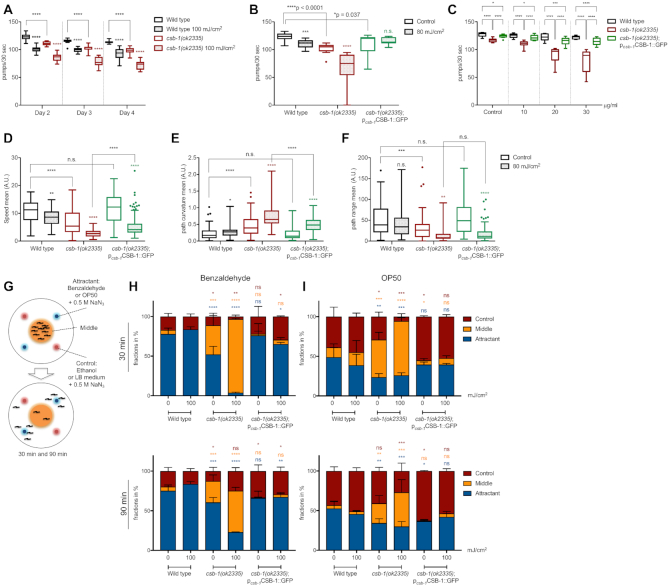
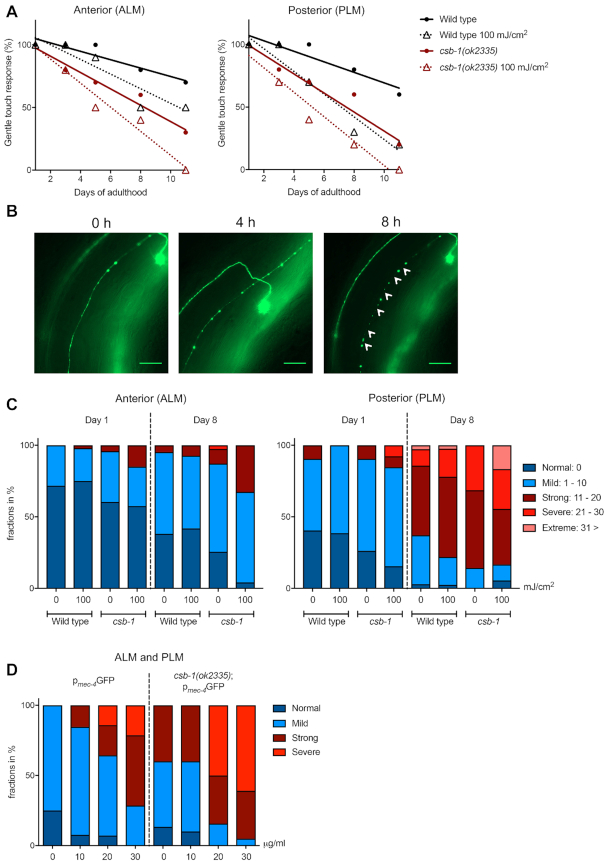
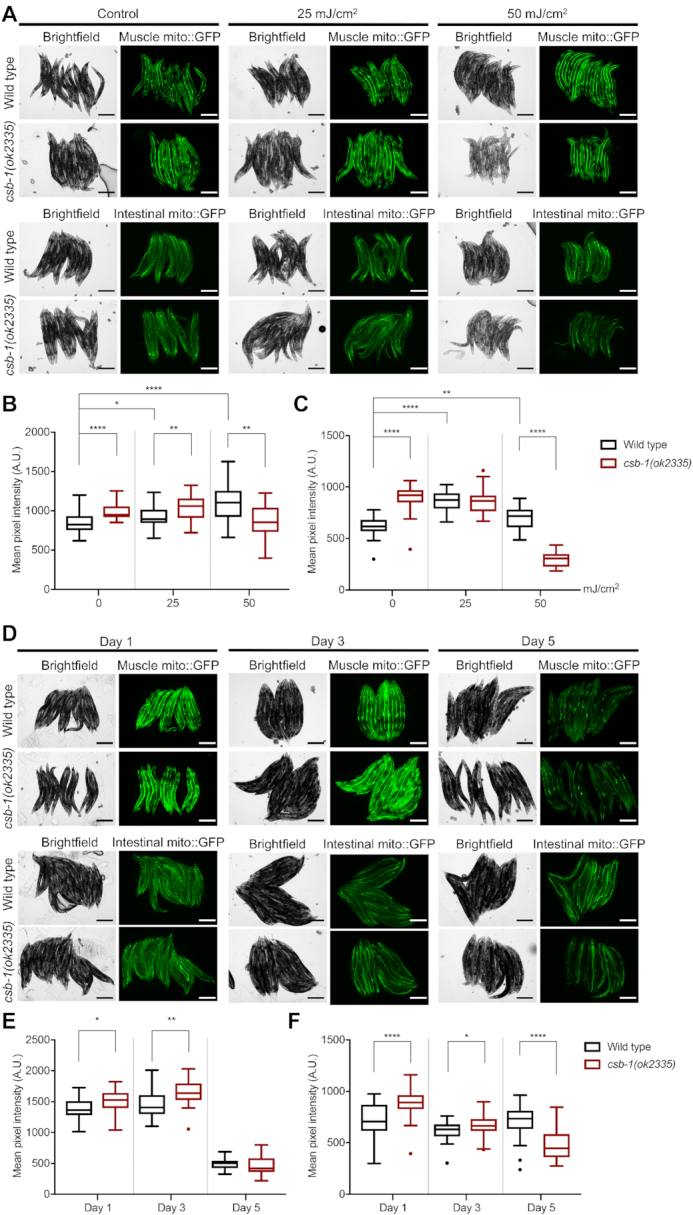
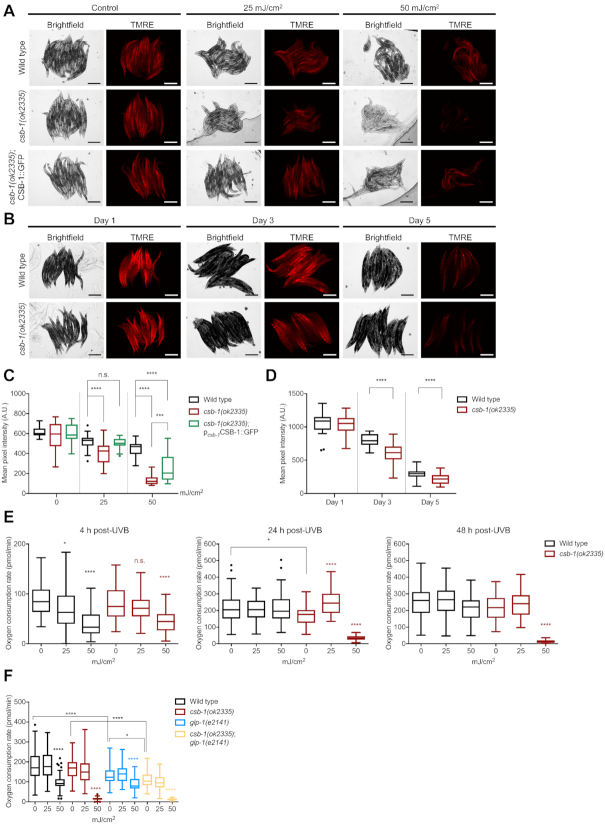
Cockayne syndrome (CS) is a congenital syndrome characterized by growth and mental retardation, and premature ageing. The complexity of CS and mammalian models warrants simpler metazoan models that display CS-like phenotypes that could be studied in the context of a live organism. Here, we provide a characterization of neuronal and mitochondrial aberrations caused by a mutation in the csb-1 gene in Caenorhabditis elegans. We report a progressive neurodegeneration in adult animals that is enhanced upon UV-induced DNA damage. The csb-1 mutants show dysfunctional hyperfused mitochondria that degrade upon DNA damage, resulting in diminished respiratory activity. Our data support the role of endogenous DNA damage as a driving factor of CS-related neuropathology and underline the role of mitochondrial dysfunction in the disease.
科凯恩综合征(CS)是一种先天性综合征,其特征为生长和智力发育迟缓,以及早衰。CS 及其哺乳动物模型的复杂性需要更简单的后生动物模型,这些模型表现出类似 CS 的表型,可以在活生物体的背景下进行研究。在这里,我们描述了 csb-1 基因突变在秀丽隐杆线虫中引起的神经元和线粒体异常。我们报告了成年动物的进行性神经退行性变,在 UV 诱导的 DNA 损伤后加重。csb-1 突变体显示功能失调的过度融合线粒体,在 DNA 损伤后降解,导致呼吸活性降低。我们的数据支持内源性 DNA 损伤作为 CS 相关神经病理学的驱动因素的作用,并强调了线粒体功能障碍在疾病中的作用。