The Razavi Newman Integrative Genomics and Bioinformatics Core, The Salk Institute for Biological Studies, 10010 N. Torrey Pines Rd., La Jolla, CA, 92037, USA.
Department of Molecular Medicine and Neurobiology, The Scripps Research Institute, 10550 North Torrey Pines Road, La Jolla, CA, 92037, USA.
Cell Death Dis. 2020 Oct 6;11(10):828. doi: 10.1038/s41419-020-03020-9.
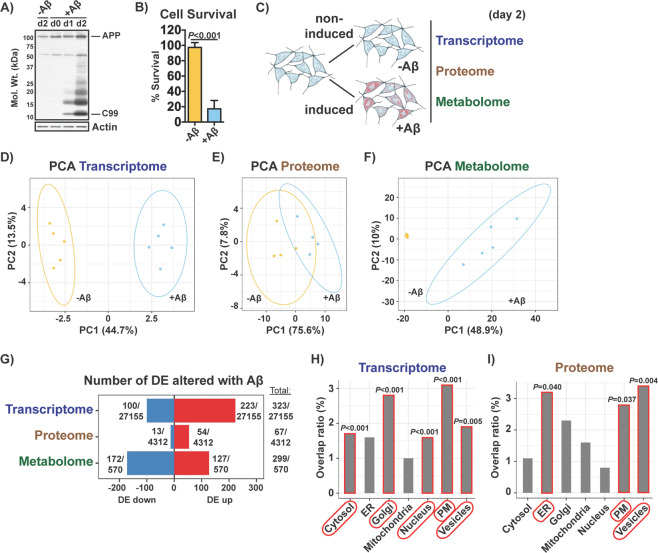
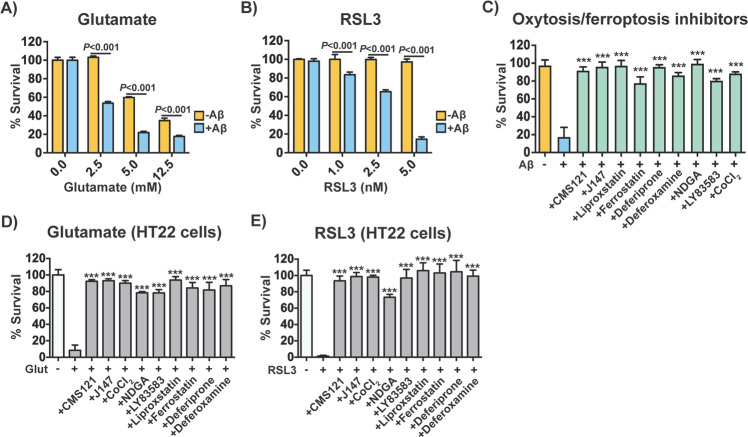
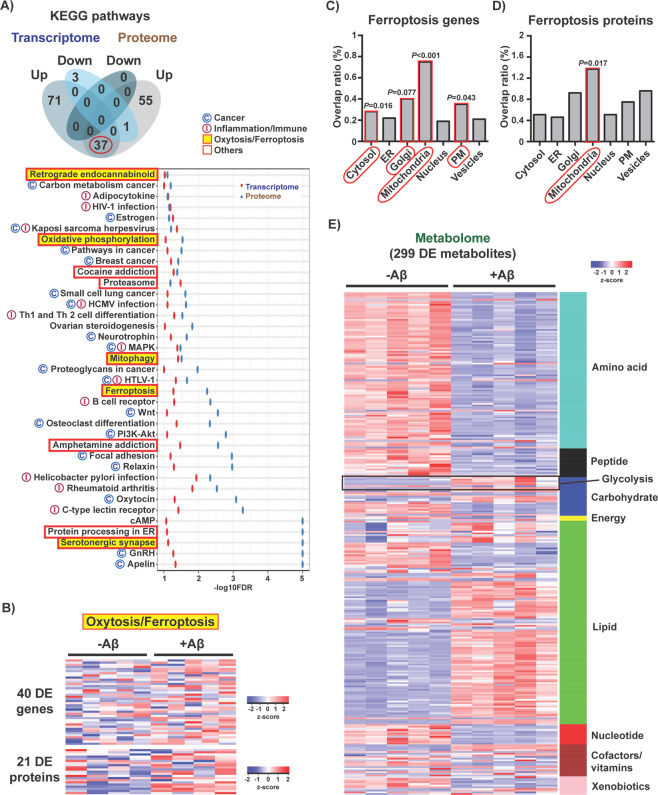
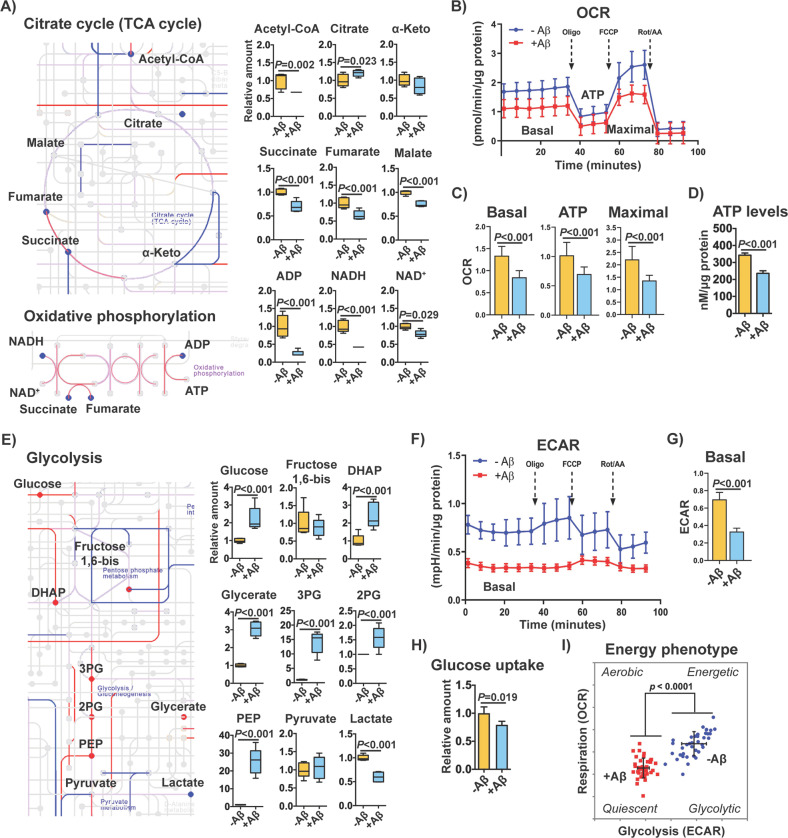
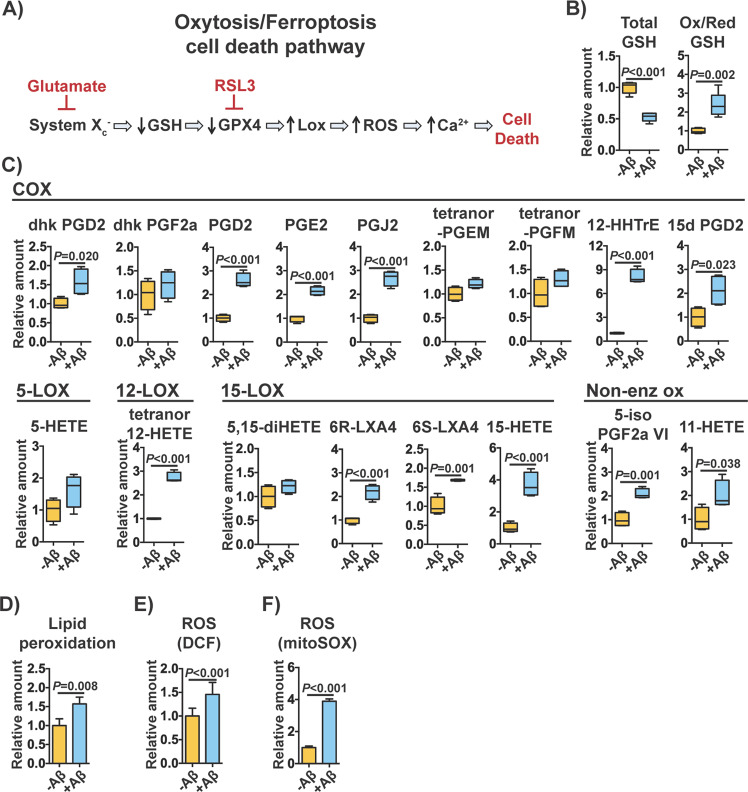
Amyloid beta (Aβ) accumulates within neurons in the brains of early stage Alzheimer's disease (AD) patients. However, the mechanism underlying its toxicity remains unclear. Here, a triple omics approach was used to integrate transcriptomic, proteomic, and metabolomic data collected from a nerve cell model of the toxic intracellular aggregation of Aβ. It was found that intracellular Aβ induces profound changes in the omics landscape of nerve cells that are associated with a pro-inflammatory, metabolic reprogramming that predisposes cells to die via the oxytosis/ferroptosis regulated cell death pathway. Notably, the degenerative process included substantial alterations in glucose metabolism and mitochondrial bioenergetics. Our findings have implications for the understanding of the basic biology of proteotoxicity, aging, and AD as well as for the development of future therapeutic interventions designed to target the oxytosis/ferroptosis regulated cell death pathway in the AD brain.
淀粉样蛋白β(Aβ)在早期阿尔茨海默病(AD)患者的神经元内积累。然而,其毒性的机制仍不清楚。在这里,采用三重组学方法整合了从 Aβ 毒性细胞内聚集的神经细胞模型中收集的转录组、蛋白质组和代谢组数据。结果发现,细胞内 Aβ 诱导神经细胞组学景观发生深刻变化,与促炎、代谢重编程相关,使细胞通过氧化/铁死亡调节的细胞死亡途径死亡。值得注意的是,退行性过程包括葡萄糖代谢和线粒体生物能量学的重大改变。我们的发现对理解蛋白毒性、衰老和 AD 的基础生物学具有重要意义,也为开发旨在靶向 AD 大脑中氧化/铁死亡调节的细胞死亡途径的未来治疗干预措施提供了依据。