Department of Chemistry, Northwestern University, Evanston, IL, United States.
Department of Chemistry, Northwestern University, Evanston, IL, United States; Department of Molecular Biosciences, Northwestern University, Evanston, IL, United States; Proteomics Center of Excellence, Northwestern University, Evanston, IL, United States.
Fungal Genet Biol. 2020 Nov;144:103477. doi: 10.1016/j.fgb.2020.103477. Epub 2020 Oct 6.
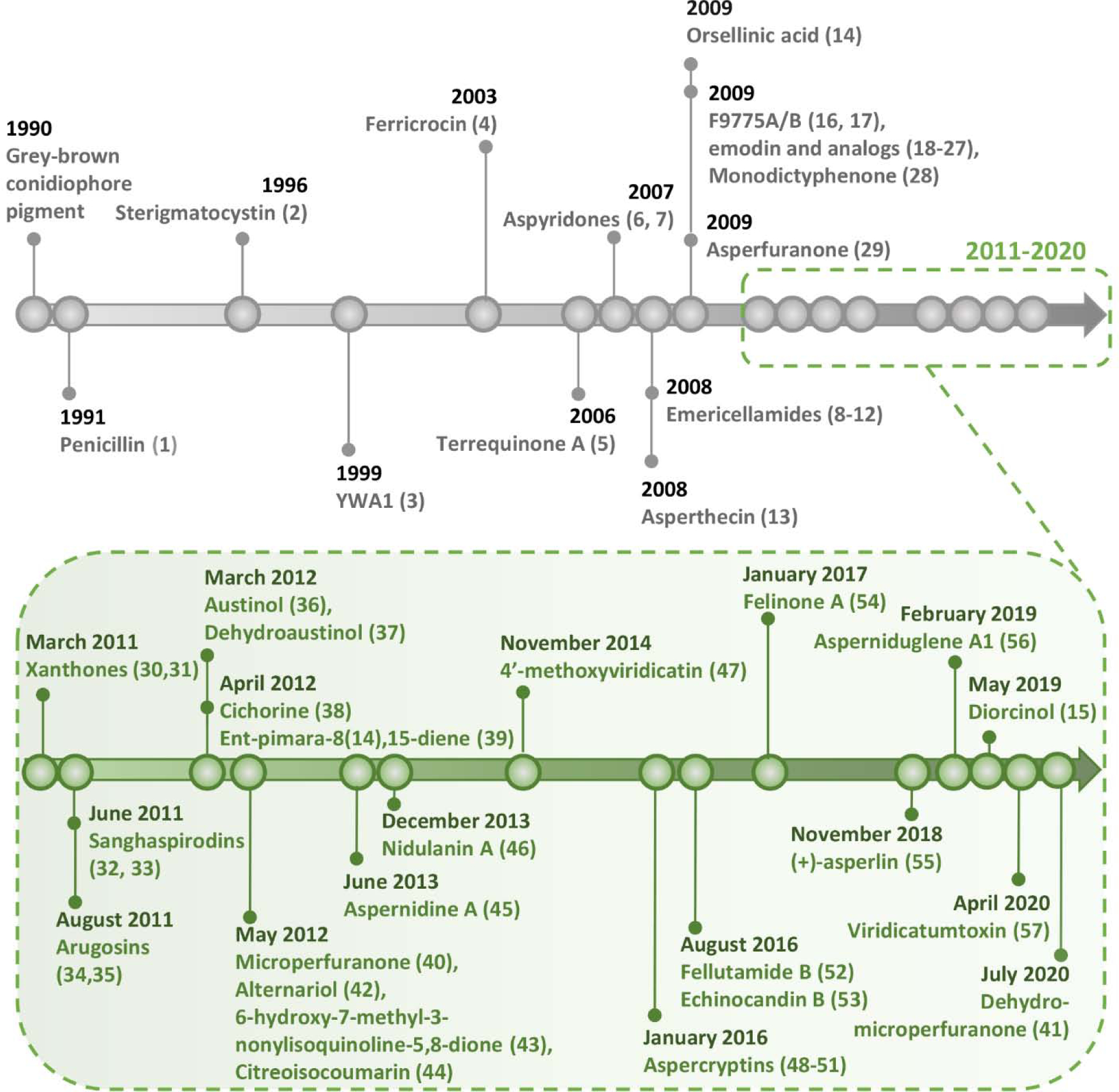
In 1990 the first fungal secondary metabolite biosynthetic gene was cloned in Aspergillus nidulans. Thirty years later, >30 biosynthetic gene clusters (BGCs) have been linked to specific natural products in this one fungal species. While impressive, over half of the BGCs in A. nidulans remain uncharacterized and their compounds structurally and functionally unknown. Here, we provide a comprehensive review of past advances that have enabled A. nidulans to rise to its current status as a natural product powerhouse focusing on the discovery and annotation of secondary metabolite clusters. From genome sequencing, heterologous expression, and metabolomics to CRISPR and epigenetic manipulations, we present a guided tour through the evolution of technologies developed and utilized in the last 30 years. These insights provide perspective to future efforts to fully unlock the biosynthetic potential of A. nidulans and, by extension, the potential of other filamentous fungi.
1990 年,人们首次在构巢曲霉中克隆了真菌次级代谢产物生物合成基因。30 年后,在这一种真菌中已有超过 30 个生物合成基因簇(BGCs)与特定的天然产物相关联。尽管这一成就令人印象深刻,但构巢曲霉中仍有一半以上的 BGC 尚未被描述,其化合物的结构和功能也尚不清楚。在这里,我们全面回顾了过去的进展,这些进展使构巢曲霉成为天然产物的强大力量,重点介绍了次级代谢物簇的发现和注释。从基因组测序、异源表达和代谢组学,到 CRISPR 和表观遗传操作,我们展示了过去 30 年来开发和利用的技术的发展历程。这些见解为未来充分挖掘构巢曲霉的生物合成潜力,以及扩展到其他丝状真菌的潜力提供了视角。