Department of Biomedical Sciences and Pathobiology, Virginia-Maryland College of Veterinary Medicine, Blacksburg, VA, United States of America.
Division of Vector-borne Diseases, Centers for Disease Control and Prevention, Fort Collins, CO, United States of America.
PLoS Negl Trop Dis. 2020 Oct 12;14(10):e0008765. doi: 10.1371/journal.pntd.0008765. eCollection 2020 Oct.
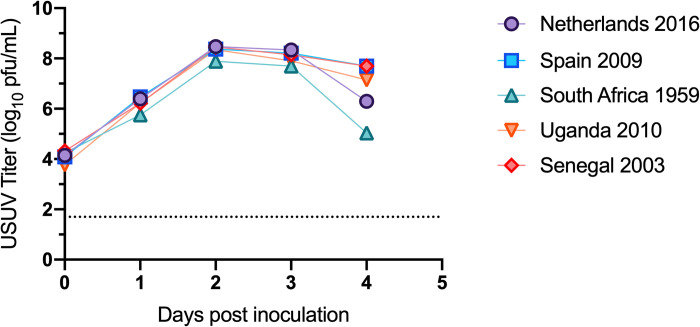
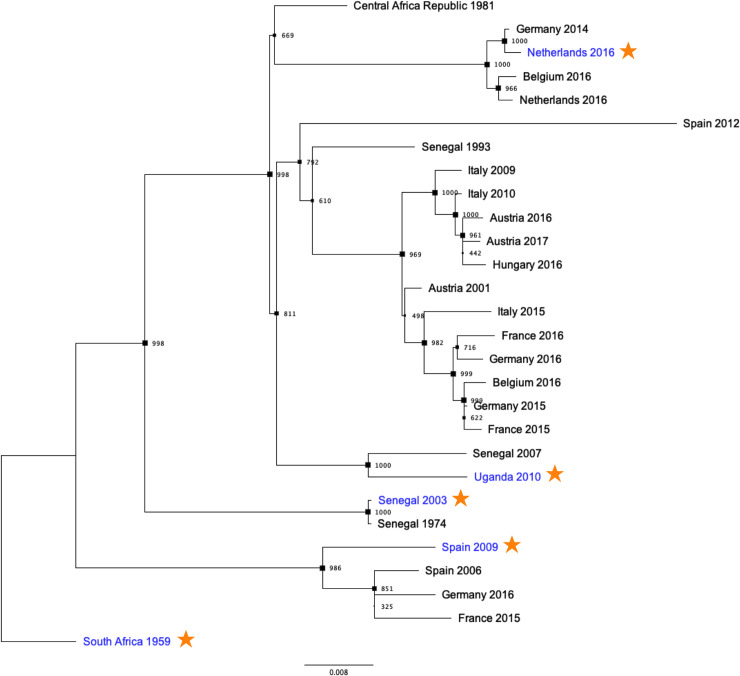
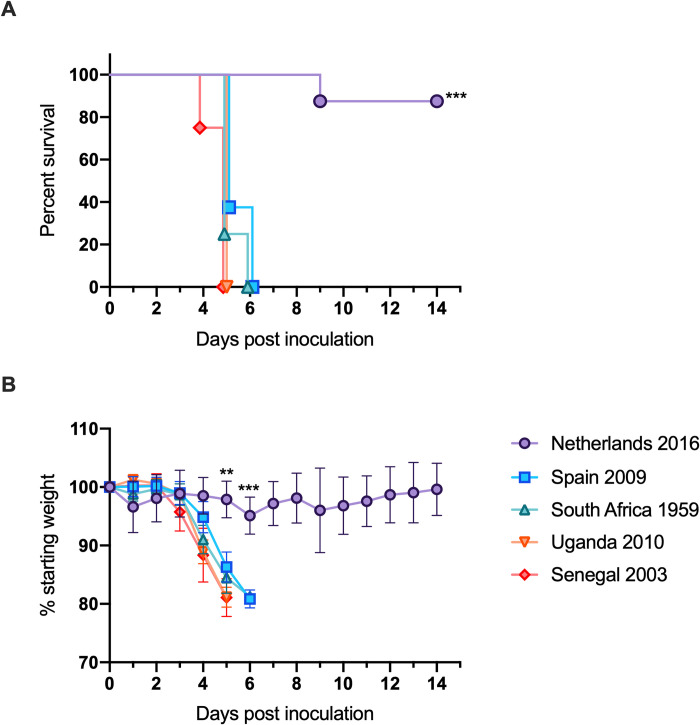
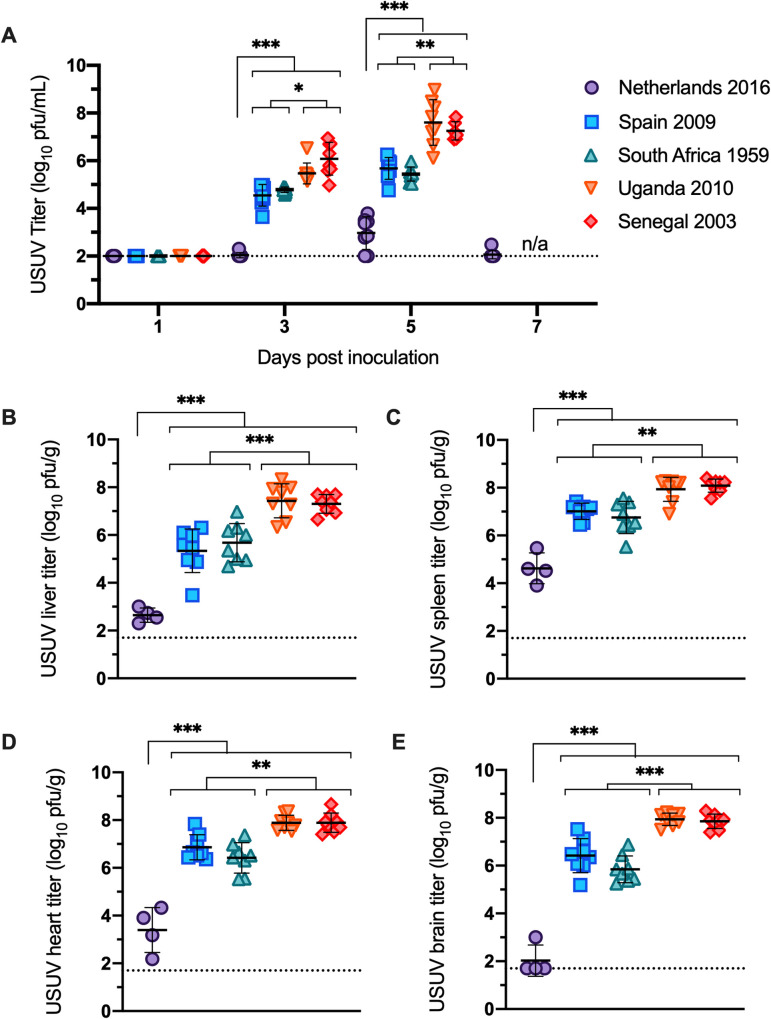
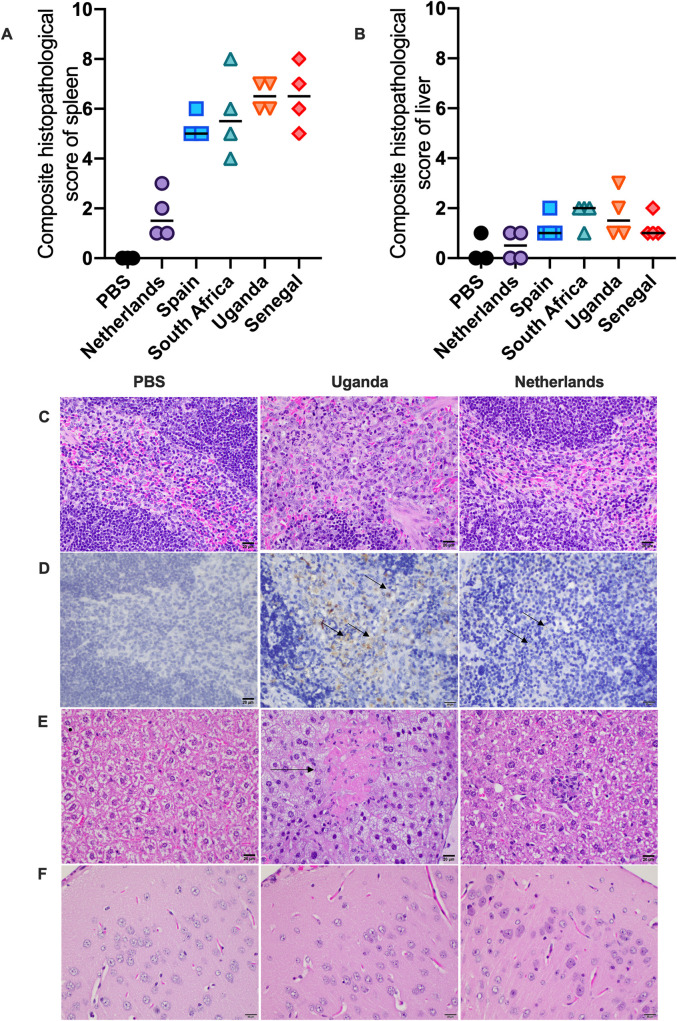
Usutu virus (USUV; Flavivirus), a close phylogenetic and ecological relative of West Nile virus, is a zoonotic virus that can cause neuroinvasive disease in humans. USUV is maintained in an enzootic cycle between Culex mosquitoes and birds. Since the first isolation in 1959 in South Africa, USUV has spread throughout Africa and Europe. Reported human cases have increased over the last few decades, primarily in Europe, with symptoms ranging from mild febrile illness to severe neurological effects. In this study, we investigated whether USUV has become more pathogenic during emergence in Europe. Interferon α/β receptor knockout (Ifnar1-/-) mice were inoculated with recent USUV isolates from Africa and Europe, as well as the historic 1959 South African strain. The three tested African strains and one European strain from Spain caused 100% mortality in inoculated mice, with similar survival times and histopathology in tissues. Unexpectedly, a European strain from the Netherlands caused only 12% mortality and significantly less histopathology in tissues from mice compared to mice inoculated with the other strains. Viremia was highest in mice inoculated with the recent African strains and lowest in mice inoculated with the Netherlands strain. Based on phylogenetics, the USUV isolates from Spain and the Netherlands were derived from separate introductions into Europe, suggesting that disease outcomes may differ for USUV strains circulating in Europe. These results also suggest that while more human USUV disease cases have been reported in Europe recently, circulating African USUV strains are still a potential major health concern.
乌苏图病毒(USUV;黄病毒科)是西尼罗河病毒的近亲,是一种能够引起人类神经侵入性疾病的人畜共患病病毒。USUV 在库蚊和鸟类之间维持着地方性循环。自 1959 年在南非首次分离以来,USUV 已传播到非洲和欧洲。过去几十年,报告的人类病例有所增加,主要在欧洲,症状从轻度发热疾病到严重神经影响不等。在这项研究中,我们研究了 USUV 在欧洲出现时是否变得更具致病性。干扰素 α/β 受体敲除(Ifnar1-/-)小鼠接种了来自非洲和欧洲的最近的 USUV 分离株,以及具有历史意义的 1959 年南非株。三种测试的非洲株和一种来自西班牙的欧洲株在接种的小鼠中引起了 100%的死亡率,具有相似的存活时间和组织病理学。出乎意料的是,来自荷兰的一种欧洲株仅导致 12%的死亡率,并且与接种其他株的小鼠相比,小鼠组织中的组织病理学明显更少。接种最近的非洲株的小鼠中的病毒血症最高,而接种荷兰株的小鼠中的病毒血症最低。基于系统发生学,来自西班牙和荷兰的 USUV 分离株是从欧洲的不同引入中衍生而来的,这表明 USUV 株在欧洲的流行可能导致不同的疾病结果。这些结果还表明,尽管最近在欧洲报告了更多的人类 USUV 疾病病例,但循环的非洲 USUV 株仍然是一个潜在的主要健康关注。