Zhou Zhengtao, Liu Xiaoqiang, Li Yulei, Li Junhua, Deng Wen, Zhong Jian, Chen Luyao, Li Yu, Zeng Xiantao, Wang Gongxian, Zhu Jingyu, Fu Bin
Department of Urology, The First Affiliated Hospital of Nanchang University, Nanchang, People's Republic of China.
Jiangxi Institute of Urology, Nanchang, People's Republic of China.
Onco Targets Ther. 2020 Sep 28;13:9587-9597. doi: 10.2147/OTT.S251830. eCollection 2020.
The tumor protein p53-inducible nuclear protein 2 (TP53INP2), an autophagy protein, is essential for autophagosome formation. The deregulation of autophagy is associated with multiple human diseases, including cancer. The present study aims to explore the role of TP53INP2 in bladder cancer.
Quantitative real-time polymerase chain reaction was used to detect the mRNA level. Relative TP53INP2 protein expression was detected by immunohistochemistry and Western blot. The effect of TP53INP2 silencing on the proliferation, migration, and invasion of bladder cancer cells was investigated by CCK-8 detection kit and transwell assay. In addition, transfection and immunofluorescence were performed.
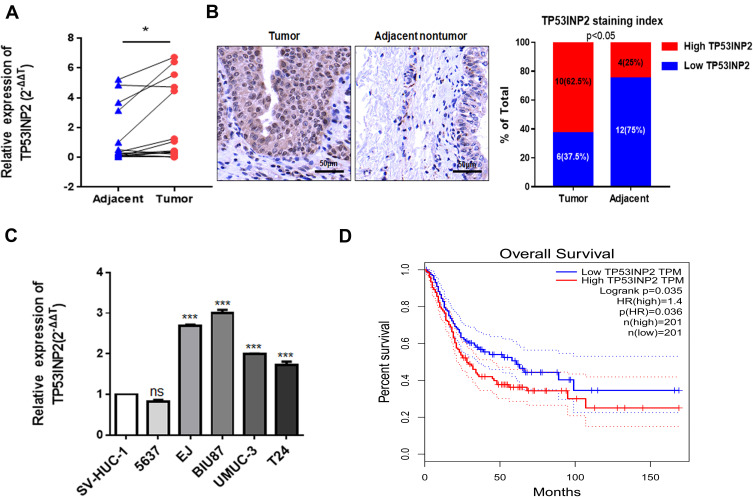
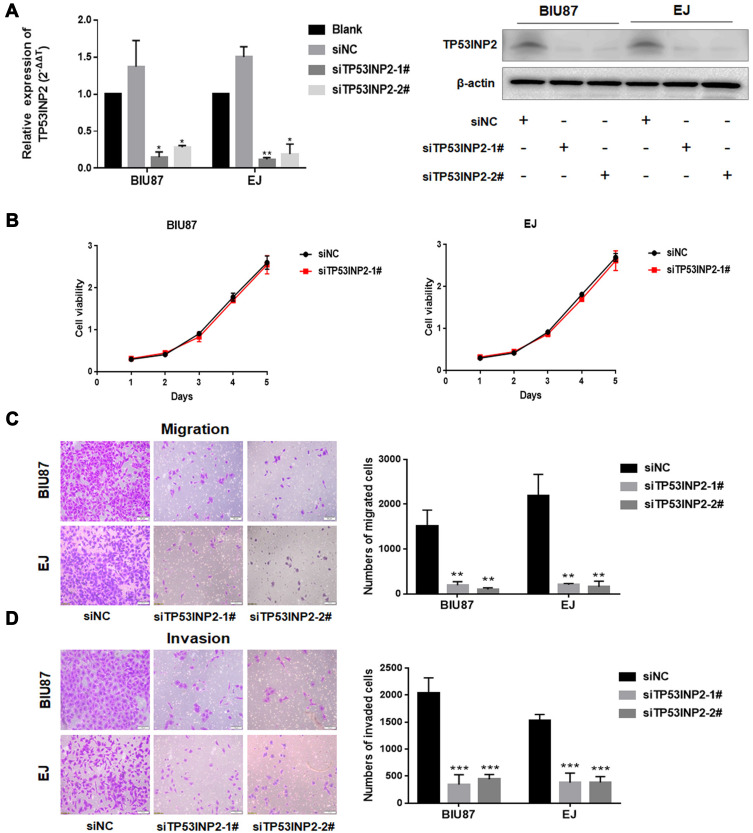
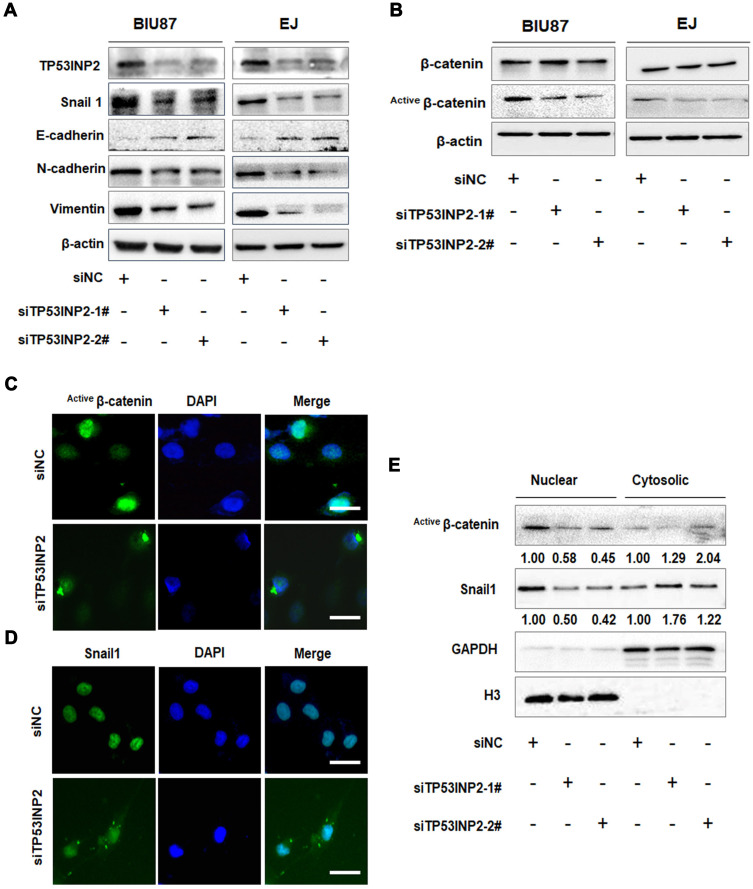
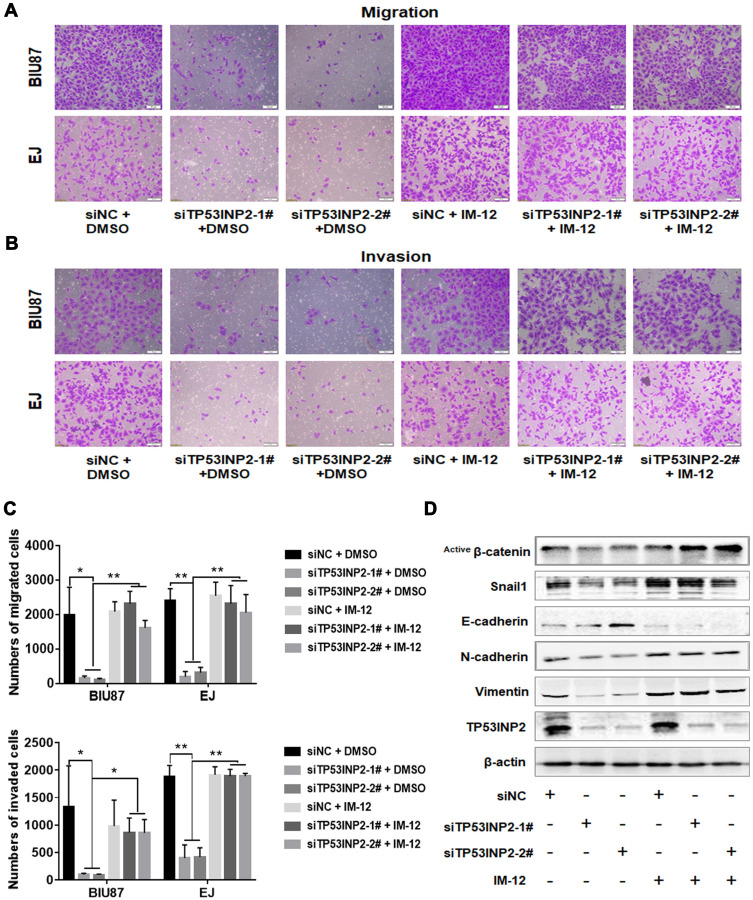
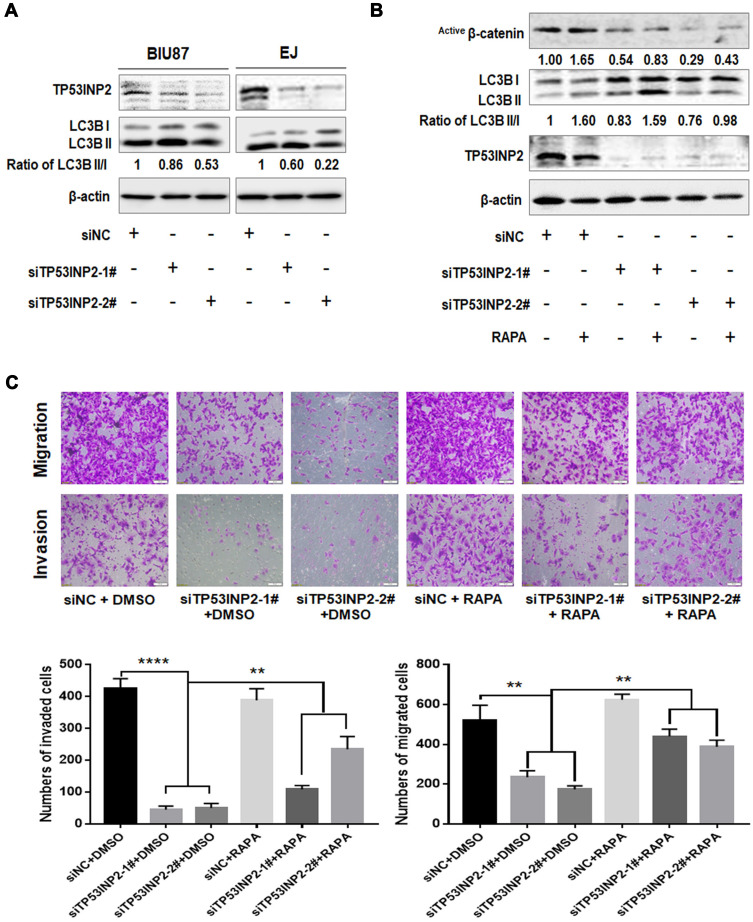
In this study, we report that high expression of TP53INP2 is correlated with poor patient survival in bladder cancer. Results demonstrate that the depletion of TP53INP2 inhibits the migration, invasion, and epithelial-to-mesenchymal transition (EMT) of bladder cancer cells. The underlying mechanism was explored. Results show that the TP53INP2 knockdown suppresses EMT by inhibiting the active non-phosphorylated β-catenin and decreasing the Snail1 levels. Furthermore, the glycogen synthase kinase-3 beta (GSK-3β) inhibitor IM-12 abrogates the effect of TP53INP2 silencing. Interestingly, the induction of autophagy partially abrogates the TP53INP2 knockdown-induced decrease in active β-catenin and inhibition of migration and invasion in bladder cancer cells.
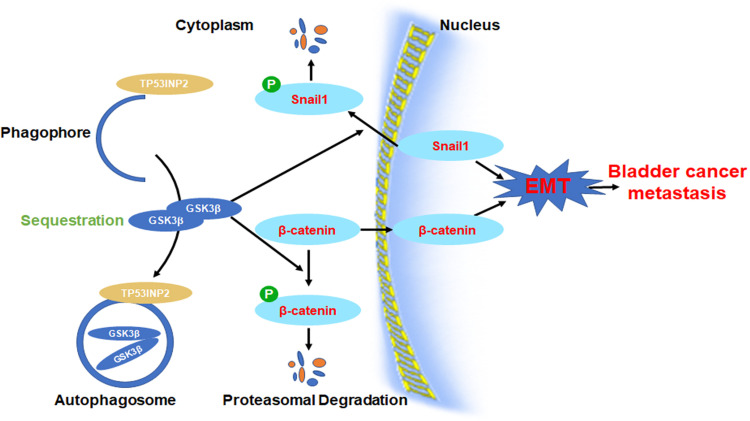
In summary, our results show that the downregulation of TP53INP2 inhibits EMT via the GSK-3β/β-catenin/Snail1 pathway in bladder cancer. The findings of this study uncover the novel role of TP53INP2 and offer new insights into bladder cancer clinical therapy.
肿瘤蛋白p53诱导核蛋白2(TP53INP2)是一种自噬蛋白,对自噬体形成至关重要。自噬失调与包括癌症在内的多种人类疾病相关。本研究旨在探讨TP53INP2在膀胱癌中的作用。
采用定量实时聚合酶链反应检测mRNA水平。通过免疫组织化学和蛋白质印迹法检测TP53INP2蛋白的相对表达。使用CCK-8检测试剂盒和Transwell实验研究TP53INP2沉默对膀胱癌细胞增殖、迁移和侵袭的影响。此外,还进行了转染和免疫荧光实验。
在本研究中,我们报告TP53INP2高表达与膀胱癌患者的不良生存相关。结果表明,TP53INP2的缺失抑制了膀胱癌细胞的迁移、侵袭和上皮-间质转化(EMT)。对潜在机制进行了探索。结果显示,TP53INP2基因敲低通过抑制活性非磷酸化β-连环蛋白和降低Snail1水平来抑制EMT。此外,糖原合酶激酶-3β(GSK-⅜)抑制剂IM-12消除了TP53INP2沉默的作用。有趣的是,自噬的诱导部分消除了TP53INP2基因敲低诱导的活性β-连环蛋白减少以及对膀胱癌细胞迁移和侵袭的抑制。
总之,我们的结果表明,TP53INP2的下调通过GSK-3β/β-连环蛋白/Snail1途径抑制膀胱癌中的EMT。本研究结果揭示了TP53INP2的新作用,并为膀胱癌临床治疗提供了新的见解。