Fan Tao, Sun Nan, He Jie
Department of Oncology, Renmin Hospital of Wuhan University, Wuhan, China.
Department of Thoracic Surgery, National Cancer Center, National Clinical Research Center for Cancer, Cancer Hospital, Chinese Academy of Medical Sciences, Peking Union Medical College, Beijing, China.
Front Oncol. 2020 Sep 23;10:1728. doi: 10.3389/fonc.2020.01728. eCollection 2020.
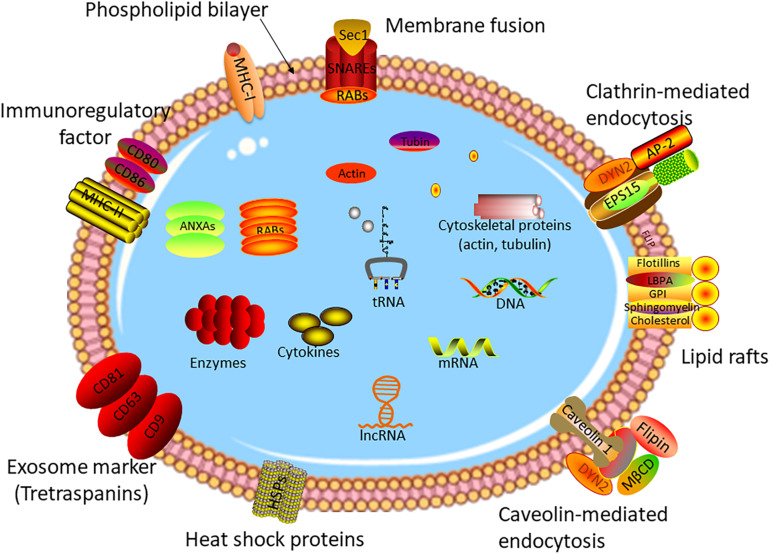
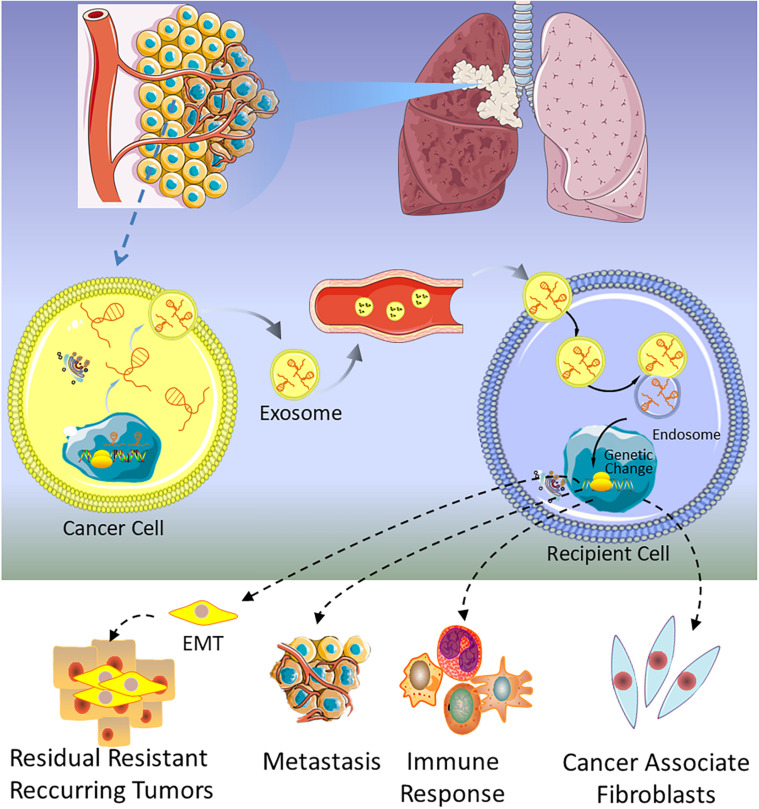
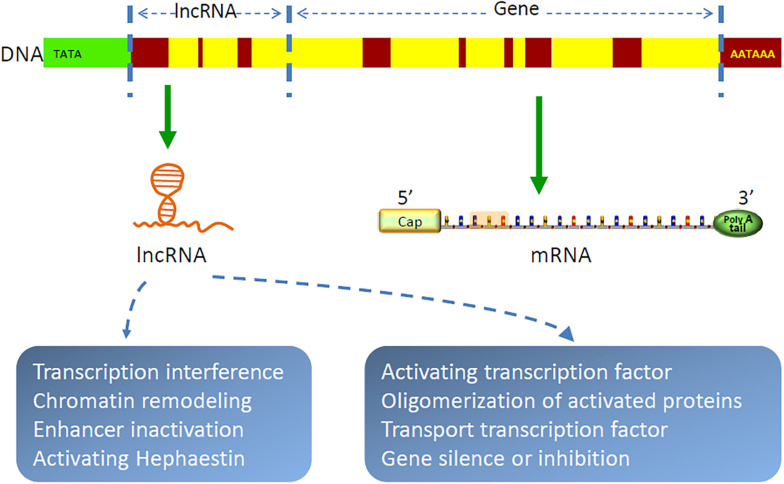
As extracellular vesicles, exosomes are released from most cells to perform cell-cell communication. Recent studies have shown that exosomes could be released into tumor microenvironment and blood to promote tumor progression through packaging and transmitting various bioactive molecules, such as cholesterol, proteins, lipids, miRNAs, mRNAs, and long non-coding RNAs (lncRNAs) to distant cells. LncRNAs have emerged as a major class of non-coding transcripts. A lot of LncRNAs have been discovered during the past few years of research on genomics. They have been proven to participate in various biological functions and disease processes through multiple mechanisms. In this review, we analyzed the role of exosome-derived lncRNAs in lung carcinogenesis and metastasis. We also highlight opportunities for the clinical potential of exosomes with specific lncRNAs as biomarkers and therapeutic intervention in lung cancer.
作为细胞外囊泡,外泌体由大多数细胞释放以进行细胞间通讯。最近的研究表明,外泌体可释放到肿瘤微环境和血液中,通过包装和传递各种生物活性分子,如胆固醇、蛋白质、脂质、微小RNA(miRNA)、信使RNA(mRNA)和长链非编码RNA(lncRNA)至远处细胞,从而促进肿瘤进展。LncRNA已成为一类主要的非编码转录本。在过去几年的基因组学研究中发现了许多LncRNA。它们已被证明通过多种机制参与各种生物学功能和疾病过程。在本综述中,我们分析了外泌体来源的lncRNA在肺癌发生和转移中的作用。我们还强调了具有特定lncRNA的外泌体作为肺癌生物标志物和治疗干预的临床潜力的机会。