Han Shenqi, Qi Yongqiang, Luo Yiming, Chen Xiaoping, Liang Huifang
Hepatic Surgery Center, Tongji Hospital, Tongji Medical College, Huazhong University of Science and Technology, Wuhan, China.
Hubei Key Laboratory of Hepato-Pancreato-Biliary Diseases, Wuhan, China.
Front Oncol. 2021 Jan 14;10:617837. doi: 10.3389/fonc.2020.617837. eCollection 2020.
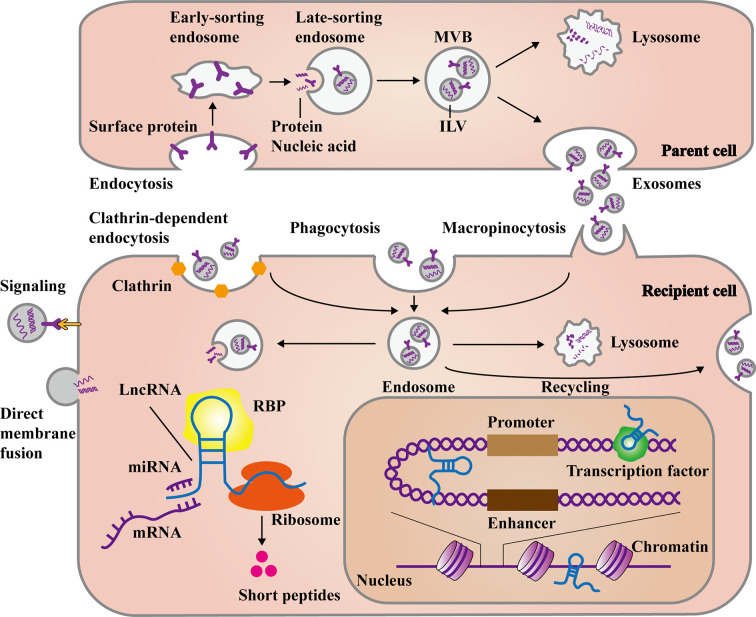
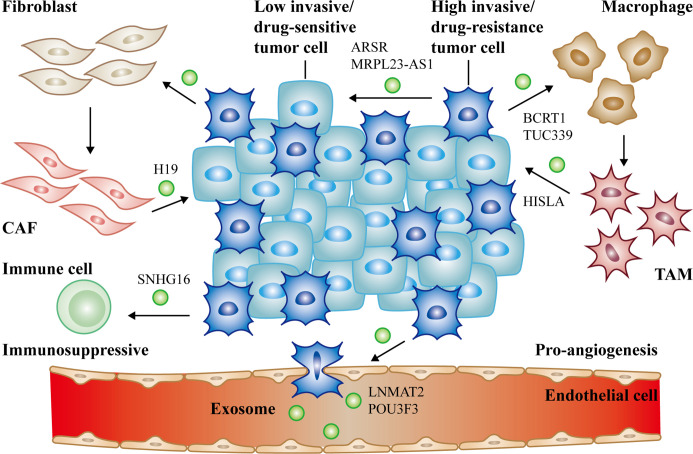
Exosomes are small membranous vesicles released by many kinds of cells, and are indispensable in cell-to-cell communication by delivering functional biological components both locally and systemically. Long non-coding RNAs (lncRNAs) are long transcripts over 200 nucleotides that exhibit no or limited protein-coding potentials. LncRNAs are dramatic gene expression regulators, and can be selectively sorted into exosomes. Exosomal lncRNAs derived from cancer cells and stromal cells can mediate the generation of pre-metastatic niches (PMNs) and thus promote the progression of cancer. In this review, we summarized the fundamental biology and characteristics of exosomal lncRNAs. Besides, we provided an overview of current research on functions of exosomal lncRNAs between cancer cells and non-cancer cells. A deep understanding of exosomal lncRNAs' role in cancer will be facilitated to find important implications for cancer development and treatment.
外泌体是多种细胞释放的小膜泡,通过在局部和全身传递功能性生物成分,在细胞间通讯中不可或缺。长链非编码RNA(lncRNAs)是长度超过200个核苷酸的长转录本,不具有或仅有有限的蛋白质编码潜能。lncRNAs是重要的基因表达调节因子,可被选择性地分选到外泌体中。源自癌细胞和基质细胞的外泌体lncRNAs可介导前转移微环境(PMN)的形成,从而促进癌症进展。在本综述中,我们总结了外泌体lncRNAs的基本生物学特性。此外,我们概述了目前关于外泌体lncRNAs在癌细胞与非癌细胞之间功能的研究。深入了解外泌体lncRNAs在癌症中的作用将有助于发现其对癌症发展和治疗的重要意义。