Área de Bioquímica y Biología Molecular, Departamento de Biología Molecular, Facultad de Veterinaria, Universidad de León, 24071 León, Spain.
Instituto de Biología Molecular, Genómica y Proteómica (INBIOMIC), Universidad de León, 24071 León, Spain.
Int J Mol Sci. 2020 Oct 18;21(20):7696. doi: 10.3390/ijms21207696.
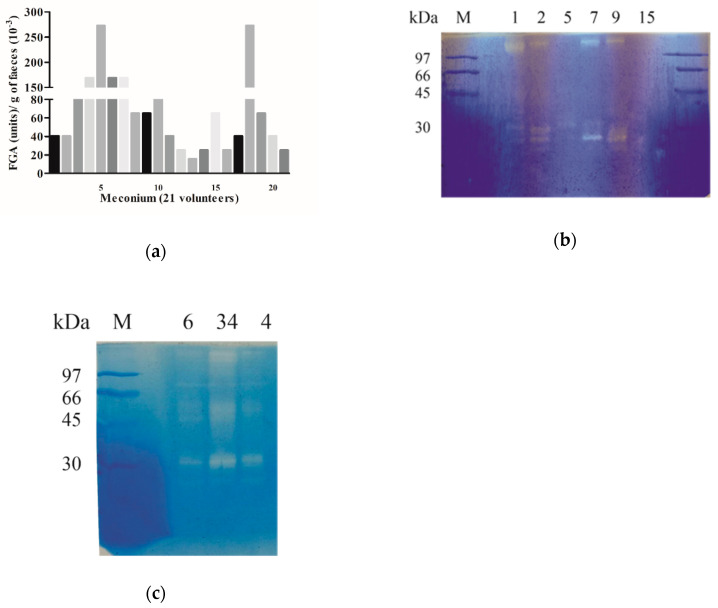
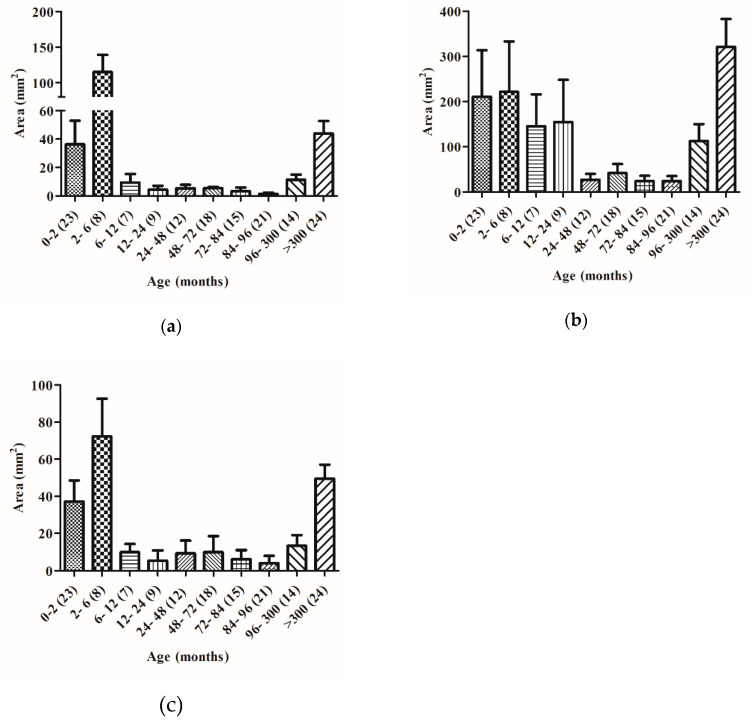
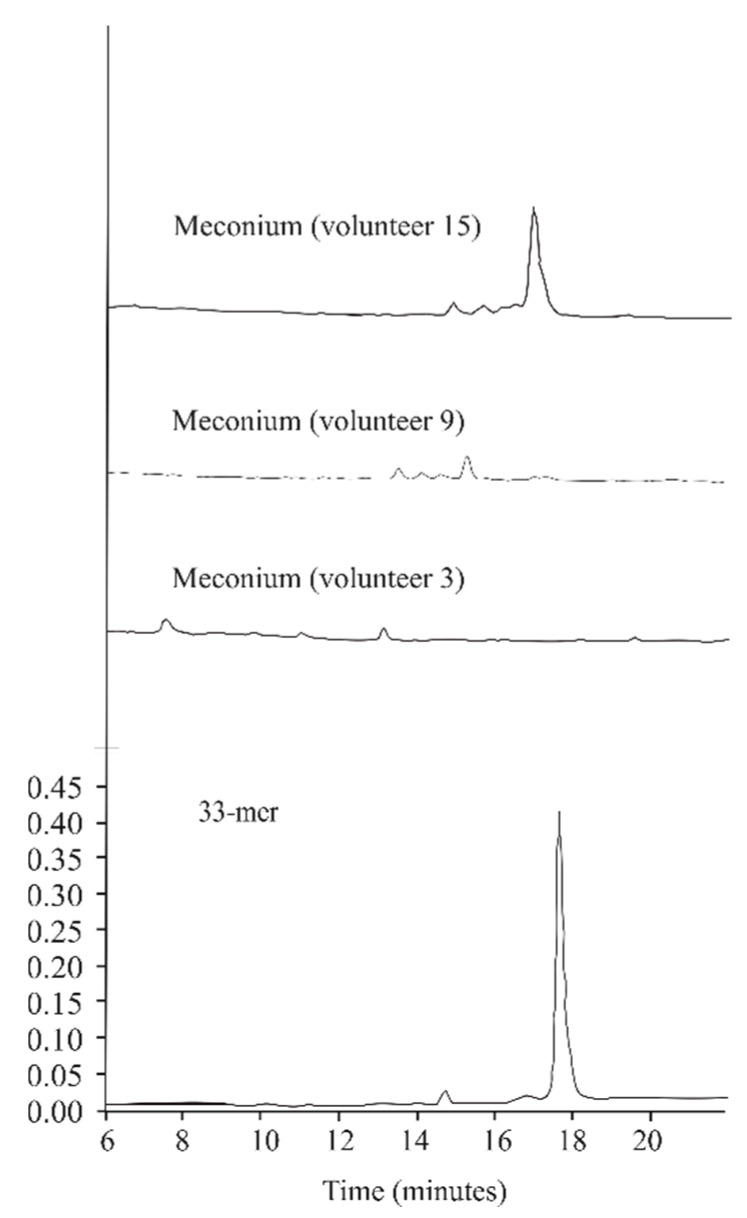
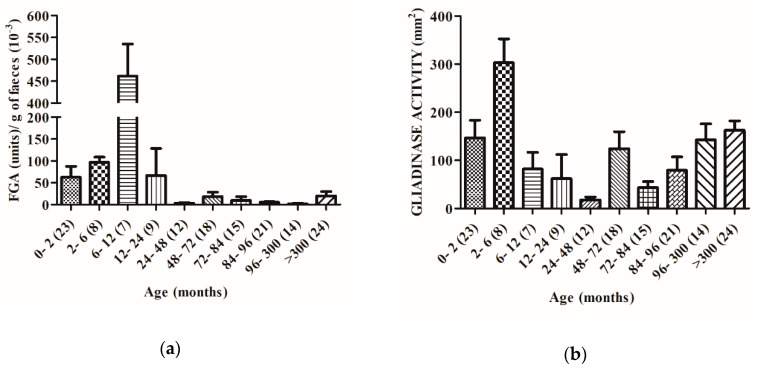
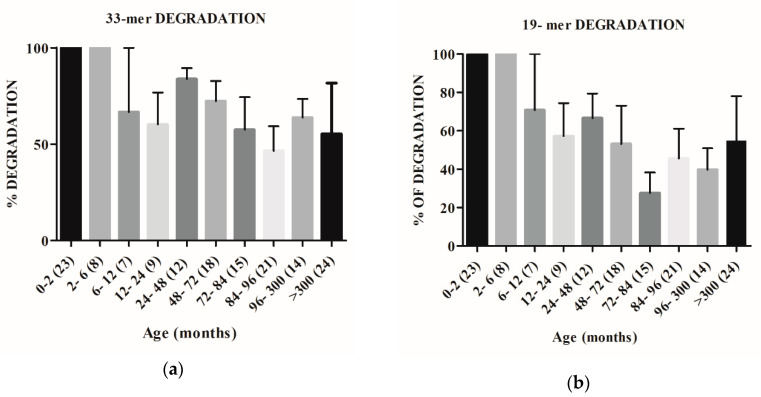
The human gastrointestinal system has the capacity to metabolize dietary gluten. The capacity to degrade gliadin-derived peptide is present in humans from birth and increases during the first stages of life (up to 6-12 months of age). Fecal samples from 151 new-born and adult non-celiac disease (NCD) volunteers were collected, and glutenase and glianidase activities were evaluated. The capacity of total fecal proteins to metabolize 33-mer, 19-mer, and 13-mer gliadin peptides was also evaluated by high-performance liquid chromatography (HPLC). Feces from new-borns (meconium) showed glutenase and gliadinase activities, and peptidase activity against all three gliadin peptides. Maximal gluten degradative activity was observed in fecal samples from the youngest volunteers (0-12 months old). After the age of nine months, the gluten digestive capacity of gastrointestinal tract decreases and, from ±8 years old, individuals lose the ability to completely degrade toxic peptides. The gastrointestinal proteases involved in gluten digestion: elastase 2A, elastase 3B, and carboxipeptidase A1 are present from earlier stages of life. The human digestive tract contains the proteins capable of metabolizing gluten from birth, even before starting gluten intake. Humans are born with the ability to digest gluten and to completely degrade the potentially toxic gliadin-derived peptides (33-, 19-, and 13-mer).
人类的胃肠道系统具有代谢膳食 gluten 的能力。从出生起,人类就具有降解来自 gliadin 的肽的能力,并且这种能力在生命的最初阶段(6-12 个月大)增加。收集了 151 名新生和成年非乳糜泻(NCD)志愿者的粪便样本,并评估了 glutenase 和 glianidase 活性。还通过高效液相色谱法(HPLC)评估了总粪便蛋白代谢 33-mer、19-mer 和 13-mer gliadin 肽的能力。新生儿(胎粪)的粪便显示出 glutenase 和 gliadinase 活性,以及针对所有三种 gliadin 肽的肽酶活性。在最年轻的志愿者(0-12 个月大)的粪便样本中观察到最大的 gluten 降解活性。九个月后,胃肠道的 gluten 消化能力下降,从 8 岁左右开始,个体失去完全降解毒性肽的能力。参与 gluten 消化的胃肠道蛋白酶:弹性蛋白酶 2A、弹性蛋白酶 3B 和羧肽酶 A1 从生命的早期阶段就存在。人类的消化道从出生起就含有能够代谢 gluten 的蛋白质,甚至在开始摄入 gluten 之前。人类天生就具有消化 gluten 和完全降解潜在毒性的 gliadin 衍生肽(33-mer、19-mer 和 13-mer)的能力。