Section of Pediatric Gastroenterology, Department of Pediatrics and Child Health, Max Rady College of Medicine, University of Manitoba, Winnipeg, MB R3A 1S1, Canada.
Nutrients. 2021 Nov 9;13(11):3993. doi: 10.3390/nu13113993.
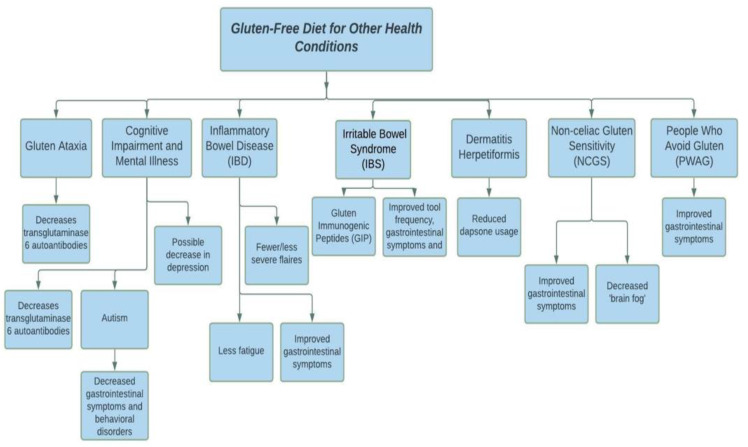
The gluten-free diet (GFD) has gained popularity beyond its main medical indication as the treatment for gluten-induced immune-mediated disorders such as celiac disease (CD), dermatitis herpetiformis, gluten ataxia, wheat allergy, and non-celiac gluten sensitivity. However, the diet carries some disadvantages such as elevated costs, nutritional deficiencies, and social and psychological barriers. The present work aims to review indications, proven benefits, and adverse events of a gluten-free diet. Close follow-up with patients following the diet is recommended. More data is needed to assess the effectiveness of the diet in managing mental and cognitive disorders and to establish a connection between the brain and gluten.
无麸质饮食(GFD)已超越其主要医学适应症,即用于治疗麸质引起的免疫介导性疾病,如乳糜泻(CD)、疱疹样皮炎、麸质共济失调、小麦过敏和非乳糜泻麸质敏感性。然而,这种饮食也存在一些缺点,如费用增加、营养缺乏以及社会和心理障碍。本研究旨在综述无麸质饮食的适应证、已证实的益处和不良反应。建议对遵循该饮食的患者进行密切随访。需要更多的数据来评估饮食在治疗精神和认知障碍方面的有效性,并确定大脑与麸质之间的联系。