Department of Dermatology, Peking Union Medical College Hospital, Chinese Academy of Medical Sciences, National Clinical Research Center for Skin and Immune Diseases, Beijing, 100730, China.
Institute of Basic Medical Sciences, Chinese Academy of Medical Sciences, School of Basic Medicine, Peking Union Medical College, Beijing, 100005, China.
Sci Rep. 2020 Oct 22;10(1):17989. doi: 10.1038/s41598-020-75135-0.
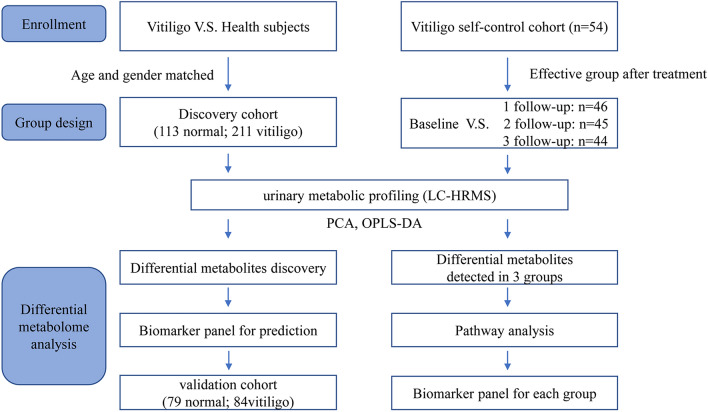
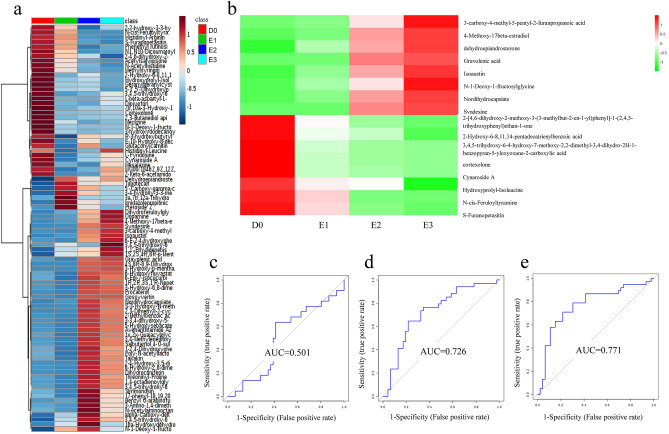
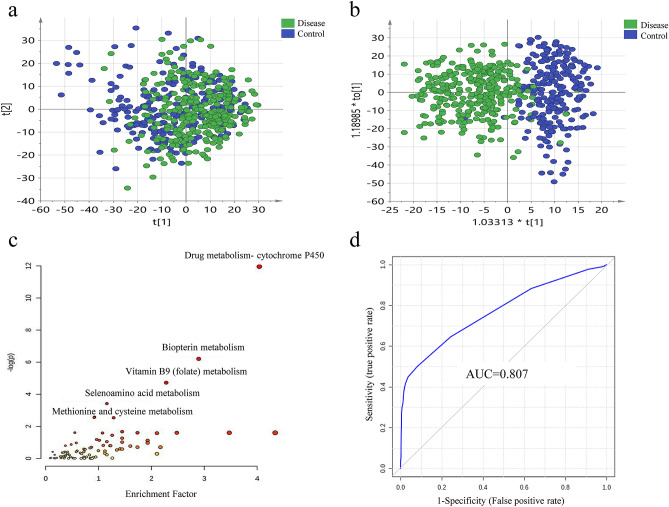
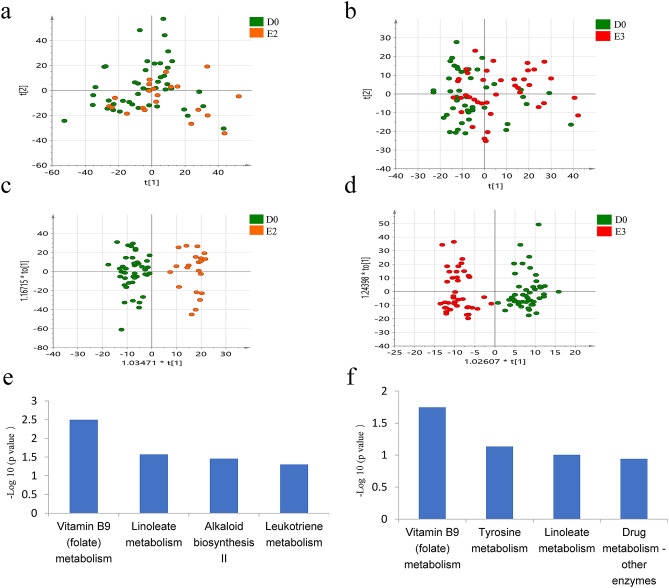
Urinary metabolomics is a useful non-invasive tool for large-scale screening of disease-related metabolites. However, no comprehensive urinary metabolomic analysis of vitiligo is presently available. To investigate the urine metabolic pattern of vitiligo patients, we conducted a combined cross-sectional and prospective self-control cohort study and an untargeted urinary metabolomic analysis. In the cross-sectional study, 295 vitiligo patients and 192 age- and sex-matched controls were enrolled, and 71 differential metabolites between two groups were identified. Pathway enrichment analysis revealed that drug metabolism-cytochrome P450, biopterin metabolism, vitamin B9 (folate) metabolism, selenoamino acid metabolism, and methionine and cysteine metabolism showed significant enrichment in vitiligo patients compared with the status in healthy controls. In the self-control cohort, 46 active vitiligo patients were recruited to analyse the urinary metabolic signatures after treatment. All of these patients were asked to undertake follow-up visits every 2 months three times after first consulting and the disease stage was evaluated compared with that at the last visit. Folate metabolism, linoleate metabolism, leukotriene metabolism, alkaloid biosynthesis, and tyrosine metabolism were predicted to be involved in vitiligo activity. Our study is the first attempt to reveal urinary metabolic signatures of vitiligo patients and provides new insights into the metabolic mechanisms of vitiligo.
尿代谢组学是一种用于大规模筛选疾病相关代谢物的有用的非侵入性工具。然而,目前还没有关于白癜风的全面尿代谢组学分析。为了研究白癜风患者的尿液代谢模式,我们进行了一项联合横断面和前瞻性自身对照队列研究以及非靶向性尿代谢组学分析。在横断面研究中,纳入了 295 名白癜风患者和 192 名年龄和性别匹配的对照者,鉴定出两组之间存在 71 个差异代谢物。通路富集分析显示,与健康对照组相比,药物代谢-细胞色素 P450、生物蝶呤代谢、维生素 B9(叶酸)代谢、硒代氨基酸代谢和蛋氨酸和半胱氨酸代谢在白癜风患者中明显富集。在自身对照队列中,招募了 46 名活动性白癜风患者来分析治疗后的尿液代谢特征。所有这些患者都被要求在首次就诊后每 2 个月进行三次随访,并与最后一次就诊时的病情阶段进行比较。预测叶酸代谢、亚油酸代谢、白三烯代谢、生物碱生物合成和酪氨酸代谢参与了白癜风的活动。本研究首次尝试揭示白癜风患者的尿液代谢特征,并为白癜风的代谢机制提供了新的见解。