Yu Xiang, Wang Shui-Hua, Zhang Yu-Dong
School of Informatics, University of Leicester, Leicester, LE1 7RH, UK.
School of Architecture Building and Civil engineering, Loughborough University, Loughborough, LE11 3TU, UK.
Inf Process Manag. 2021 Jan;58(1):102411. doi: 10.1016/j.ipm.2020.102411. Epub 2020 Oct 19.
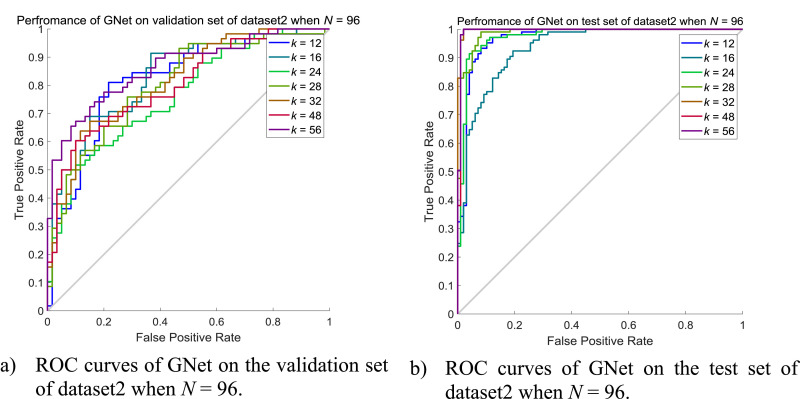
Pneumonia is a global disease that causes high children mortality. The situation has even been worsening by the outbreak of the new coronavirus named COVID-19, which has killed more than 983,907 so far. People infected by the virus would show symptoms like fever and coughing as well as pneumonia as the infection progresses. Timely detection is a public consensus achieved that would benefit possible treatments and therefore contain the spread of COVID-19. X-ray, an expedient imaging technique, has been widely used for the detection of pneumonia caused by COVID-19 and some other virus. To facilitate the process of diagnosis of pneumonia, we developed a deep learning framework for a binary classification task that classifies chest X-ray images into normal and pneumonia based on our proposed CGNet. In our CGNet, there are three components including feature extraction, graph-based feature reconstruction and classification. We first use the transfer learning technique to train the state-of-the-art convolutional neural networks (CNNs) for binary classification while the trained CNNs are used to produce features for the following two components. Then, by deploying graph-based feature reconstruction, we, therefore, combine features through the graph to reconstruct features. Finally, a shallow neural network named GNet, a one layer graph neural network, which takes the combined features as the input, classifies chest X-ray images into normal and pneumonia. Our model achieved the best accuracy at 0.9872, sensitivity at 1 and specificity at 0.9795 on a public pneumonia dataset that includes 5,856 chest X-ray images. To evaluate the performance of our proposed method on detection of pneumonia caused by COVID-19, we also tested the proposed method on a public COVID-19 CT dataset, where we achieved the highest performance at the accuracy of 0.99, specificity at 1 and sensitivity at 0.98, respectively.
肺炎是一种导致儿童高死亡率的全球性疾病。新型冠状病毒COVID-19的爆发使这种情况更加恶化,截至目前,该病毒已导致超过983,907人死亡。感染该病毒的人会出现发烧、咳嗽等症状,随着感染的进展还会出现肺炎症状。及时检测是达成的一项公众共识,这将有利于可能的治疗,从而遏制COVID-19的传播。X射线是一种便捷的成像技术,已被广泛用于检测由COVID-19和其他一些病毒引起的肺炎。为了促进肺炎的诊断过程,我们基于提出的CGNet开发了一个用于二分类任务的深度学习框架,该框架将胸部X射线图像分类为正常和肺炎两类。在我们的CGNet中,有三个组件,包括特征提取、基于图的特征重建和分类。我们首先使用迁移学习技术训练用于二分类的先进卷积神经网络(CNN),而训练好的CNN用于为以下两个组件生成特征。然后,通过部署基于图的特征重建,我们通过图来组合特征以进行特征重建。最后,一个名为GNet的浅层神经网络,即一层图神经网络,将组合后的特征作为输入,将胸部X射线图像分类为正常和肺炎两类。在一个包含5856张胸部X射线图像的公共肺炎数据集上,我们的模型取得了最佳准确率0.9872、灵敏度1和特异性0.9795。为了评估我们提出的方法在检测由COVID-19引起的肺炎方面的性能,我们还在一个公共COVID-19 CT数据集上测试了该方法,在该数据集上我们分别取得了最高性能,准确率为0.99、特异性为1和灵敏度为0.98。