Research Laboratory of Electronics, Massachusetts Institute of Technology, Cambridge, Massachusetts 02139, United States.
McGovern Institute for Brain Research, Massachusetts Institute of Technology, Cambridge, Massachusetts 02139, United States.
ACS Chem Neurosci. 2020 Nov 18;11(22):3802-3813. doi: 10.1021/acschemneuro.0c00577. Epub 2020 Oct 27.
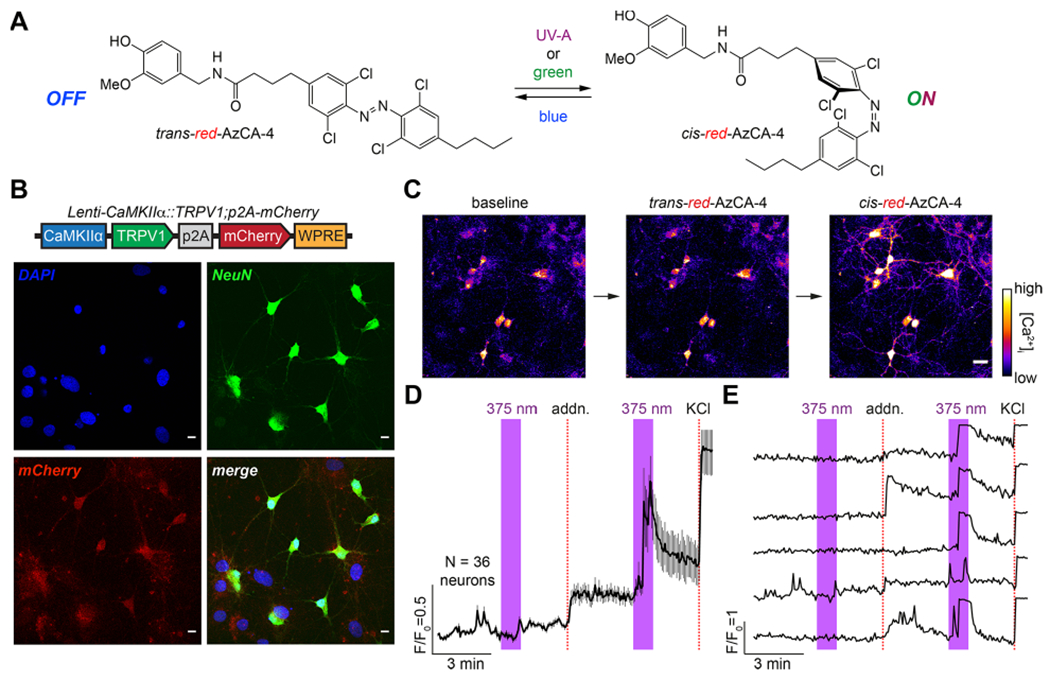
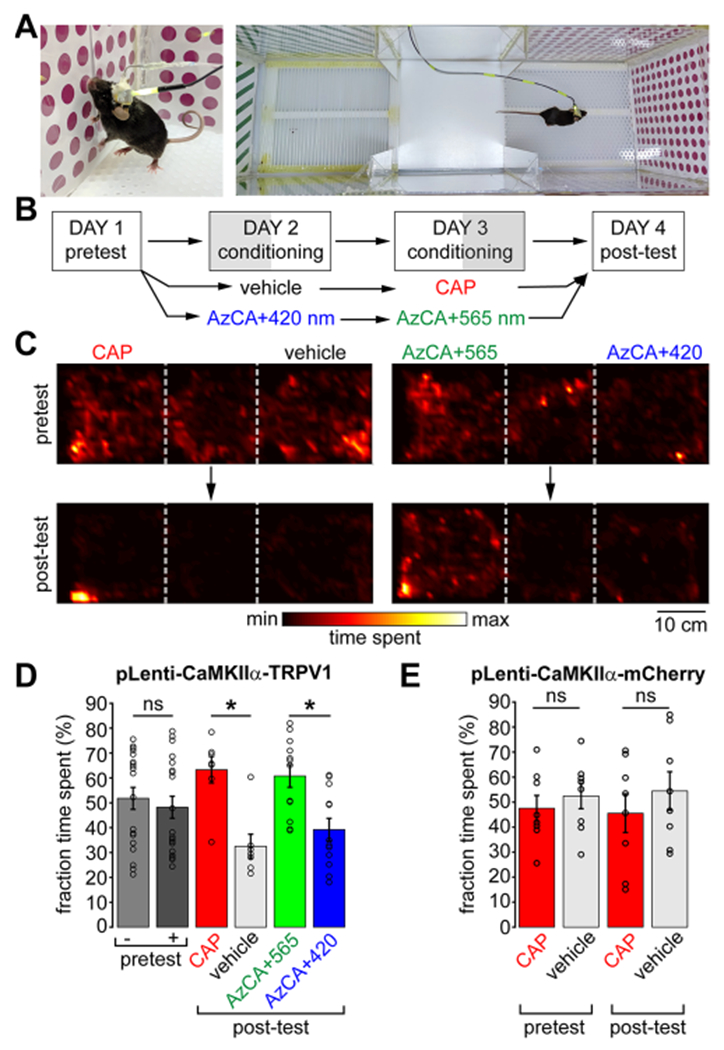
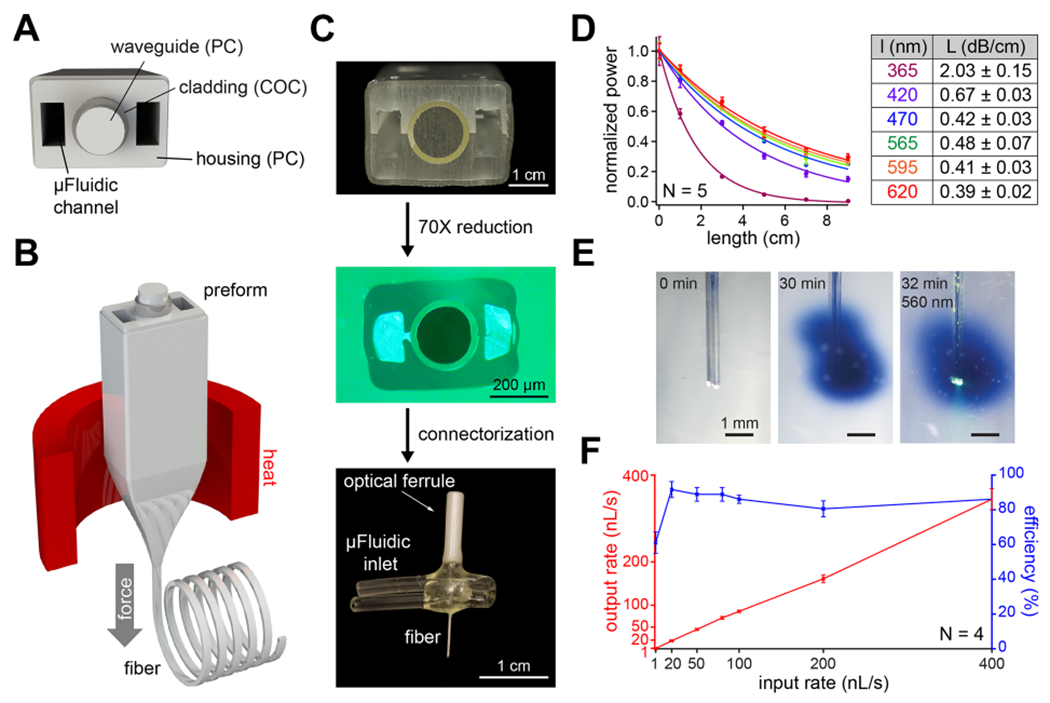
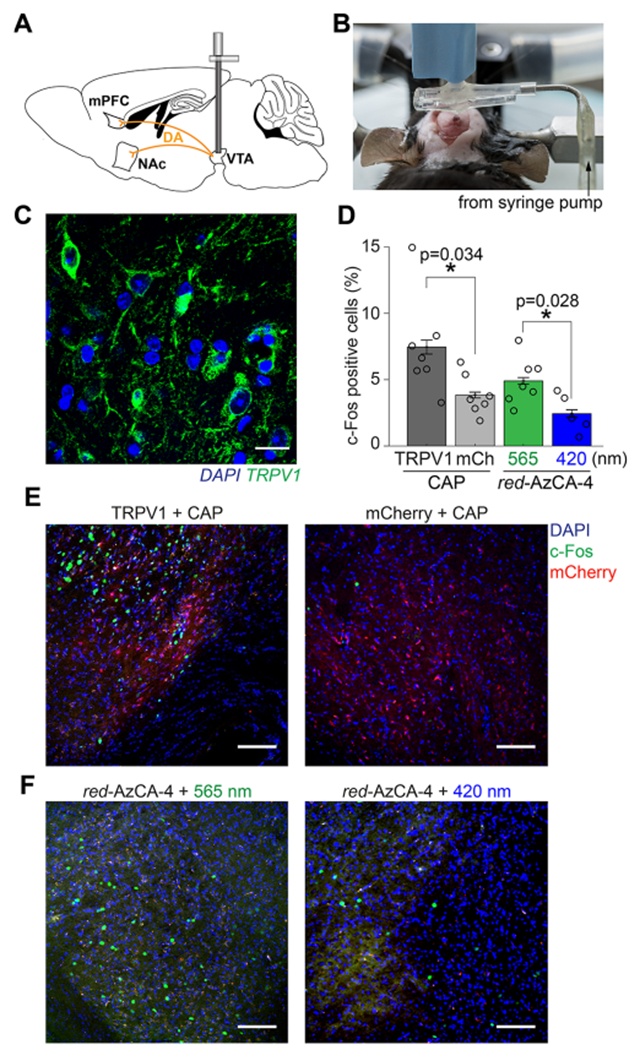
Photoswitchable ligands can add an optical switch to a target receptor or signaling cascade and enable reversible control of neural circuits. The application of this approach, termed photopharmacology, to behavioral experiments has been impeded by a lack of integrated hardware capable of delivering both light and compounds to deep brain regions in moving subjects. Here, we devise a hybrid photochemical genetic approach to target neurons using a photoswitchable agonist of the capsaicin receptor TRPV1, -AzCA-4. Using multifunctional fibers with optical and microfluidic capabilities, we delivered a transgene coding for TRPV1 into the ventral tegmental area (VTA). This sensitized excitatory VTA neurons to -AzCA-4, allowing us to optically control conditioned place preference in mice, thus extending applications of photopharmacology to behavioral experiments. Applied to endogenous receptors, our approach may accelerate future studies of molecular mechanisms underlying animal behavior.
光致开关配体可以为靶受体或信号级联添加光学开关,并实现对神经回路的可逆控制。这种方法,称为光药理学,在行为实验中的应用受到缺乏能够向运动主体的深部脑区同时输送光和化合物的集成硬件的阻碍。在这里,我们设计了一种混合光化学遗传方法,使用辣椒素受体 TRPV1 的光致开关激动剂 -AzCA-4 来靶向神经元。使用具有光学和微流控功能的多功能纤维,我们将编码 TRPV1 的转基因递送到腹侧被盖区 (VTA)。这使兴奋性 VTA 神经元对 -AzCA-4 敏感,使我们能够在小鼠中用光控制条件性位置偏好,从而将光药理学的应用扩展到行为实验中。应用于内源性受体,我们的方法可能会加速对动物行为背后的分子机制的未来研究。