Liao Shuilin, Wang Yayu, Liu Huan, Fan Guangyi, Sahu Sunil Kumar, Jin Tao, Chen Jianwei, Zhang Pengfan, Gram Lone, Strube Mikael Lenz, Shi Qiong, Lee Simon Ming Yuen, Liu Xin
BGI Education Center, University of Chinese Academy of Sciences, Shenzhen, China.
State Key Laboratory of Agricultural Genomics, BGI-Shenzhen, Shenzhen, China.
mSystems. 2020 Oct 27;5(5):e00851-19. doi: 10.1128/mSystems.00851-19.
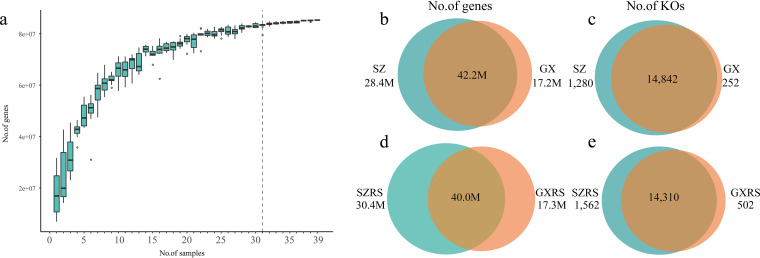
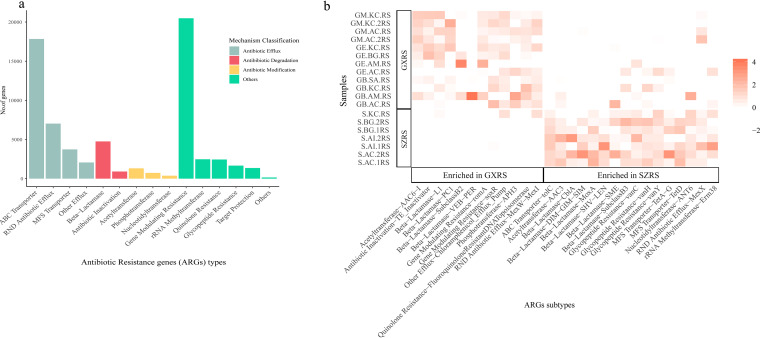
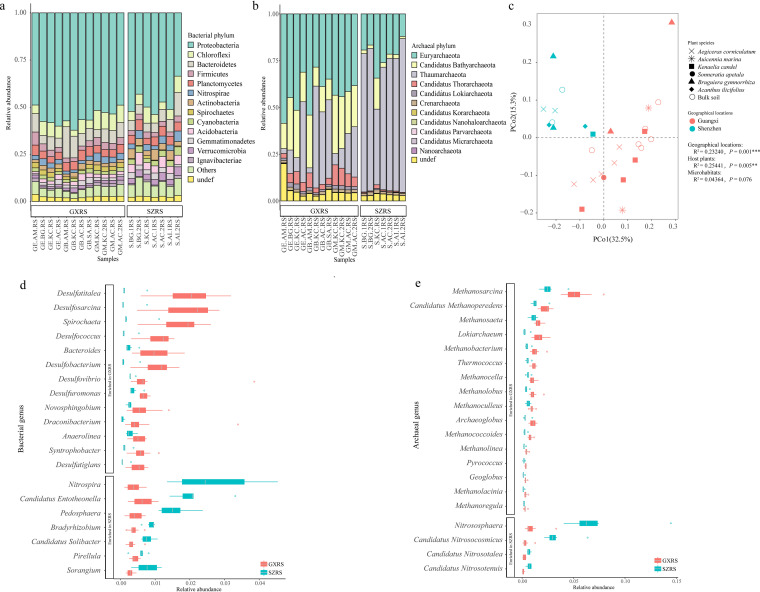
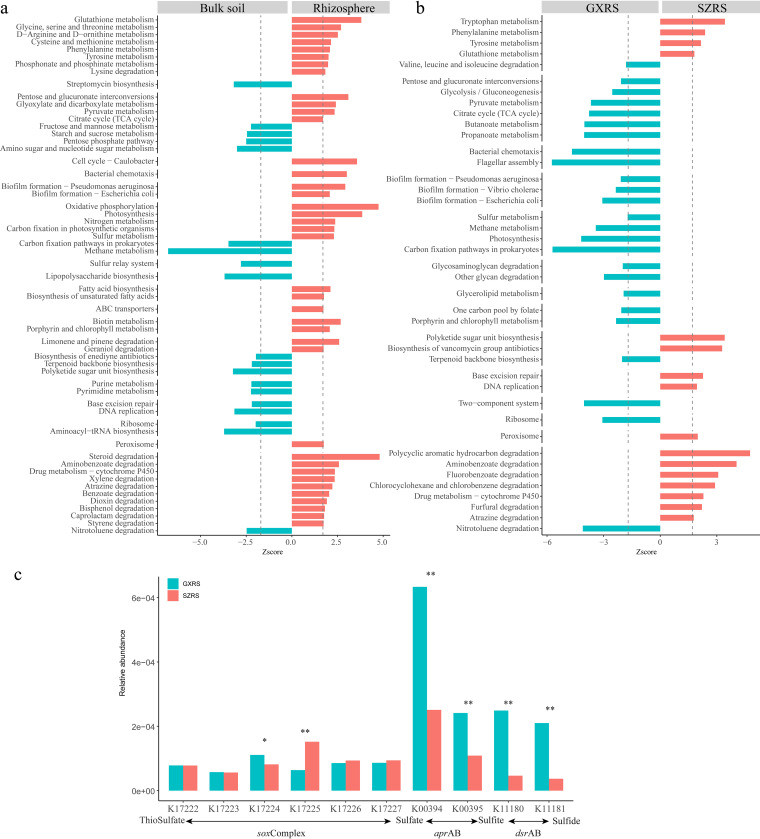
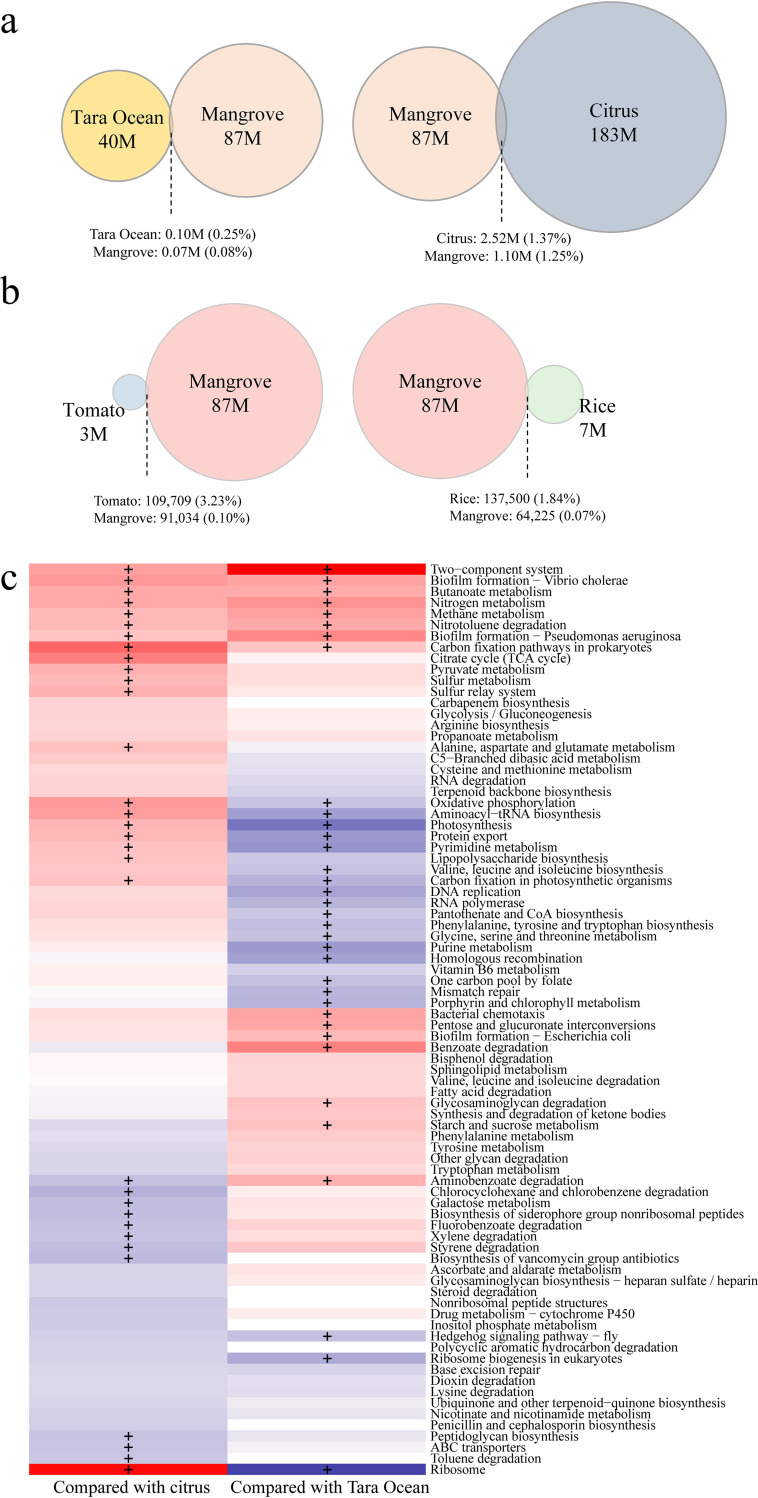
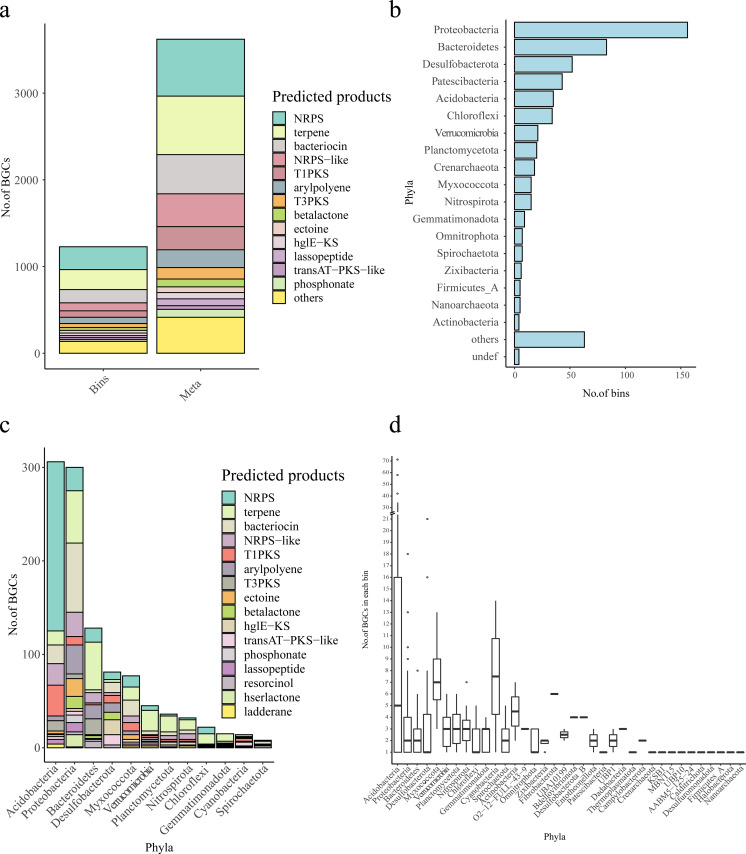
Mangroves, as important and special ecosystems, create unique ecological environments for examining the microbial gene capacity and potential for producing bioactive compounds. However, little is known about the biogeochemical implications of microbiomes in mangrove ecosystems, especially the variations between pristine and anthropogenic mangroves. To elucidate this, we investigated the microbial taxonomic and functional shifts of the mangrove microbiomes and their potential for bioactive compounds in two different coastal mangrove ecosystems in southern China. A gene catalogue, including 87 million unique genes, was constructed, based on deep shotgun metagenomic sequencing. Differentially enriched bacterial and archaeal taxa between pristine mangroves (Guangxi) and anthropogenic mangroves (Shenzhen) were found. The and ammonia-oxidizing archaea, specifically, were more abundant in Shenzhen mangroves, while sulfate-reducing bacteria and methanogens were more abundant in Guangxi mangroves. The results of functional analysis were consistent with the taxonomic results, indicating that the Shenzhen mangrove microbiome has a higher abundance of genes involved in nitrogen metabolism while the Guangxi mangrove microbiome has a higher capacity for sulfur metabolism and methanogenesis. Biosynthetic gene clusters were identified in the metagenome data and in hundreds of reconstructed nonredundant microbial genomes, respectively. Notably, we found different biosynthetic potential in different taxa, and we identified three high quality and novel genomes with a large number of BGCs. In total, 67,278 unique genes were annotated with antibiotic resistance, indicating the prevalence and persistence in multidrug-resistant genes in the mangrove microbiome. This study comprehensively described the taxonomy and functionality of mangrove microbiomes, including their capacity for secondary metabolite biosynthesis and their ability to resist antibiotics. The microbial taxonomic and functional characteristics differed between geographical locations, corresponding to the environmental condition of two diverse mangrove regions. A large number of microbial biosynthetic gene clusters encoding novel bioactivities were found, and this can serve as a valuable resource to guide novel bioactive compound discovery for potential clinical uses.
红树林作为重要且特殊的生态系统,为研究微生物基因能力和产生生物活性化合物的潜力创造了独特的生态环境。然而,对于红树林生态系统中微生物群落的生物地球化学影响,尤其是原始红树林和人为影响的红树林之间的差异,我们了解甚少。为了阐明这一点,我们调查了中国南方两个不同沿海红树林生态系统中红树林微生物群落的微生物分类和功能变化及其产生生物活性化合物的潜力。基于深度鸟枪法宏基因组测序,构建了一个包含8700万个独特基因的基因目录。我们发现了原始红树林(广西)和人为影响的红树林(深圳)之间差异富集的细菌和古菌类群。具体而言,深圳红树林中的硝化螺旋菌属和氨氧化古菌更为丰富,而广西红树林中的硫酸盐还原菌和产甲烷菌更为丰富。功能分析结果与分类结果一致,表明深圳红树林微生物群落中参与氮代谢的基因丰度较高,而广西红树林微生物群落具有更高的硫代谢和甲烷生成能力。分别在宏基因组数据和数百个重建的非冗余微生物基因组中鉴定出了生物合成基因簇。值得注意的是,我们在不同类群中发现了不同的生物合成潜力,并鉴定出了三个具有大量生物合成基因簇的高质量新基因组。总共有67278个独特基因被注释为具有抗生素抗性,这表明红树林微生物群落中多重耐药基因的普遍存在和持续性。本研究全面描述了红树林微生物群落的分类和功能,包括其次级代谢产物生物合成能力和抗生素抗性能力。微生物分类和功能特征因地理位置而异,这与两个不同红树林区域的环境条件相对应。我们发现了大量编码新生物活性的微生物生物合成基因簇,这可作为一种宝贵资源,指导发现潜在临床用途中的新型生物活性化合物。