Sundaram Prabhavathi, Abrahamse Heidi
Laser Research Centre, Faculty of Health Sciences, University of Johannesburg, Johannesburg 2028, South Africa.
Materials (Basel). 2020 Oct 28;13(21):4830. doi: 10.3390/ma13214830.
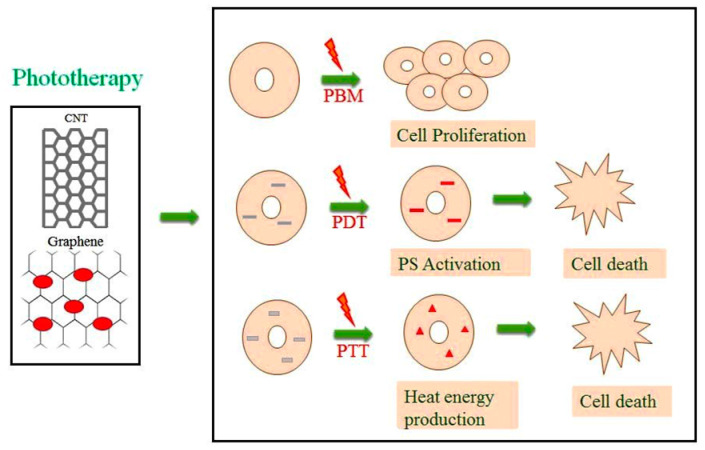
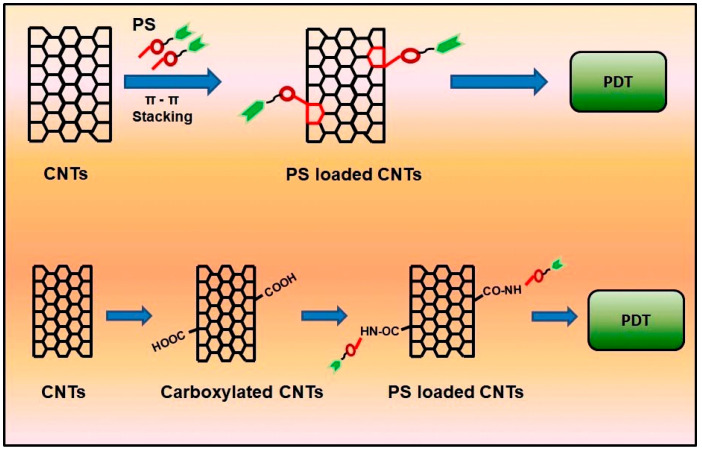
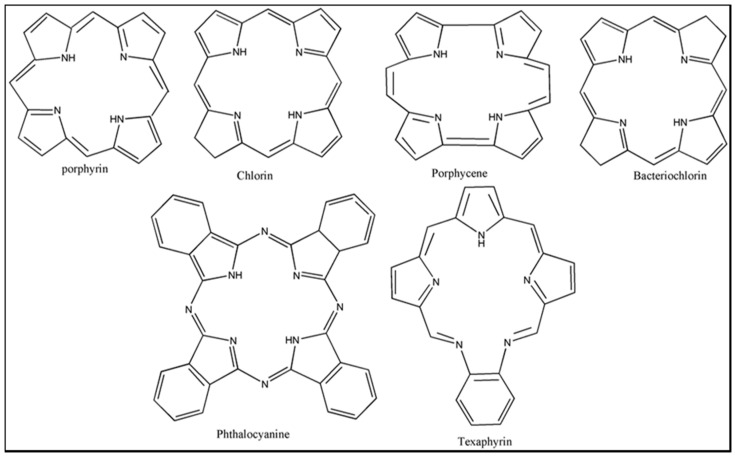
Carbon-based materials have attracted research interest worldwide due to their physical and chemical properties and wide surface area, rendering them excellent carrier molecules. They are widely used in biological applications like antimicrobial activity, cancer diagnosis, bio-imaging, targeting, drug delivery, biosensors, tissue engineering, dental care, and skin care. Carbon-based nanomaterials like carbon nanotubes and graphene have drawn more attention in the field of phototherapy due to their unique properties such as thermal conductivity, large surface area, and electrical properties. Phototherapy is a promising next-generation therapeutic modality for many modern medical conditions that include cancer diagnosis, targeting, and treatment. Phototherapy involves the major administration of photosensitizers (PSs), which absorb light sources and emit reactive oxygen species under cellular environments. Several types of nontoxic PSs are functionalized on carbon-based nanomaterials and have numerous advantages in cancer therapy. In this review, we discuss the potential role and combined effect of phototherapy and carbon nanomaterials, the mechanism and functionalization of PSs on nanomaterials, and their promising advantages in cancer therapy.
碳基材料因其物理和化学性质以及较大的表面积而在全球范围内引起了研究兴趣,使其成为出色的载体分子。它们广泛应用于生物医学领域,如抗菌活性、癌症诊断、生物成像、靶向治疗、药物递送、生物传感器、组织工程、牙齿护理和皮肤护理等。碳纳米管和石墨烯等碳基纳米材料因其独特的性质,如热导率、大表面积和电学性质,在光疗领域受到了更多关注。光疗是一种有前途的下一代治疗方式,可用于许多现代医学病症,包括癌症诊断、靶向治疗和治疗。光疗主要涉及光敏剂(PSs)的给药,光敏剂在细胞环境中吸收光源并产生活性氧。几种无毒的光敏剂在碳基纳米材料上进行了功能化,在癌症治疗中具有许多优势。在这篇综述中,我们讨论了光疗和碳纳米材料的潜在作用及联合效应、光敏剂在纳米材料上的作用机制和功能化,以及它们在癌症治疗中有望发挥的优势。