You Yu, Luo Lin, You Yanyan, Lin Yanjun, Hu Huiling, Chen Yunhui, Fu Chaomei, Xie Tian
College of Pharmacy, Chengdu University of Traditional Chinese Medicine, Chengdu, Sichuan China.
Department of Pharmacy and Laboratory Medicine, Sichuan Nursing Vocational College, 173 Lung Du Nan Road, Chengdu, 610100 Sichuan China.
Chin Med. 2020 Oct 28;15:114. doi: 10.1186/s13020-020-00394-y. eCollection 2020.
Spleen-deficiency syndrome, an important pathological change in traditional Chinese medicine, has been proven to attribute to intestinal dysbacteriosis. Shengmai Yin (SMY), a classic formula for replenishing qi and restoring pulse, is a common medicine for critical emergencies in traditional Chinese Medicine. Interestingly, our previous study established a spleen-deficiency rat model and verified the potency of SMY formula in curing spleen-deficiency rats. Our goal herein was to explore whether SMY can modulate the composition of intestinal flora and alleviate spleen-deficiency in rats.
This experiment was randomly divided into three groups, namely the normal control group (NC), model control group (MC), and the Shengmai Yin group (SMY). After the treatment, the weight and symptom indexes of the rats were recorded, histological changes in the colon were observed, levels of serum D-xylose, gastrin (GAS), and vasoactive intestinal peptide (VIP) were measured, and gut microbiota profiling was conducted by 16S rRNA sequencing.
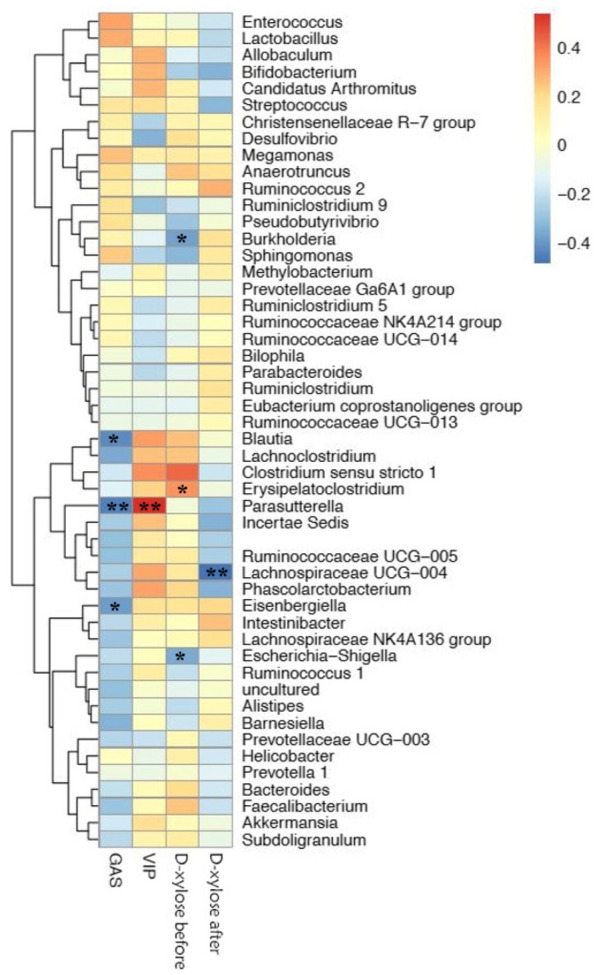
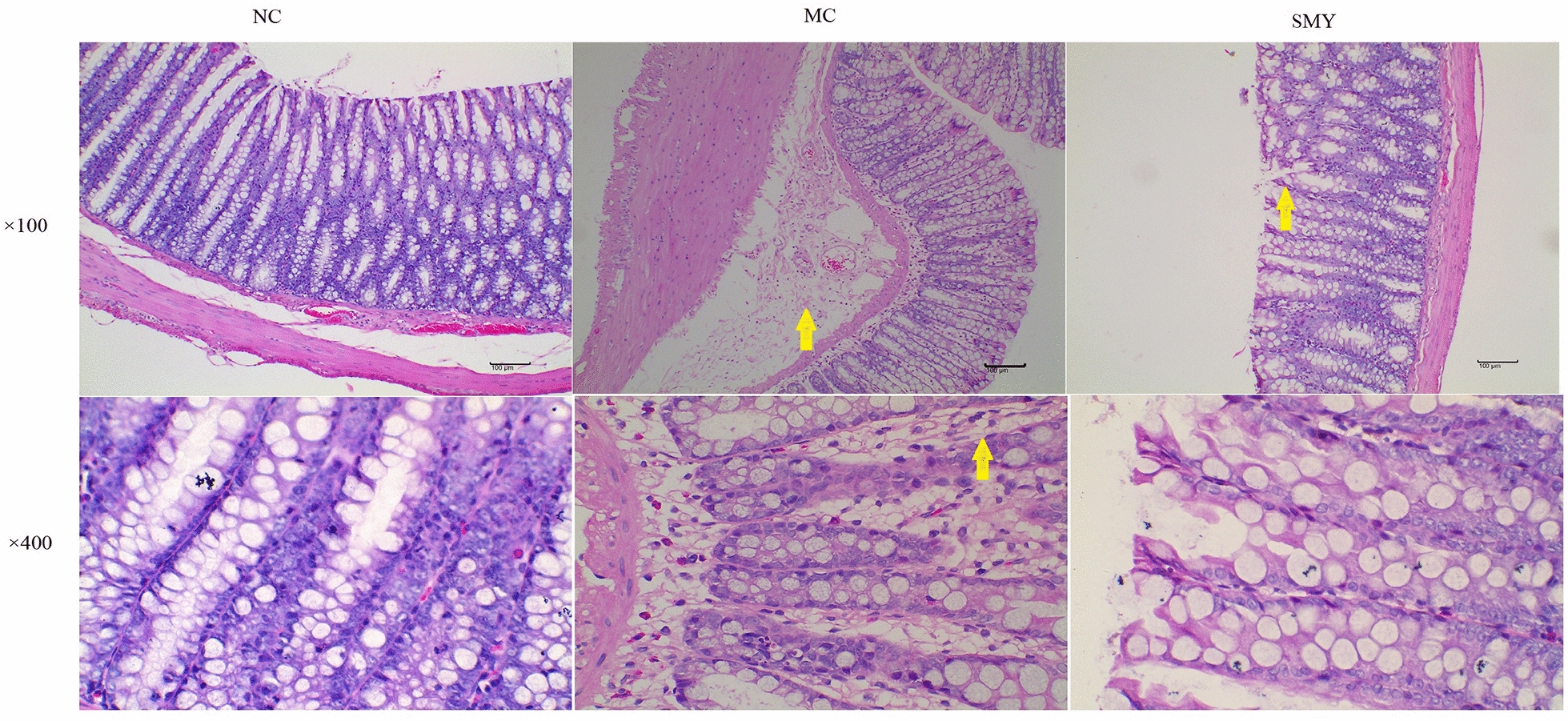
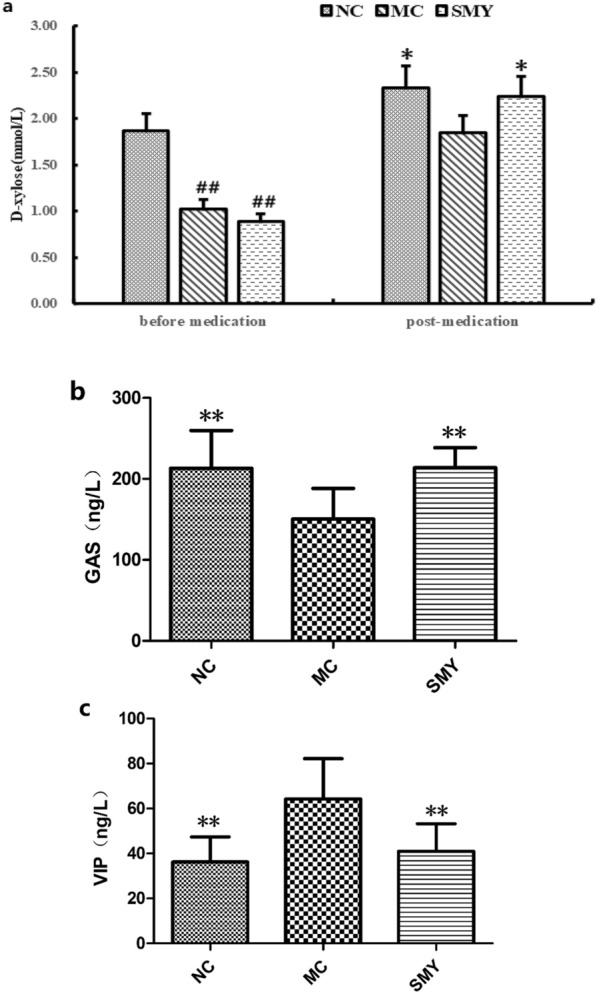
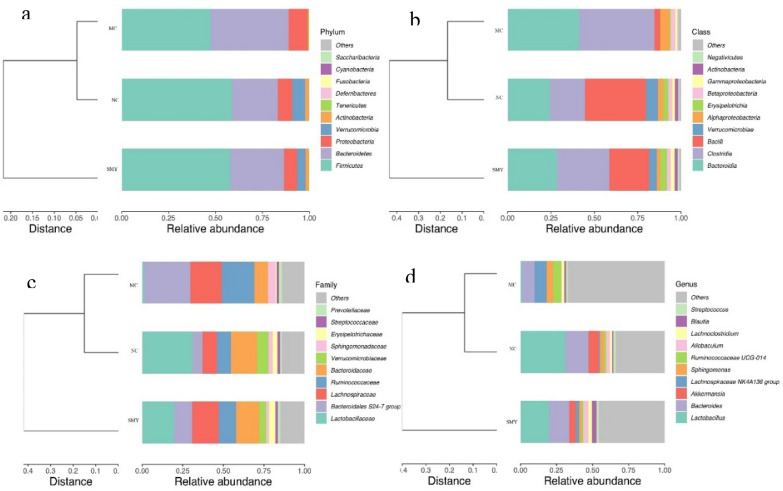
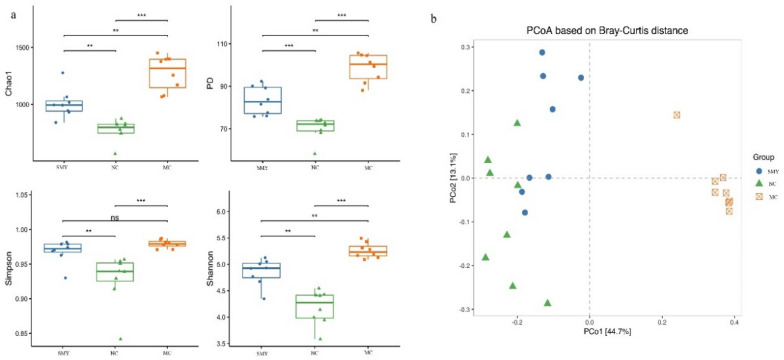
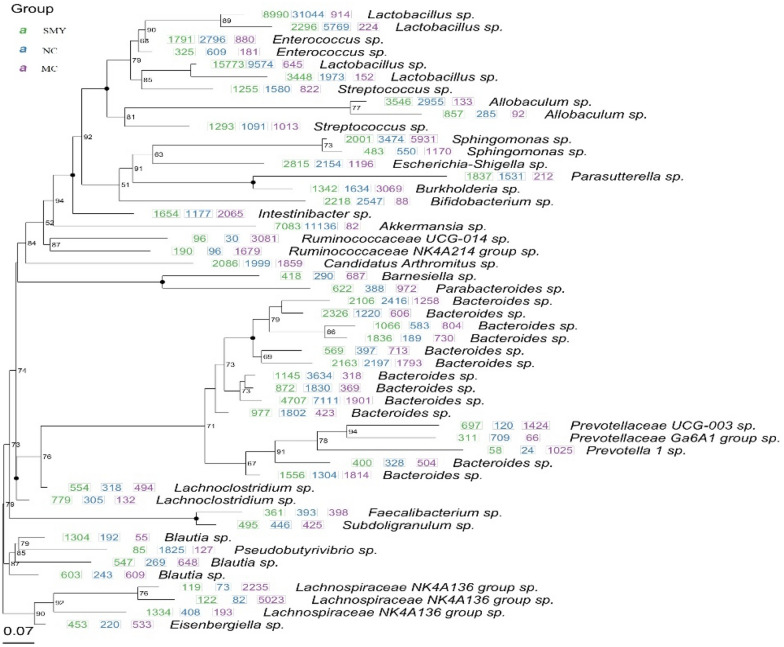
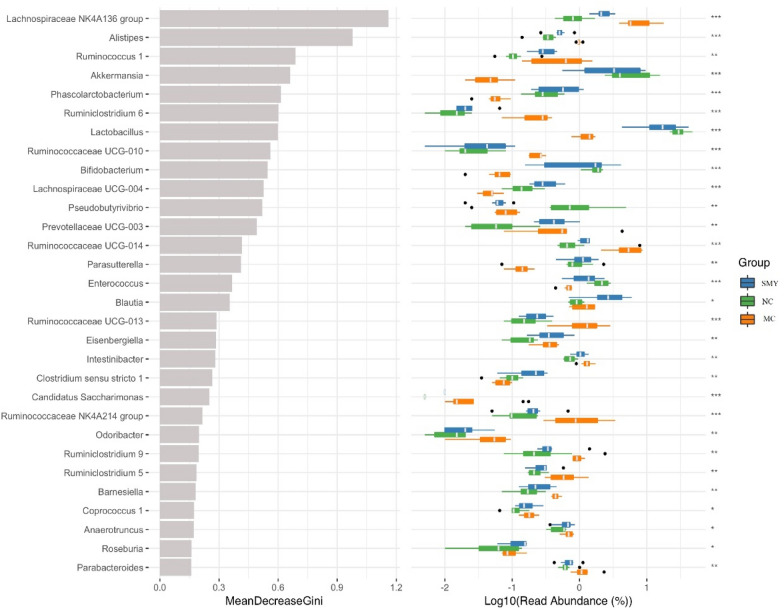
The body mass of the spleen-deficiency model rats significantly decreased compared with that of the NC group, and SMY treatment significantly increased body mass compared with the MC group ( < 0.01). Colon histopathology revealed that SMY treatment alleviated colonic mucosal damage in spleen-deficiency rats. The serum levels of D-xylose and gastrin (GAS) were significant increased by SMY ( < 0.05, < 0.01), and vasoactive intestinal peptide (VIP) was reduced by SMY ( < 0.01) compared with MC. Furthermore, alpha diversity was significantly decreased in the model rats compared to the normal rats ( < 0.05) and increased with SMY treatment ( < 0.01). The most abundant phyla were and , followed by , , and . At the genus level, there was a lower relative abundance of , , , and , and a higher relative abundance of , and in the MC group The relative abundance of , , , , , , , , , , and were significantly abundant in the treatment groups, and thus may be singled out as potential biomarkers for SMY in the treatment of spleen deficiency. In addition, analysis on the correlation between species and physicochemical indexes showed that the abundance of was negatively correlated with the change in GAS, and positively correlated with the change in VIP ( < 0.01).
Our findings have provided preliminary evidence that modulating the gut microbiota may play a role in the treatment of spleen deficiency with SMY. However, further studies are needed to clarify the mechanism by which SMY regulation of related gut microbiota occurs.
脾虚证是中医重要的病理变化,已被证明与肠道菌群失调有关。生脉饮是中医经典的益气复脉方剂,常用于中医急症。有趣的是,我们之前的研究建立了脾虚大鼠模型,并验证了生脉饮配方对脾虚大鼠的治疗效果。我们在此的目标是探讨生脉饮是否能调节肠道菌群组成并缓解大鼠脾虚症状。
本实验随机分为三组,即正常对照组(NC)、模型对照组(MC)和生脉饮组(SMY)。治疗后,记录大鼠的体重和症状指标,观察结肠组织学变化,检测血清D-木糖、胃泌素(GAS)和血管活性肠肽(VIP)水平,并通过16S rRNA测序进行肠道微生物群分析。
与NC组相比,脾虚模型大鼠体重显著降低,与MC组相比,生脉饮治疗显著增加了体重(<0.01)。结肠组织病理学显示,生脉饮治疗减轻了脾虚大鼠的结肠黏膜损伤。与MC组相比,生脉饮显著提高了血清D-木糖和胃泌素(GAS)水平(<0.05,<0.01),并降低了血管活性肠肽(VIP)水平(<0.01)。此外,与正常大鼠相比,模型大鼠的α多样性显著降低(<0.05),而生脉饮治疗后α多样性增加(<0.01)。最丰富的菌门是 和 ,其次是 、 和 。在属水平上,MC组中 、 、 和 的相对丰度较低,而 和 的相对丰度较高。治疗组中 、 、 、 、 、 、 、 、 、 、 和 的相对丰度显著丰富,因此可能被选为生脉饮治疗脾虚的潜在生物标志物。此外,物种与理化指标之间的相关性分析表明, 的丰度与GAS的变化呈负相关,与VIP的变化呈正相关(<0.01)。
我们的数据提供了初步证据,表明调节肠道微生物群可能在生脉饮治疗脾虚中发挥作用。然而,需要进一步研究来阐明生脉饮调节相关肠道微生物群的机制。