Kumar Arora Naveen, Fatima Tahmish, Mishra Jitendra, Mishra Isha, Verma Sushma, Verma Renu, Verma Maya, Bhattacharya Ankita, Verma Priyanka, Mishra Priya, Bharti Chanda
Department of Environmental Science, School for Environmental Sciences, Babasaheb Bhimrao Ambedkar University, Lucknow, UP, India.
Department of Microbiology, Babasaheb Bhimrao Ambedkar University, Lucknow, UP, India.
J Adv Res. 2020 Jul 11;26:69-82. doi: 10.1016/j.jare.2020.07.003. eCollection 2020 Nov.
The collective impact of climate change and soil salinity is continuously increasing the degraded lands across the globe, bringing agricultural productivity and food security under stress. The high concentration of salts in saline soils impose osmotic, ionic, oxidative and water stress in plants. Biological solutions can be the most reliable and sustainable approach to ensure food security and limit the use of agro-chemicals.
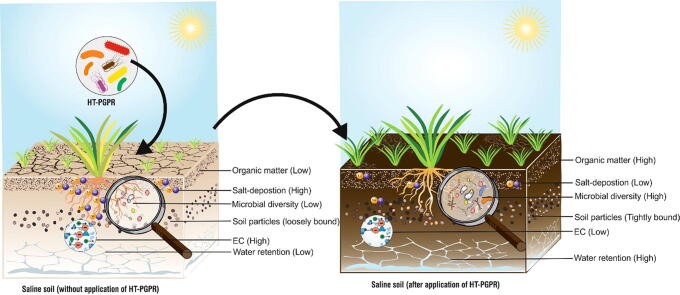
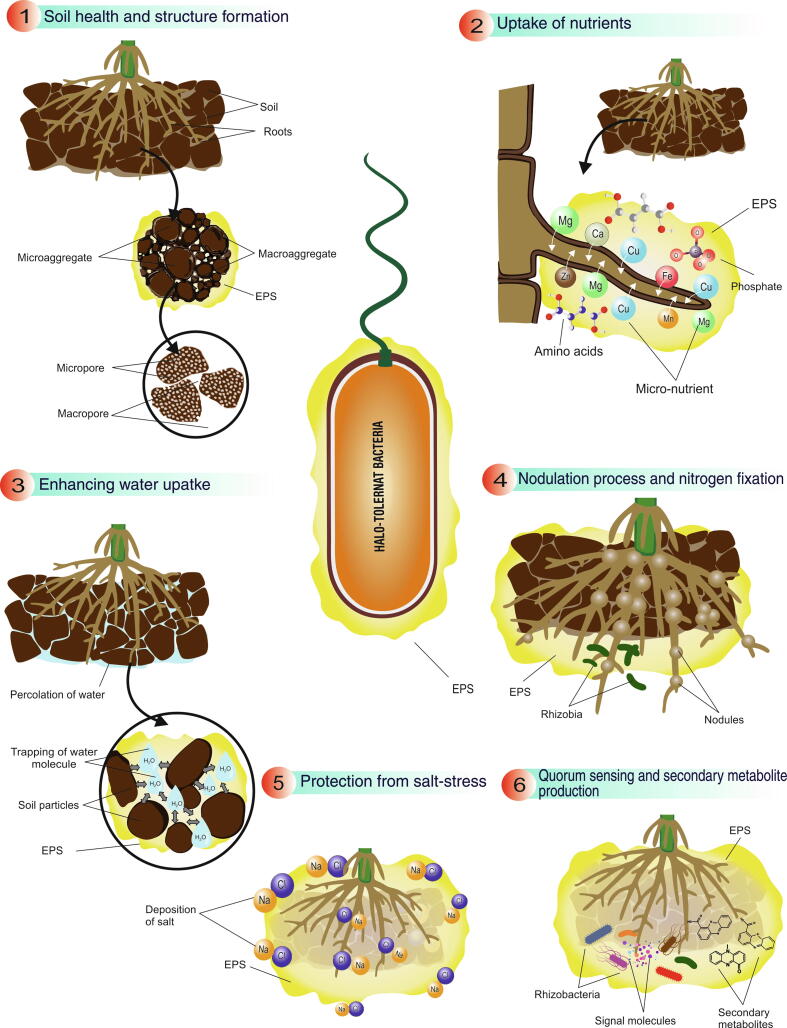
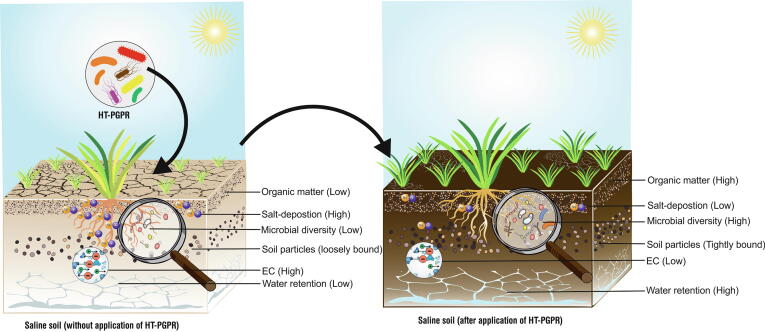
Halo-tolerant plant growth promoting rhizobacteria (HT-PGPR) are emerging as efficient biological tools to mitigate the toxic effects of high salt concentrations and improve the growth of plants, simultaneously remediating the degraded saline soils. The review explains the role of HT-PGPR in mitigating the salinity stress in plants through diverse mechanisms and concurrently leading to improvement of soil quality.
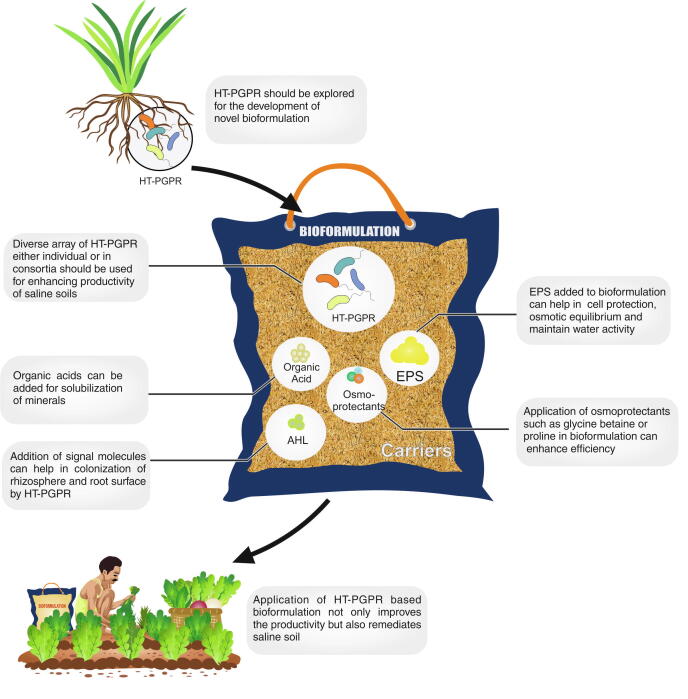
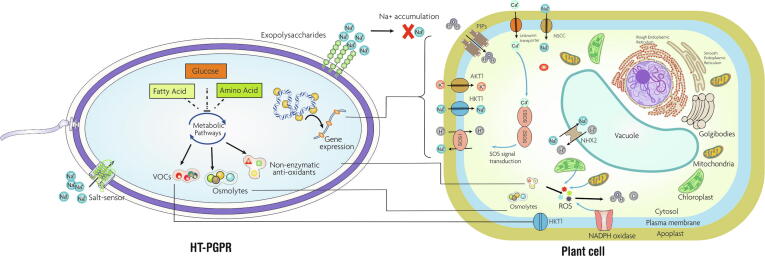
HT-PGPR are involved in alleviating the salinity stress in plants through a number of mechanisms evoking multipronged physiological, biochemical and molecular responses. These include changes in expression of defense-related proteins, exopolysaccharides synthesis, activation of antioxidant machinery, accumulation of osmolytes, maintaining the Na kinetics and improving the levels of phytohormones and nutrient uptake in plants. The modification of signaling by HT-PGPR inoculation under stress conditions elicits induced systemic resistance in plants which further prepares them against salinity stress. The role of microbial-mechanisms in remediating the saline soil through structural and compositional improvements is also important. Development of novel bioinoculants for saline soils based on the concepts presented in the review can be a sustainable approach in improving productivity of affected agro-ecosystems and simultaneously remediating them.
气候变化和土壤盐渍化的综合影响正在使全球范围内的退化土地不断增加,给农业生产力和粮食安全带来压力。盐渍土壤中高浓度的盐分对植物施加渗透、离子、氧化和水分胁迫。生物解决方案可能是确保粮食安全和限制农用化学品使用的最可靠、可持续的方法。
耐盐促植物生长根际细菌(HT-PGPR)正成为减轻高盐浓度毒性影响、促进植物生长、同时修复退化盐渍土壤的有效生物工具。本综述解释了HT-PGPR通过多种机制减轻植物盐胁迫并同时改善土壤质量的作用。
HT-PGPR通过引发多方面生理、生化和分子反应的多种机制参与减轻植物的盐胁迫。这些机制包括与防御相关蛋白表达的变化、胞外多糖的合成、抗氧化机制的激活、渗透调节物质的积累、维持钠动力学以及提高植物体内植物激素水平和养分吸收。在胁迫条件下接种HT-PGPR对信号传导的改变会引发植物的诱导系统抗性,从而进一步使植物抵御盐胁迫。微生物机制通过结构和成分改善修复盐渍土壤的作用也很重要。基于本综述中提出的概念开发用于盐渍土壤的新型生物菌剂可能是提高受影响农业生态系统生产力并同时对其进行修复的可持续方法。