Psychology, University of Utah, Salt Lake City, UT, USA.
Psychology, Macquarie University, Macquarie Park, Australia.
Psychon Bull Rev. 2021 Apr;28(2):503-511. doi: 10.3758/s13423-020-01826-4. Epub 2020 Nov 2.
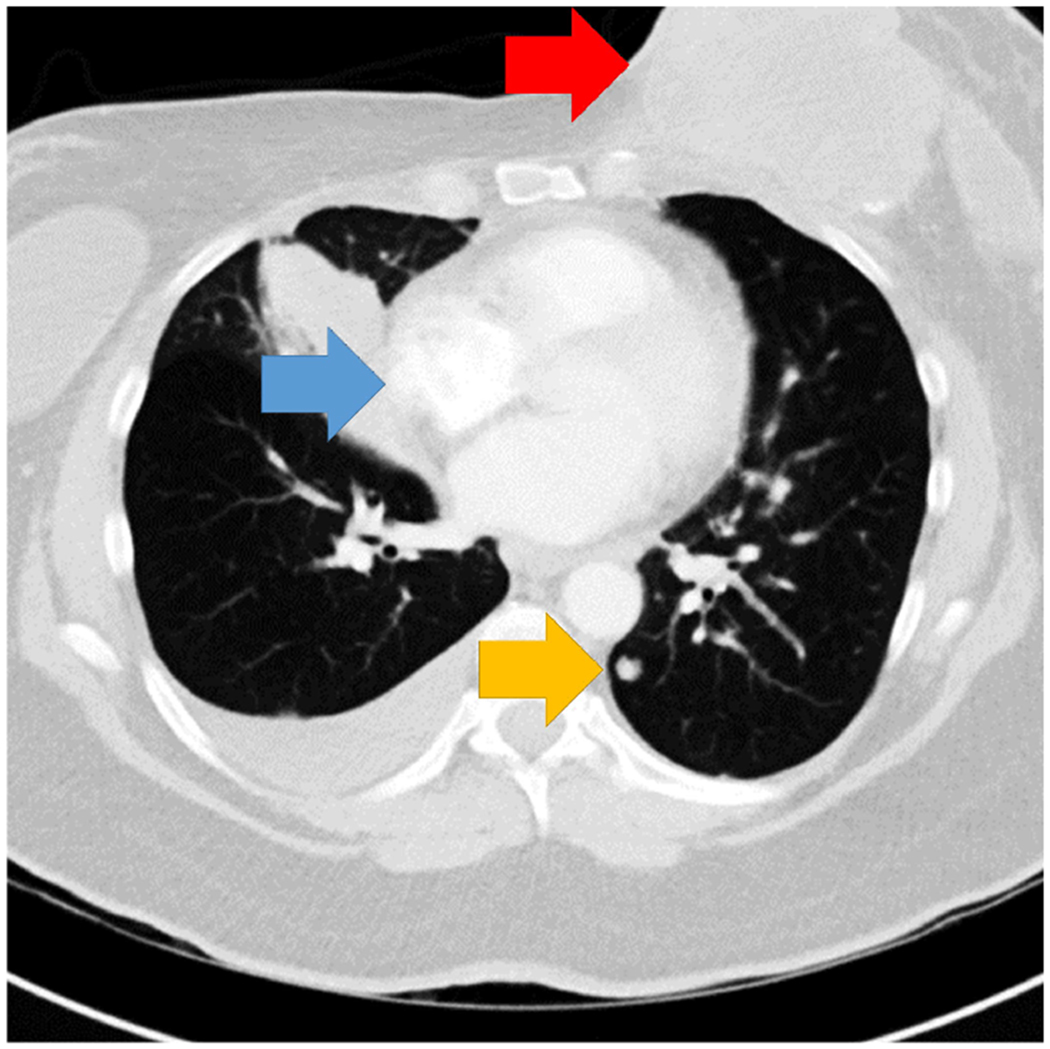
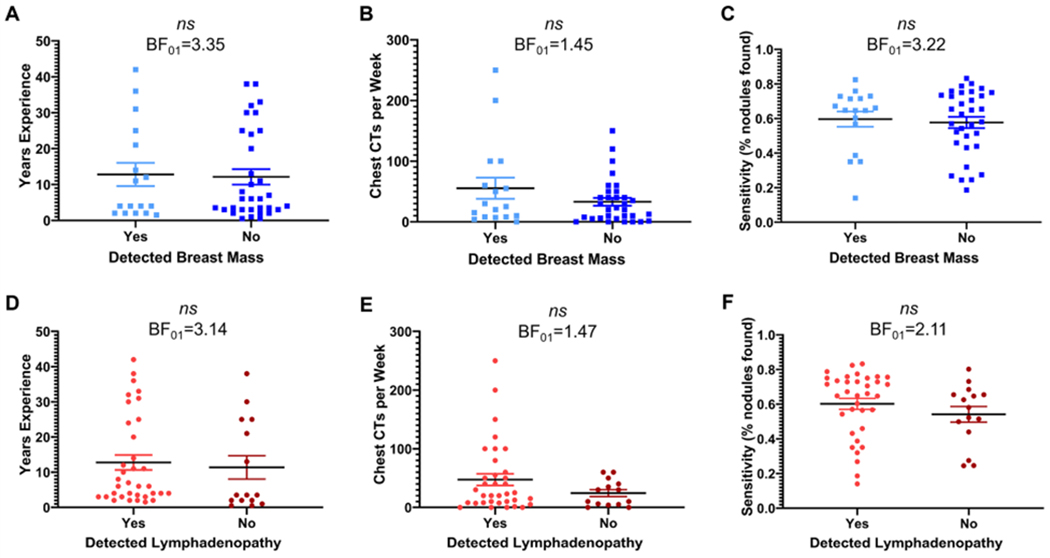
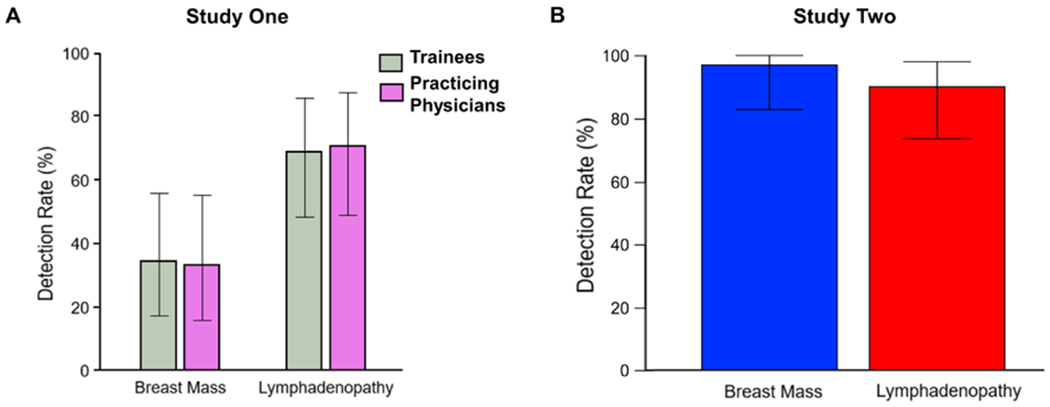
Retrospectively obvious events are frequently missed when attention is engaged in another task-a phenomenon known as inattentional blindness. Although the task characteristics that predict inattentional blindness rates are relatively well understood, the observer characteristics that predict inattentional blindness rates are largely unknown. Previously, expert radiologists showed a surprising rate of inattentional blindness to a gorilla photoshopped into a CT scan during lung-cancer screening. However, inattentional blindness rates were higher for a group of naïve observers performing the same task, suggesting that perceptual expertise may provide protection against inattentional blindness. Here, we tested whether expertise in radiology predicts inattentional blindness rates for unexpected abnormalities that were clinically relevant. Fifty radiologists evaluated CT scans for lung cancer. The final case contained a large (9.1 cm) breast mass and lymphadenopathy. When their attention was focused on searching for lung nodules, 66% of radiologists did not detect breast cancer and 30% did not detect lymphadenopathy. In contrast, only 3% and 10% of radiologists (N = 30), respectively, missed these abnormalities in a follow-up study when searching for a broader range of abnormalities. Neither experience, primary task performance, nor search behavior predicted which radiologists missed the unexpected abnormalities. These findings suggest perceptual expertise does not protect against inattentional blindness, even for unexpected stimuli that are within the domain of expertise.
当注意力集中在另一项任务上时,事后明显的事件经常会被忽略——这一现象被称为疏忽性盲视。虽然预测疏忽性盲视率的任务特征已经相对了解,但预测疏忽性盲视率的观察者特征在很大程度上仍是未知的。先前,专家放射科医生在肺癌筛查中对一张被 PS 到 CT 扫描中的大猩猩表现出惊人的疏忽性盲视率。然而,一组执行相同任务的天真观察者的疏忽性盲视率更高,这表明感知专业知识可能提供对疏忽性盲视的保护。在这里,我们测试了放射科专业知识是否可以预测对意外的临床相关异常的疏忽性盲视率。50 名放射科医生评估了肺癌的 CT 扫描。最后一个病例包含一个大(9.1 厘米)的乳房肿块和淋巴结病。当他们的注意力集中在寻找肺结节时,66%的放射科医生没有发现乳腺癌,30%的放射科医生没有发现淋巴结病。相比之下,只有 3%和 10%的放射科医生(N=30),在后续的更广泛的异常搜索研究中,分别错过了这些异常。经验、主要任务表现和搜索行为都不能预测哪些放射科医生会错过这些意外的异常。这些发现表明,即使对于在专业领域内的意外刺激,感知专业知识也不能保护免受疏忽性盲视的影响。