• 文献检索
  • 文档翻译
  • 深度研究
  • 学术资讯
  • Suppr Zotero 插件Zotero 插件
  • 邀请有礼
  • 套餐&价格
  • 历史记录
应用&插件
Suppr Zotero 插件Zotero 插件浏览器插件Mac 客户端Windows 客户端微信小程序
定价
高级版会员购买积分包购买API积分包
服务
文献检索文档翻译深度研究API 文档MCP 服务
关于我们
关于 Suppr公司介绍联系我们用户协议隐私条款
关注我们

Suppr 超能文献

核心技术专利:CN118964589B侵权必究
粤ICP备2023148730 号-1Suppr @ 2026

文献检索

告别复杂PubMed语法,用中文像聊天一样搜索,搜遍4000万医学文献。AI智能推荐,让科研检索更轻松。

立即免费搜索

文件翻译

保留排版,准确专业,支持PDF/Word/PPT等文件格式,支持 12+语言互译。

免费翻译文档

深度研究

AI帮你快速写综述,25分钟生成高质量综述,智能提取关键信息,辅助科研写作。

立即免费体验

香港本地医院在COVID-19大流行期间用于个人防护装备消费管理和监测的捆绑式干预措施。

Bundled interventions for consumption management and monitoring of personal protective equipment in COVID-19 pandemic in Hong Kong local hospitals.

作者信息

Kwan Wai-Man, Mok Chun-Keung, Kwok Yick-Ting, Lam Hon-Wai, Chan Kwan-Ho, Law Tat-Hong Samuel, Leung Pik-Man, Mak Man-Yu, Que Tak-Lun, Tang Yiu-Hang

机构信息

Quality and Safety Division, New Territories West Cluster, Hospital Authority, Hong Kong, Hong Kong.

Medicine and Geriatrics Department, Tuen Mun Hospital, New Territories West Cluster, Hospital Authority, Hong Kong, Hong Kong.

出版信息

BMJ Open Qual. 2020 Nov;9(4). doi: 10.1136/bmjoq-2020-000990.

DOI:10.1136/bmjoq-2020-000990
PMID:33154097
原文链接:https://pmc.ncbi.nlm.nih.gov/articles/PMC7646320/
Abstract

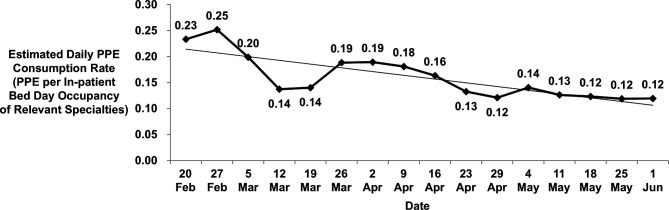
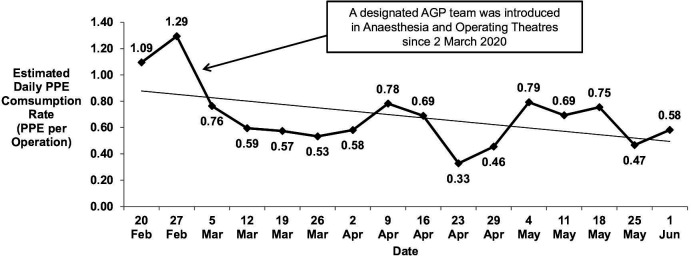
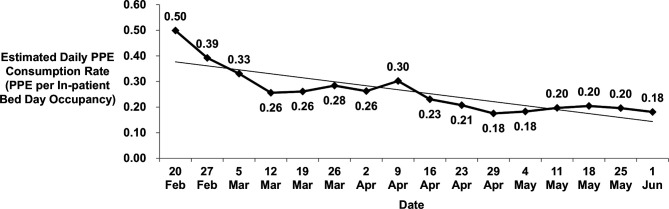
Since the outbreak of COVID-19 in December 2019, there had been global shortage of personal protective equipment (PPE) supply due to the breakage of supply chain and also the forbidding of PPE exported by various countries. This situation had greatly affected the healthcare services in local hospitals of Hong Kong. To maintain the availability of PPE for healthcare workers in high-risk clinical settings, the cluster management of New Territories West Cluster, Hospital Authority, had implemented a bundle of interventions in controlling and managing the PPE consumption and ensuring its proper use. A Taskforce on Management of PPE was set up in February 2020 with the aim to monitor and manage the use of PPE in five local hospitals and eight general outpatient clinics of New Territories West Cluster, which were governed in a cluster basis, under the COVID-19 epidemic. Interventions including cutting down non-essential services, implementing telecare, monitoring PPE consumption at unit level and PPE stock at the Cluster Central Distribution Centre and forming mobile infection teams were implemented. The updated PPE standards and usage guidelines to clinical staff were promulgated through forums, newsletters and unit visits. The PPE consumption rates of individual unit were reviewed. Significant decrease in PPE consumption rates was noted when comparing with the baseline data. Comparing the data between 20 February and 1 June 2020, the overall PPE consumption rates were reduced by 64% (r=-0.841; p<0.001) while the PPE consumption rates in anaesthesia and operating theatres, and isolation and surveillance wards were reduced by 47% (r=-0.506; p=0.023) and 49% (r=-0.810; p<0.001), respectively. A bundled approach, including both administrative measures and staff education, is effective in managing PPE consumption during major infection outbreaks especially when PPE supply is at risk.

摘要

自2019年12月新型冠状病毒肺炎疫情爆发以来,由于供应链中断以及各国禁止个人防护装备(PPE)出口,全球出现了个人防护装备供应短缺的情况。这种情况严重影响了香港本地医院的医疗服务。为了确保高危临床环境下医护人员能够获得个人防护装备,医院管理局新界西医院联网实施了一系列干预措施,以控制和管理个人防护装备的消耗,并确保其正确使用。2020年2月成立了个人防护装备管理特别工作组,旨在监测和管理新界西医院联网的五家本地医院和八家普通科门诊诊所(这些机构在疫情期间以联网形式进行管理)在2019冠状病毒病疫情期间个人防护装备的使用情况。采取的干预措施包括减少非必要服务、实施远程护理、在科室层面监测个人防护装备的消耗以及在联网中央配送中心监测个人防护装备库存,并组建流动感染控制小组。通过研讨会、通讯和科室走访等方式,向临床工作人员发布了最新的个人防护装备标准和使用指南。对各科室的个人防护装备消耗率进行了审查。与基线数据相比,个人防护装备消耗率显著下降。比较2020年2月20日至6月1日的数据,整体个人防护装备消耗率降低了64%(r=-0.841;p<0.001),而麻醉科和手术室以及隔离和监测病房的个人防护装备消耗率分别降低了47%(r=-0.506;p=0.023)和49%(r=-0.810;p<0.001)。包括行政措施和员工教育在内的综合方法,在重大感染疫情期间管理个人防护装备消耗方面是有效的,尤其是在个人防护装备供应面临风险的情况下。
https://cdn.ncbi.nlm.nih.gov/pmc/blobs/681e/7646320/feff73728aa1/bmjoq-2020-000990f03.jpg
https://cdn.ncbi.nlm.nih.gov/pmc/blobs/681e/7646320/7f8a98fa2627/bmjoq-2020-000990f01.jpg
https://cdn.ncbi.nlm.nih.gov/pmc/blobs/681e/7646320/9721e4903ed4/bmjoq-2020-000990f02.jpg
https://cdn.ncbi.nlm.nih.gov/pmc/blobs/681e/7646320/feff73728aa1/bmjoq-2020-000990f03.jpg
https://cdn.ncbi.nlm.nih.gov/pmc/blobs/681e/7646320/7f8a98fa2627/bmjoq-2020-000990f01.jpg
https://cdn.ncbi.nlm.nih.gov/pmc/blobs/681e/7646320/9721e4903ed4/bmjoq-2020-000990f02.jpg
https://cdn.ncbi.nlm.nih.gov/pmc/blobs/681e/7646320/feff73728aa1/bmjoq-2020-000990f03.jpg

相似文献

1
Bundled interventions for consumption management and monitoring of personal protective equipment in COVID-19 pandemic in Hong Kong local hospitals.香港本地医院在COVID-19大流行期间用于个人防护装备消费管理和监测的捆绑式干预措施。
BMJ Open Qual. 2020 Nov;9(4). doi: 10.1136/bmjoq-2020-000990.
2
Management of personal protective equipment in New Zealand during the COVID-19 pandemic: report from the Auditor-General.新冠疫情期间新西兰个人防护装备的管理:审计长报告
N Z Med J. 2020 Sep 25;133(1522):144-148.
3
Characteristics of personal protective equipment training programs in Australia and New Zealand hospitals: A survey.澳大利亚和新西兰医院个人防护装备培训项目的特点:一项调查。
Infect Dis Health. 2020 Nov;25(4):253-261. doi: 10.1016/j.idh.2020.05.005. Epub 2020 Jun 26.
4
Human Factor Considerations in Using Personal Protective Equipment in the COVID-19 Pandemic Context: Binational Survey Study.新冠疫情背景下使用个人防护装备的人为因素考量:双边调查研究
J Med Internet Res. 2020 Jun 17;22(6):e19947. doi: 10.2196/19947.
5
Personal protective equipment (PPE) in a pandemic: Approaches to PPE preservation for South African healthcare facilities.大流行期间的个人防护装备(PPE):南非医疗机构的PPE保存方法。
S Afr Med J. 2020 Apr 30;110(6):466-468. doi: 10.7196/SAMJ.2020.v110i6.14831.
6
An Integrated Strategy for the Prevention of SARS-CoV-2 Infection in Healthcare Workers: A Prospective Observational Study.一种预防医疗机构工作人员感染 SARS-CoV-2 的综合策略:一项前瞻性观察研究。
Int J Environ Res Public Health. 2020 Aug 10;17(16):5785. doi: 10.3390/ijerph17165785.
7
Hospital care in Departments defined as COVID-free: A proposal for a safe hospitalization protecting healthcare professionals and patients not affected by COVID-19.在定义为无新冠病毒科室的医院护理:一项关于安全住院治疗的提议,旨在保护医护人员和未感染新冠病毒的患者。
Arch Ital Urol Androl. 2020 Apr 24;92(2). doi: 10.4081/aiua.2020.2.67.
8
Effect of extended use N95 respirators and eye protection on personal protective equipment (PPE) utilization during SARS-CoV-2 outbreak in Singapore.在新加坡2019冠状病毒病疫情期间,延长使用N95口罩和眼部防护用品对个人防护装备(PPE)使用情况的影响。
Antimicrob Resist Infect Control. 2020 Jun 15;9(1):86. doi: 10.1186/s13756-020-00753-2.
9
Personal protective equipment (PPE) and infection among healthcare workers - What is the evidence?个人防护设备(PPE)和医护人员中的感染——有什么证据?
Int J Clin Pract. 2020 Nov;74(11):e13617. doi: 10.1111/ijcp.13617. Epub 2020 Sep 9.
10
Impact of COVID-19 Pandemic on Neurosurgical Practice in India: A Survey on Personal Protective Equipment Usage, Testing, and Perceptions on Disease Transmission.新冠疫情对印度神经外科学实践的影响:关于个人防护设备使用、检测以及对疾病传播认知的调查。
Neurol India. 2020 Sep-Oct;68(5):1133-1138. doi: 10.4103/0028-3886.299173.

引用本文的文献

1
Use of the PRECEDE-PROCEED Model in Piloting Vaccine Promotion and Infection Self-Protection: Intervention Development and Effectiveness Examination.在试点疫苗推广和感染自我保护中使用PRECEDE-PROCEED模型:干预措施开发与效果检验
Vaccines (Basel). 2024 Aug 28;12(9):979. doi: 10.3390/vaccines12090979.
2
Identifying resilience strategies for disruption management in the healthcare supply chain during COVID-19 by digital innovations: A systematic literature review.通过数字创新确定COVID-19期间医疗供应链中断管理的恢复力策略:一项系统的文献综述
Inform Med Unlocked. 2023;38:101199. doi: 10.1016/j.imu.2023.101199. Epub 2023 Feb 25.
3

本文引用的文献

1
Virtually Perfect? Telemedicine for Covid-19.近乎完美?用于新冠疫情的远程医疗
N Engl J Med. 2020 Apr 30;382(18):1679-1681. doi: 10.1056/NEJMp2003539. Epub 2020 Mar 11.
2
Coronavirus: hospitals must learn from past pandemics.冠状病毒:医院必须从过去的大流行中吸取教训。
Nature. 2020 Feb;578(7794):193. doi: 10.1038/d41586-020-00354-4.
3
Coronavirus: global stocks of protective gear are depleted, with demand at "100 times" normal level, WHO warns.世界卫生组织警告称,冠状病毒疫情下,全球防护装备库存告急,需求达到正常水平的“100倍”。
A Composite Particle Swarm Optimization Algorithm for Hospital Equipment Management Risk Control Optimization and Prediction.
基于复合粒子群算法的医院设备管理风险控制优化与预测。
J Environ Public Health. 2022 May 23;2022:5268887. doi: 10.1155/2022/5268887. eCollection 2022.
4
The Perspective of the Turkish Thoracic Society Members on Institutional Preparedness During the COVID-19 Pandemic in Turkey.土耳其胸科协会成员对土耳其新冠疫情期间机构准备情况的看法。
Turk Thorac J. 2021 Jul;22(4):317-323. doi: 10.5152/TurkThoracJ.2021.20296.
BMJ. 2020 Feb 10;368:m543. doi: 10.1136/bmj.m543.
4
Outbreak of pneumonia of unknown etiology in Wuhan, China: The mystery and the miracle.中国武汉不明原因肺炎疫情:谜团与奇迹
J Med Virol. 2020 Apr;92(4):401-402. doi: 10.1002/jmv.25678. Epub 2020 Feb 12.
5
Improving the Use of Personal Protective Equipment: Applying Lessons Learned.改进个人防护设备的使用:应用经验教训。
Clin Infect Dis. 2019 Sep 13;69(Suppl 3):S165-S170. doi: 10.1093/cid/ciz619.
6
Long shadow of fear in an epidemic: fearonomic effects of Ebola on the private sector in Nigeria.疫情中恐惧的深远影响:埃博拉对尼日利亚私营部门的恐惧经济学效应
BMJ Glob Health. 2016 Nov 9;1(3):e000111. doi: 10.1136/bmjgh-2016-000111. eCollection 2016.
7
From SARS to Avian Influenza Preparedness in Hong Kong.从 SARS 到香港的禽流感防备。
Clin Infect Dis. 2017 May 15;64(suppl_2):S98-S104. doi: 10.1093/cid/cix123.
8
The problem with Plan-Do-Study-Act cycles.计划-执行-研究-行动循环的问题。
BMJ Qual Saf. 2016 Mar;25(3):147-52. doi: 10.1136/bmjqs-2015-005076. Epub 2015 Dec 23.
9
Personal protective equipment in an influenza pandemic: a UK simulation exercise.流感大流行期间的个人防护装备:英国模拟演练
J Hosp Infect. 2009 Jan;71(1):15-21. doi: 10.1016/j.jhin.2008.09.005. Epub 2008 Nov 17.
10
Personal protective equipment and antiviral drug use during hospitalization for suspected avian or pandemic influenza.疑似禽流感或大流行性流感住院期间个人防护装备及抗病毒药物的使用情况。
Emerg Infect Dis. 2007 Oct;13(10):1541-7. doi: 10.3201/eid1310.070033.