Judah Harriet Louise, Liu Pengfei, Zarbakhsh Ali, Resmini Marina
Department of Chemistry, SBCS, Queen Mary University of London, Mile End Road, London E1 4NS, UK.
Polymers (Basel). 2020 Nov 4;12(11):2590. doi: 10.3390/polym12112590.
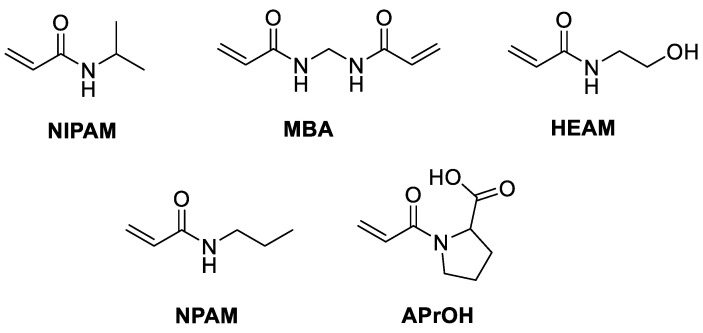
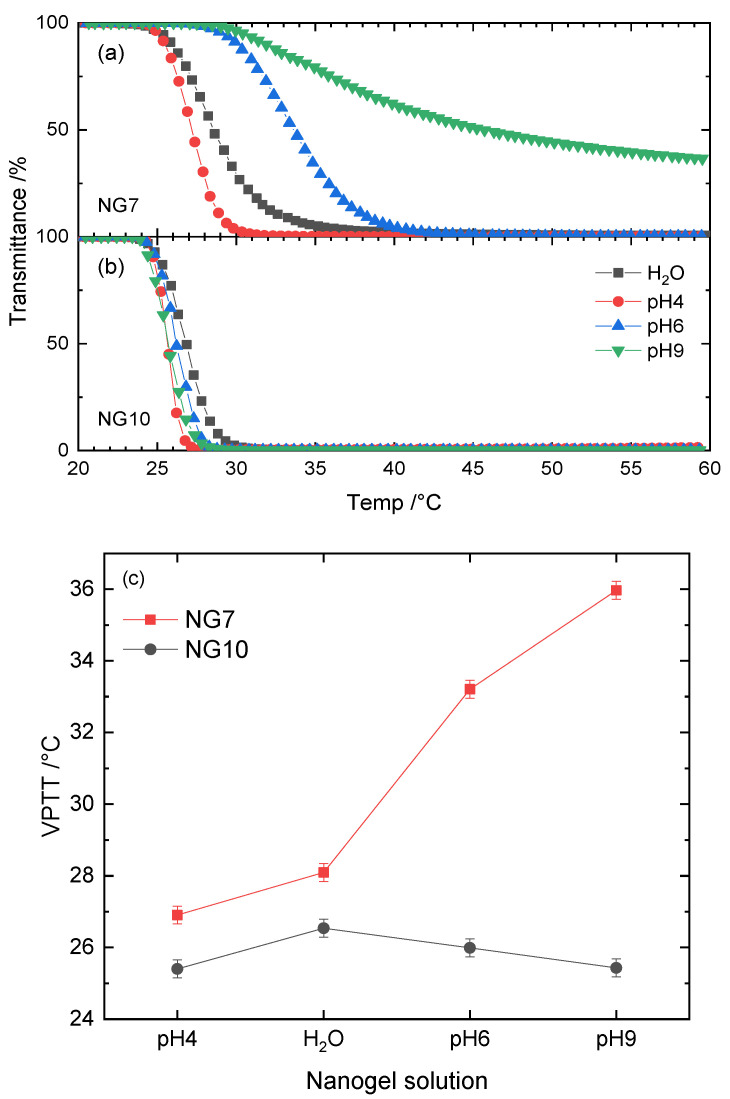
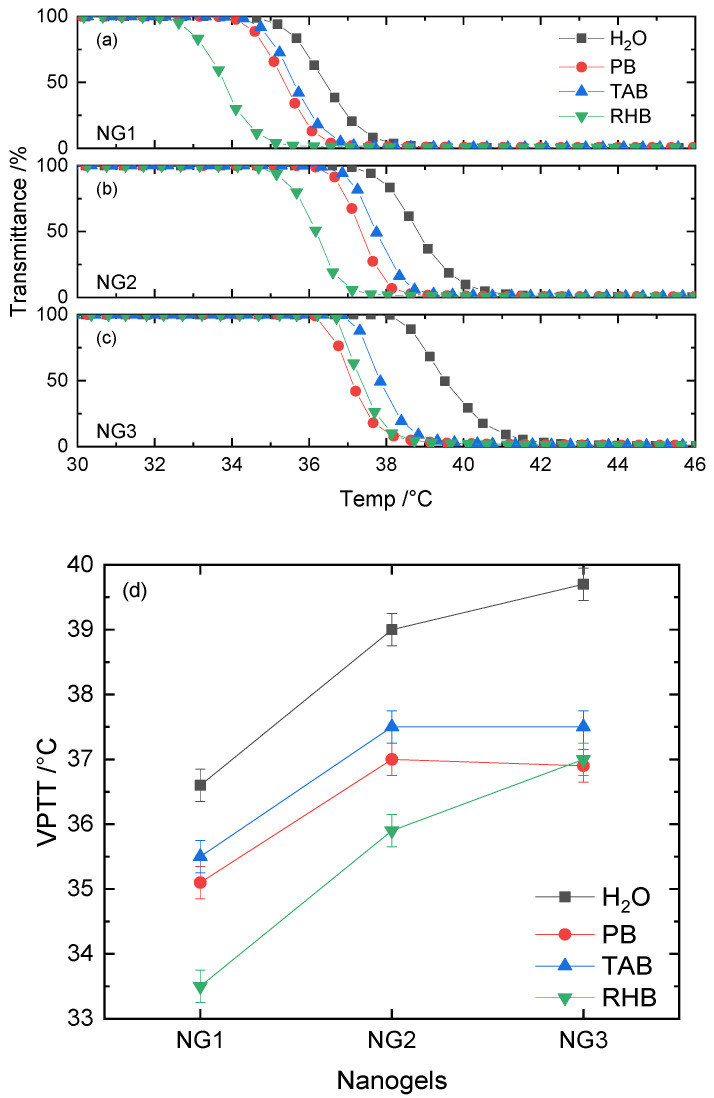
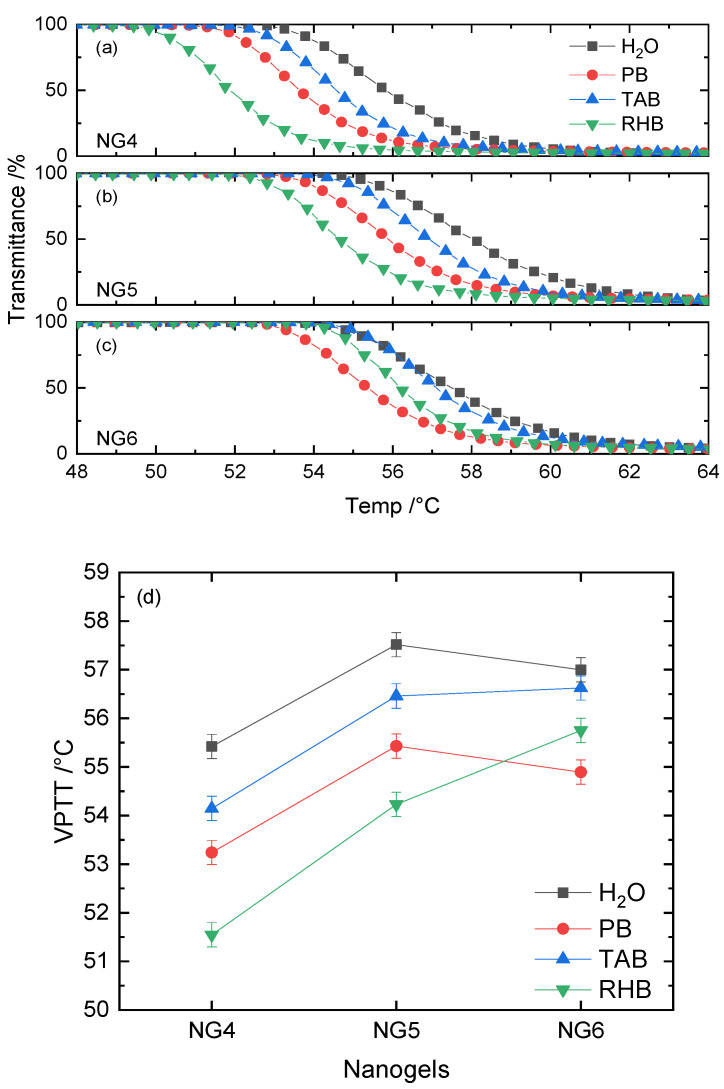
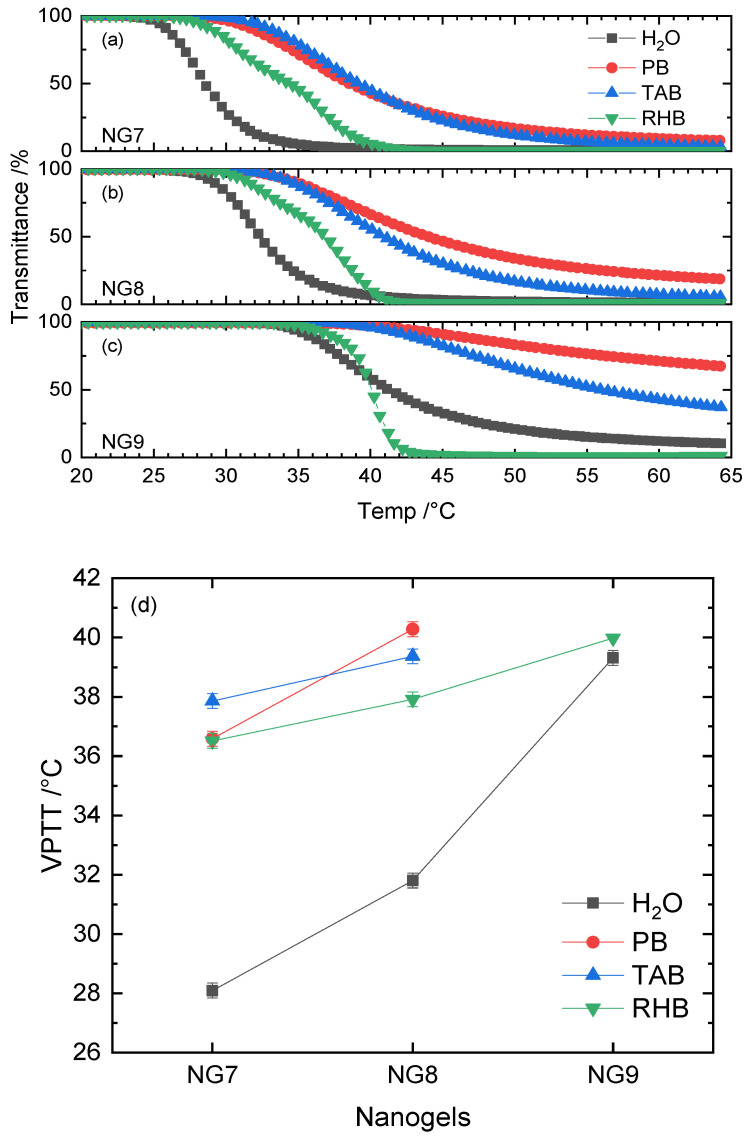
The use of covalently crosslinked nanogels for applications in biology and medicine is dependent on their properties and characteristics, which often change because of the biological media involved. Understanding the role of salts, ionic strength and pH in altering specific properties is key to progress in this area. We studied the effect of both chemical structure and media environment on the thermoresponsive behavior of nanogels. A small library of methylenebisacrylamide (MBA) crosslinked nanogels were prepared using -isopropylacrylamide (NIPAM) or -propylacrylamide (NPAM), in combination with functional monomers -hydroxyethylacrylamide (HEAM) and -acryloyl-l-proline (APrOH). The thermoresponsive properties of nanogels were evaluated in phosphate buffer, tris-acetate buffer and Ringer HEPES, with varying concentrations and ionic strengths. The presence of ions facilitates the phase separation of nanogels, and this "salting-out" effect strongly depends on the electrolyte concentration as well as the specificity of individual anions, e.g., their positions in the Hofmeister series. A subtle change in the chemical structure of the side chain of the monomer from NIPAM to NPAM leads to a reduction of the volume phase transition temperature (VPTT) value by ~10 °C. The addition of hydrophilic comonomers such as HEAM, on the other hand, causes a ~20 °C shift in VPTT to higher values. The data highlight the significant role played by the chemical structure of the monomers used, with hydrophobicity and rigidity closely interlinked in determining thermoresponsive behavior. Furthermore, the volume phase transition temperature (VPTT) of nanogels copolymerized with ionizable APrOH comonomer can be tailored by changes in the pH of buffer solutions. This temperature-controlled phase transition is driven by intricate interplay involving the entropy of mixing, electrostatic interactions, conformational transitions, and structural rigidity. These results highlight the importance of understanding the physiochemical properties and behavior of covalently crosslinked nanogels in a biological environment prior to their applications in life-science, such as temperature/pH-triggered drug delivery systems.
共价交联纳米凝胶在生物学和医学领域的应用取决于其性质和特征,而这些性质和特征常常会因所涉及的生物介质而发生变化。了解盐、离子强度和pH在改变特定性质方面的作用是该领域取得进展的关键。我们研究了化学结构和介质环境对纳米凝胶热响应行为的影响。使用N-异丙基丙烯酰胺(NIPAM)或N-丙基丙烯酰胺(NPAM),与功能性单体2-羟乙基丙烯酰胺(HEAM)和N-丙烯酰基-L-脯氨酸(APrOH)结合,制备了一个亚甲基双丙烯酰胺(MBA)交联纳米凝胶的小型文库。在不同浓度和离子强度的磷酸盐缓冲液、三乙酸缓冲液和林格氏HEPES中评估了纳米凝胶的热响应性质。离子的存在促进了纳米凝胶的相分离,这种“盐析”效应强烈依赖于电解质浓度以及单个阴离子的特异性,例如它们在霍夫迈斯特序列中的位置。单体侧链的化学结构从NIPAM微妙地变化到NPAM会导致体积相转变温度(VPTT)值降低约10℃。另一方面,添加亲水性共聚单体如HEAM会使VPTT向更高值移动约20℃。这些数据突出了所用单体化学结构所起的重要作用,疏水性和刚性在决定热响应行为方面紧密相连。此外,与可电离的APrOH共聚单体共聚的纳米凝胶的体积相转变温度(VPTT)可以通过缓冲溶液pH的变化来调整。这种温度控制的相转变是由涉及混合熵、静电相互作用、构象转变和结构刚性的复杂相互作用驱动的。这些结果突出了在共价交联纳米凝胶应用于生命科学(如温度/pH触发的药物递送系统)之前,了解其在生物环境中的物理化学性质和行为的重要性。