Section for Outcomes Research, Medical University of Vienna, Wien, Austria.
Section for Outcomes Research, Medical University of Vienna, Wien, Austria
RMD Open. 2020 Nov;6(3). doi: 10.1136/rmdopen-2020-001432.
To analyse how non-adherence to prescribed treatments might be prevented, screened, assessed and managed in people with rheumatic and musculoskeletal diseases (RMDs).
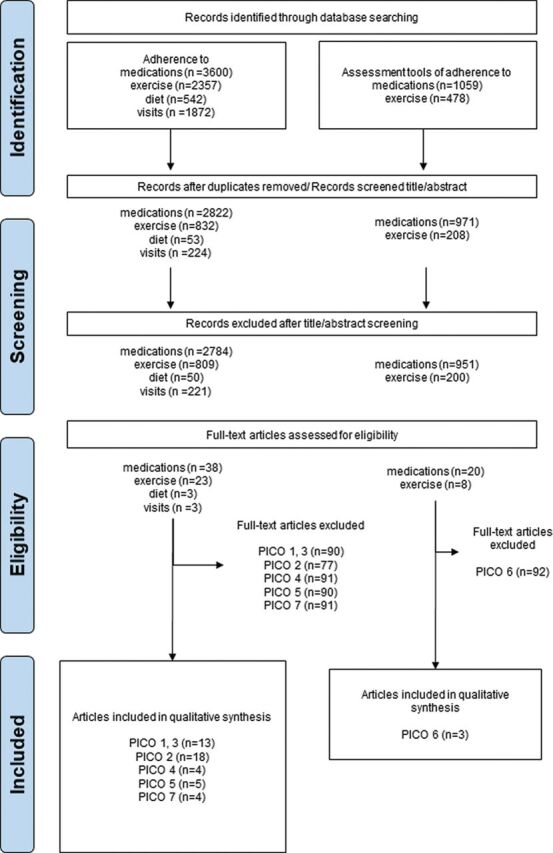
An overview of systematic reviews (SR) was performed in four bibliographic databases. Research questions focused on: (1) effective interventions or strategies, (2) associated factors, (3) impact of shared decision making and effective communication, (4) practical things to prevent non-adherence, (5) effect of non-adherence on outcome, (6) screening and assessment tools and (7) responsible healthcare providers. The methodological quality of the reviews was assessed using AMSTAR-2. The qualitative synthesis focused on results and on the level of evidence attained from the studies included in the reviews.
After reviewing 9908 titles, the overview included 38 SR on medication, 29 on non-pharmacological interventions and 28 on assessment. Content and quality of the included SR was very heterogeneous. The number of factors that may influence adherence exceed 700. Among 53 intervention studies, 54.7% showed a small statistically significant effect on adherence, and all three multicomponent interventions, including different modes of patient education and delivered by a variety of healthcare providers, showed a positive result in adherence to medication. No single assessment provided a comprehensive measure of adherence to either medication or exercise.
The results underscore the complexity of non-adherence, its changing pattern and dependence on multi-level factors, the need to involve all stakeholders in all steps, the absence of a gold standard for screening and the requirement of multi-component interventions to manage it.
分析如何预防、筛查、评估和管理风湿和肌肉骨骼疾病(RMDs)患者的不遵医嘱治疗行为。
在四个文献数据库中进行了系统评价(SR)的概述。研究问题集中在:(1)有效的干预措施或策略;(2)相关因素;(3)共同决策和有效沟通的影响;(4)预防不遵医嘱的实际措施;(5)不遵医嘱对结果的影响;(6)筛查和评估工具;(7)负责的医疗保健提供者。使用 AMSTAR-2 评估综述的方法学质量。定性综合侧重于纳入综述研究的结果和证据水平。
在审查了 9908 个标题后,该综述纳入了 38 项关于药物治疗、29 项关于非药物干预和 28 项关于评估的 SR。纳入的 SR 的内容和质量非常多样化。可能影响依从性的因素超过 700 个。在 53 项干预研究中,54.7%的研究显示对依从性有小的统计学显著影响,包括不同模式的患者教育和由各种医疗保健提供者提供的三种多组分干预措施,均显示出对药物治疗依从性的积极结果。没有单一的评估方法提供对药物或运动依从性的全面衡量。
研究结果强调了不遵医嘱行为的复杂性、其变化模式和对多层次因素的依赖性,需要在所有步骤中涉及所有利益相关者,筛查缺乏金标准,以及需要多组分干预措施来管理它。