Milay Looz, Berman Paula, Shapira Anna, Guberman Ohad, Meiri David
The Laboratory of Cancer Biology and Cannabinoid Research, Department of Biology, Technion-Israel Institute of Technology, Haifa, Israel.
Front Plant Sci. 2020 Oct 15;11:583605. doi: 10.3389/fpls.2020.583605. eCollection 2020.
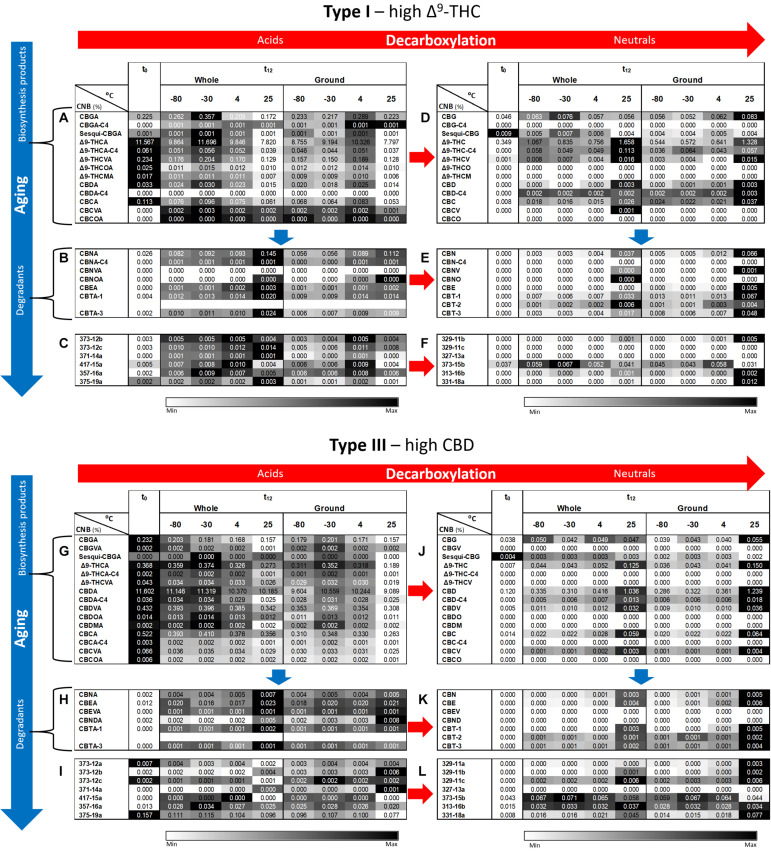
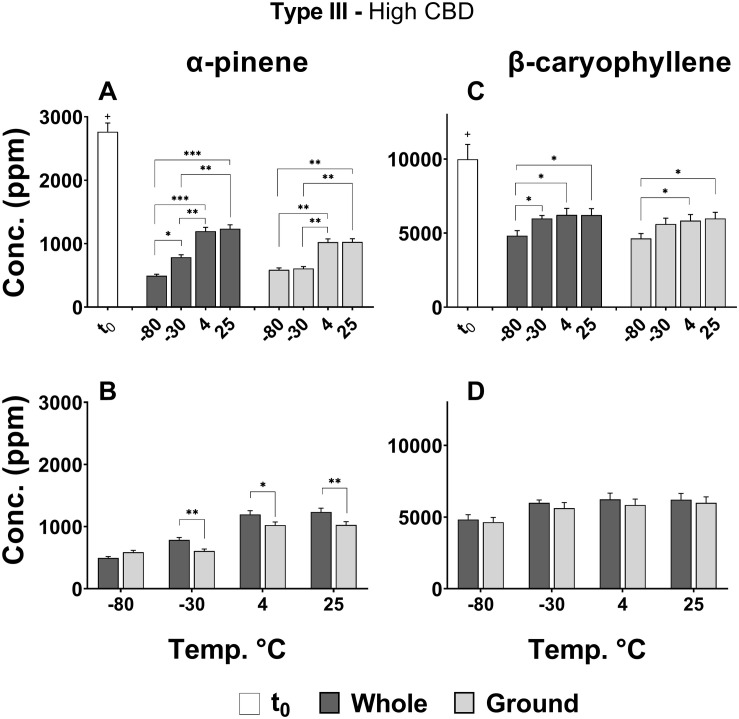
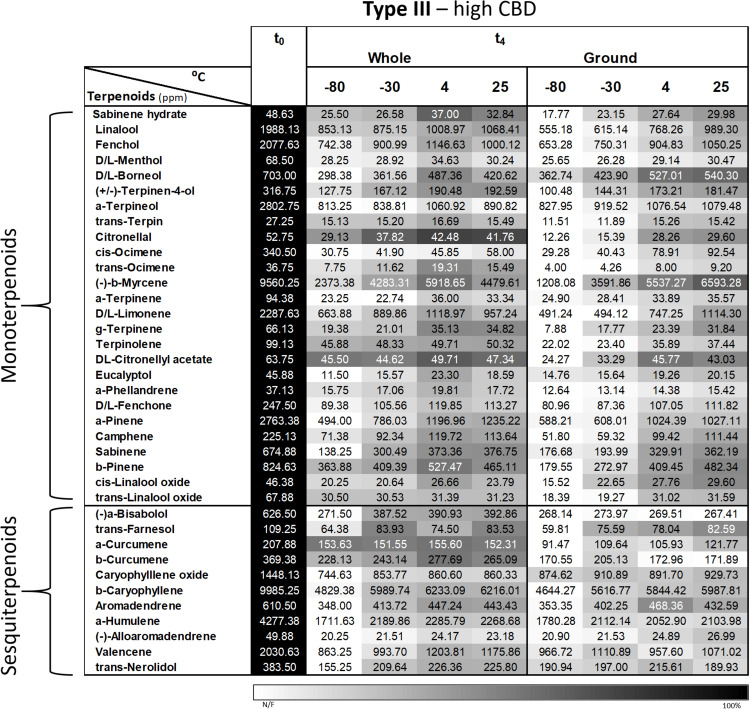
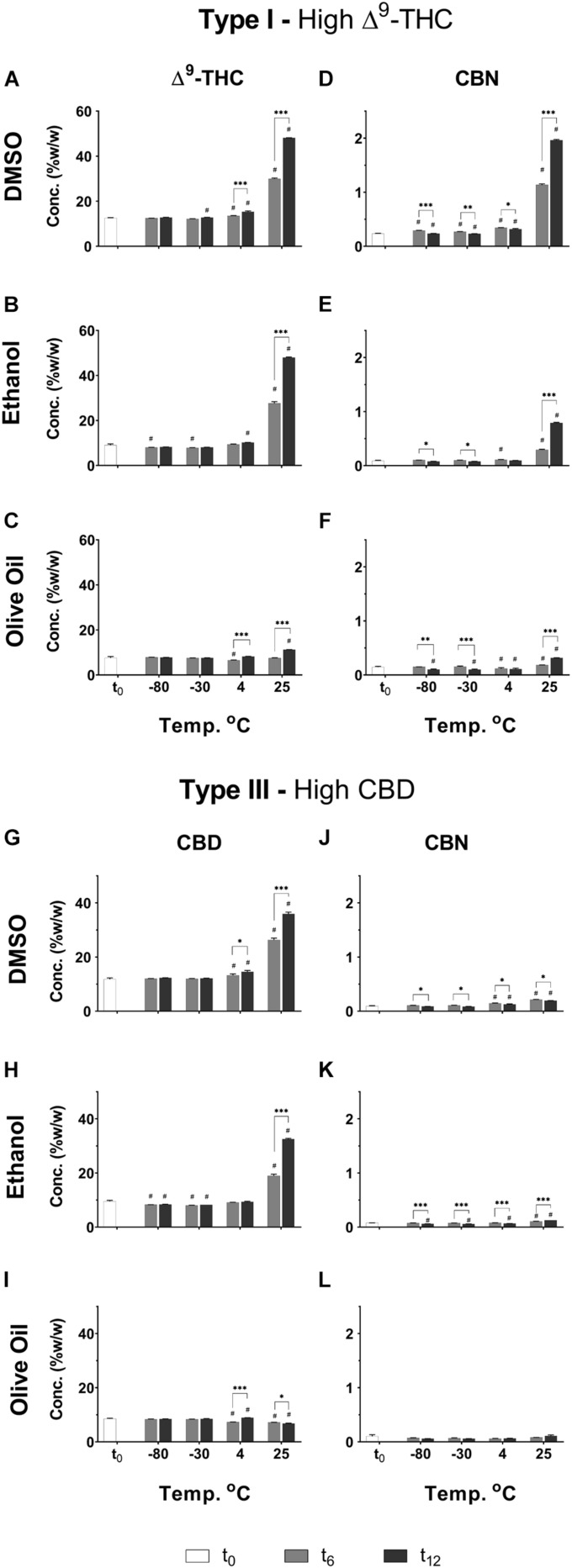
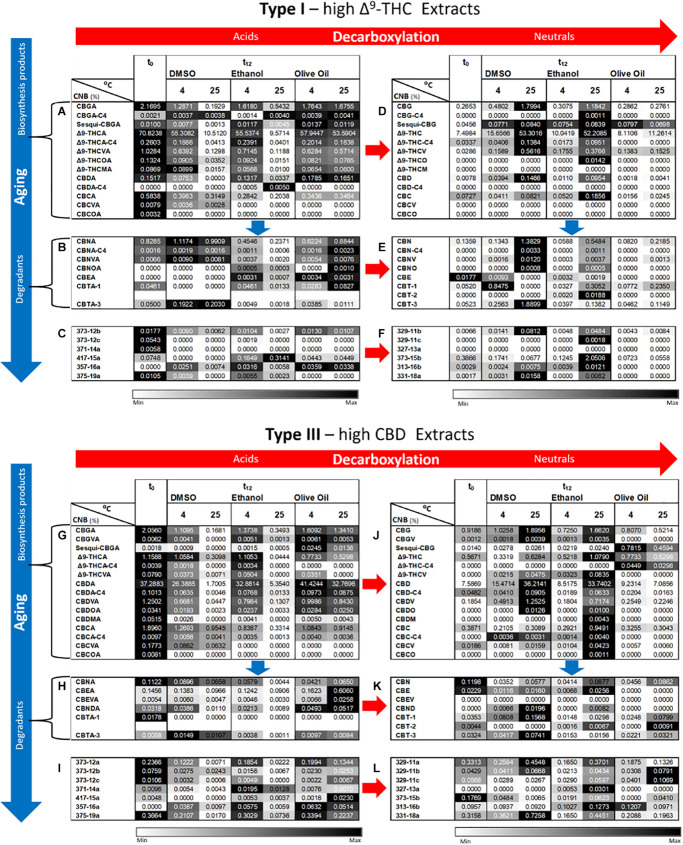
The therapeutic use of medical is growing, and so is the need for standardized and therapeutically stable products for patients. The therapeutic effects of largely depend on the content of its pharmacologically active secondary metabolites and their interactions, mainly terpenoids and phytocannabinoids. Once harvested and during storage, these natural compounds may decarboxylate, oxidize, isomerize, react photochemically, evaporate and more. Despite its widespread and increasing use, however, data on the stability of most of the plant's terpenoids and phytocannabinoids during storage is scarce. In this study, we therefore aimed to determine postharvest optimal storage conditions for preserving the composition of naturally biosynthesized secondary metabolites in inflorescences and extracts. To this end, inflorescences (whole versus ground samples) and extracts (dissolved in different solvents) from (-)-Δ--tetrahydrocannabinol- or cannabidiol-rich chemovars, were stored in the dark at various temperatures (25, 4, -30 and -80°C), and their phytocannabinoid and terpenoid profiles were analyzed over the course of 1 year. We found that in both inflorescences and extracts, a storage temperature of 25°C led to the largest changes in the concentrations of the natural phytocannabinoids over time, making this the most unfavorable temperature compared with all others examined here. Olive oil was found to be the best vehicle for preserving the natural phytocannabinoid composition of the extracts. Terpenoid concentrations were found to decrease rapidly under all storage conditions, but temperatures lower than -20°C and grinding of the inflorescences were the least favorable conditions. Overall, our conclusions point that storage of whole inflorescences and extracts dissolved in olive oil, at 4°C, were the optimal postharvest conditions for .
医用大麻的治疗用途正在增加,为患者提供标准化且治疗稳定的大麻产品的需求也在增加。大麻的治疗效果很大程度上取决于其药理活性次生代谢产物的含量及其相互作用,主要是萜类化合物和植物大麻素。一旦收获并在储存期间,这些天然化合物可能会脱羧、氧化、异构化、发生光化学反应、蒸发等等。然而,尽管其使用广泛且不断增加,但关于该植物大多数萜类化合物和植物大麻素在储存期间稳定性的数据却很少。因此,在本研究中,我们旨在确定收获后最佳储存条件,以保存大麻花序和提取物中天然生物合成的次生代谢产物的组成。为此,将富含(-)-Δ⁹-四氢大麻酚或大麻二酚的化学变种的大麻花序(整株与研磨样品)和大麻提取物(溶解于不同溶剂)在黑暗中于不同温度(25、4、-30和-80°C)下储存,并在1年的时间内分析其植物大麻素和萜类化合物谱。我们发现,在大麻花序和提取物中,25°C的储存温度导致天然植物大麻素浓度随时间变化最大,与这里研究的所有其他温度相比,这是最不利的温度。橄榄油被发现是保存提取物中天然植物大麻素组成的最佳载体。发现在所有储存条件下萜类化合物浓度都会迅速下降,但低于-20°C的温度和花序的研磨是最不利的条件。总体而言,我们的结论指出,将整株花序和溶解于橄榄油中的提取物在4°C下储存是大麻收获后的最佳条件。