Bhattacharyya Chiranjib, Vinay V
Indian Institute of Science, Bangalore, India.
Ati Motors, Bangalore, India.
J Indian Inst Sci. 2020;100(4):849-862. doi: 10.1007/s41745-020-00209-x. Epub 2020 Nov 8.
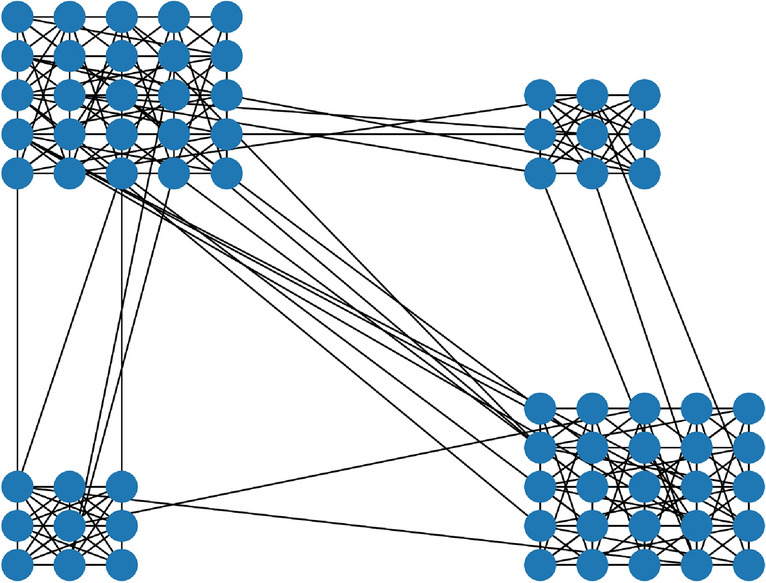
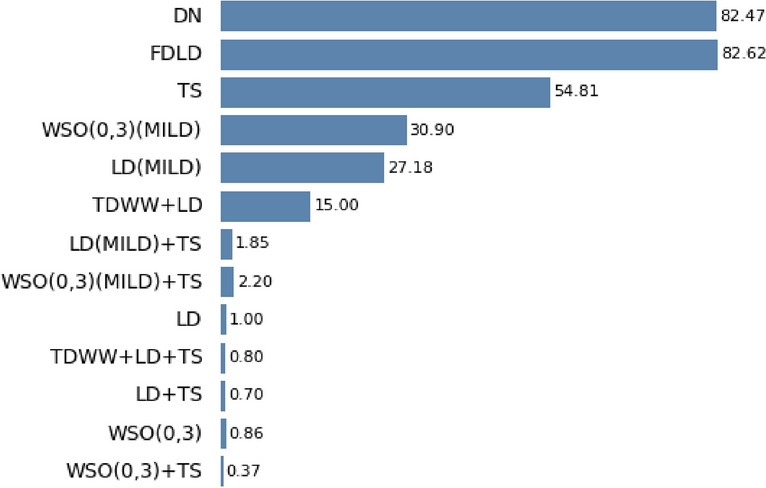
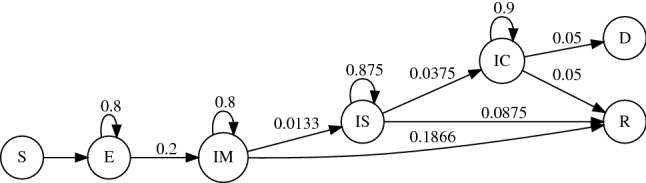
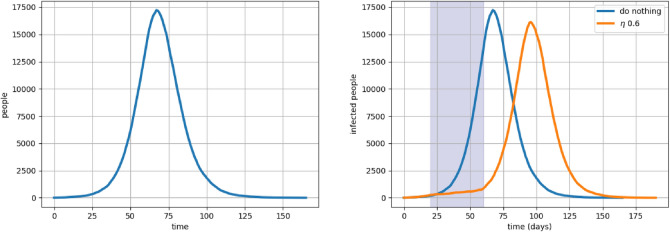
Many countries have introduced Lockdowns to contain the COVID19 epidemic. Lockdowns, though an effective policy for containment, imposes a heavy cost on the economy as it enforces extreme social distancing measures on the whole population. The objective of this note is to study alternatives to Lockdown which are either more targeted or allows partial opening of the economy. Cities are often spatially organized into wards. We introduce Multi-lattice small world (MLSW) network as a model of a city where each ward is represented by a 2D lattice and each vertex in the latex represents an agent endowed with SEIR dynamics. Through simulation studies on MLSW, we examine a variety of candidate suppression policies and find that restricting Lockdowns to infected wards can indeed out-perform global Lockdowns in both reducing the attack rate and also shortening the duration of the epidemic. Even policies such as partial opening of the economy, such as Two-Day Work Week, can be competitive if augmented with extensive Contact Tracing.
许多国家已实施封锁措施以控制新冠疫情。封锁措施虽然是控制疫情的有效政策,但由于对全体人口实施了极端的社交距离措施,给经济带来了沉重代价。本报告的目的是研究比封锁更具针对性或允许部分经济开放的替代方案。城市通常在空间上划分为多个行政区。我们引入多格小世界(MLSW)网络作为城市模型,其中每个行政区由一个二维格点表示,格点中的每个顶点代表一个具有SEIR动态的个体。通过对MLSW的模拟研究,我们考察了各种候选抑制政策,发现将封锁限制在受感染的行政区在降低感染率和缩短疫情持续时间方面确实优于全面封锁。即使是部分经济开放的政策,如每周两天工作制,如果辅以广泛的接触者追踪,也可能具有竞争力。