Department of Civil Engineering, Architecture and Georesources, CERENA (Centro de Recursos Naturais e Ambiente), Instituto Superior Técnico, University of Lisbon, 1049-001 Lisbon, Portugal.
Department of Petrology and Mineral Resources, Eberhard-Karls University of Tübingen, Schnarrenbergstraße 94-96, 72076 Tübingen, Germany.
Int J Environ Res Public Health. 2020 Nov 12;17(22):8369. doi: 10.3390/ijerph17228369.
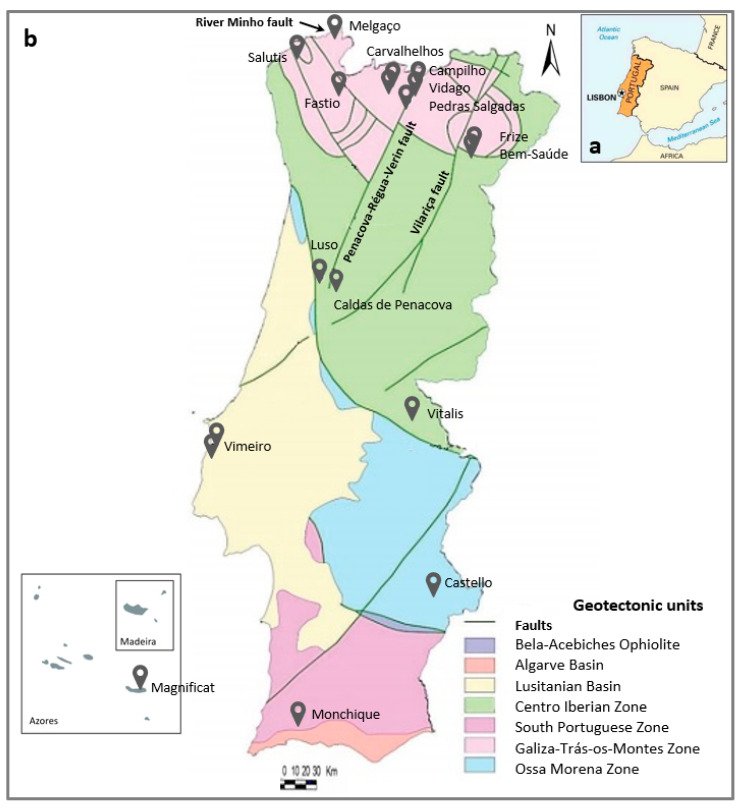
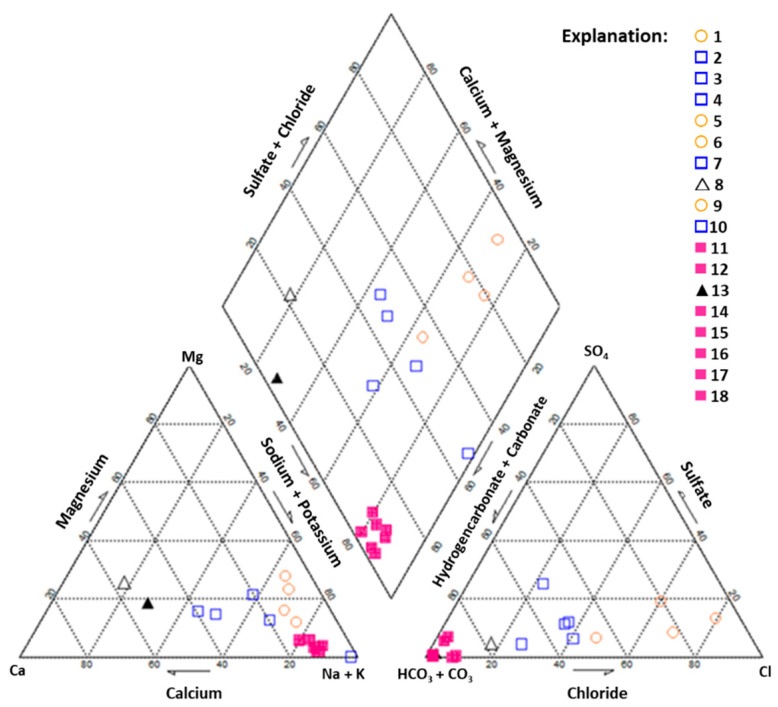
There is increasing epidemiologic and experimental evidence that lithium (Li) exhibits significant health benefits, even at concentrations lower than the therapeutic oral doses prescribed as treatment for mental disorders. The aim of this study is to determine the content of Li in 18 brands of bottled natural mineral waters that are available on the Portuguese market and from which the sources are found within the Portuguese territory, to provide data for Li intake from drinking water. Analyses of Li were performed by inductively coupled plasma-mass spectrometry. The results indicate highly different Li concentrations in natural mineral waters: one group with low Li concentrations (up to 11 µg Li/L) and a second group with Li concentrations higher than 100 µg/L. The highest Li concentrations (>1500 µg Li/L) were observed in the highly mineralized Na-HCO type waters that are naturally carbonated (>250 mg/L free CO). As a highly bioavailable source for Li dietary intake these natural mineral waters have potential for Li health benefits but should be consumed in a controlled manner due to its Na and F contents. The consumption of as little as 0.25 L/day of Vidago natural mineral water (2220 µg Li/L), can contribute up to 50% of the proposed daily requirement of 1 mg Li/day for an adult (70 kg body weight). In future, Li epidemiological studies that concern the potential Li effect or health benefits from Li in drinking water should consider not only the Li intake from tap water but also intake from natural mineral water that is consumed in order to adjust the Li intake of the subjects.
越来越多的流行病学和实验证据表明,锂(Li)即使在低于治疗精神障碍的口服剂量的浓度下,也具有显著的健康益处。本研究旨在确定在葡萄牙市场上可获得的 18 种瓶装天然矿泉水的 Li 含量,这些矿泉水的水源均在葡萄牙境内,为饮用水中的 Li 摄入量提供数据。采用电感耦合等离子体质谱法进行 Li 分析。结果表明,天然矿泉水中的 Li 浓度差异很大:一组 Li 浓度较低(低至 11μg Li/L),另一组 Li 浓度高于 100μg/L。高矿化度的 Na-HCO3 型天然碳酸水(游离 CO2 含量>250mg/L)中 Li 浓度最高(>1500μg Li/L)。这些天然矿泉水是 Li 饮食摄入的高生物利用源,具有 Li 健康益处的潜力,但由于其含有 Na 和 F,应控制其摄入量。每天饮用 0.25 升 Vidago 天然矿泉水(2220μg Li/L),可满足成人(70kg 体重)每日 1mg Li 建议摄入量的 50%。未来,关于饮用水中 Li 潜在效应或健康益处的 Li 流行病学研究,不仅应考虑自来水中的 Li 摄入量,还应考虑饮用天然矿泉水的摄入量,以便调整研究对象的 Li 摄入量。