Department of Oral Health, University of Medicine and Pharmacy "Iuliu Hatieganu", Victor Babes Street, No. 15, 400012 Cluj-Napoca, Romania.
Research Center for Functional Genomics, Biomedicine and Translational Medicine, "Iuliu Hatieganu" University of Medicine and Pharmacy, Gheorghe Marinescu Street, No. 23, 400337 Cluj-Napoca, Romania.
Medicina (Kaunas). 2020 Nov 12;56(11):607. doi: 10.3390/medicina56110607.
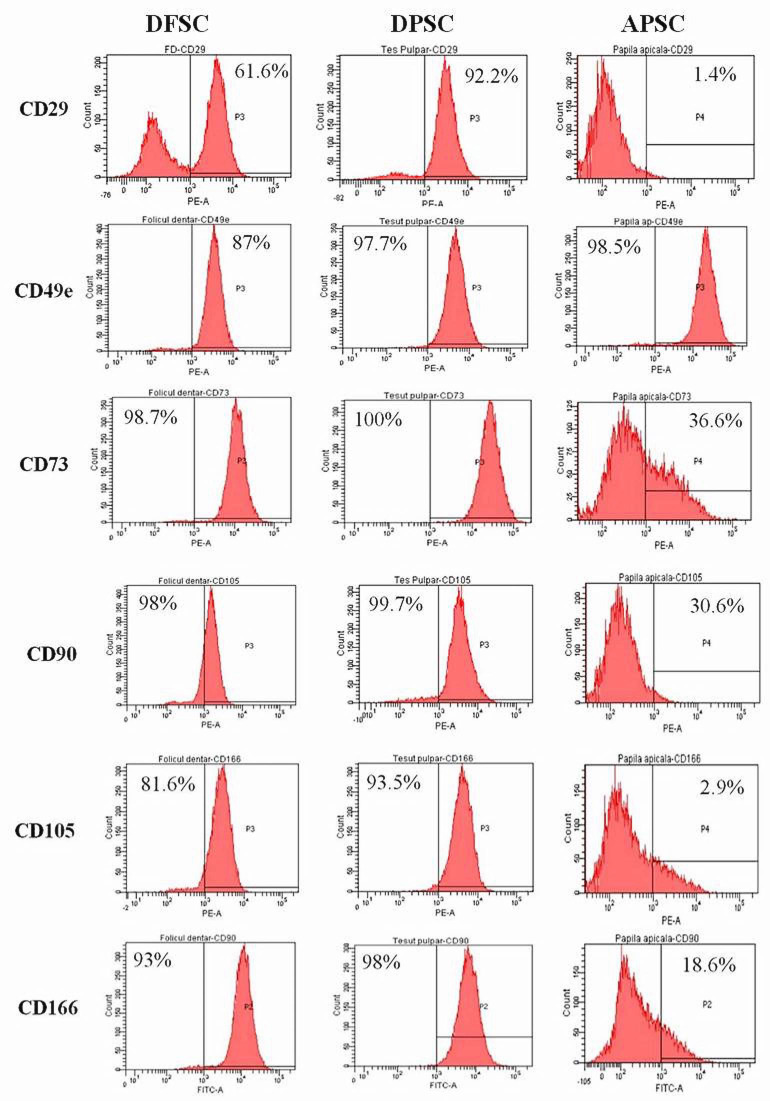
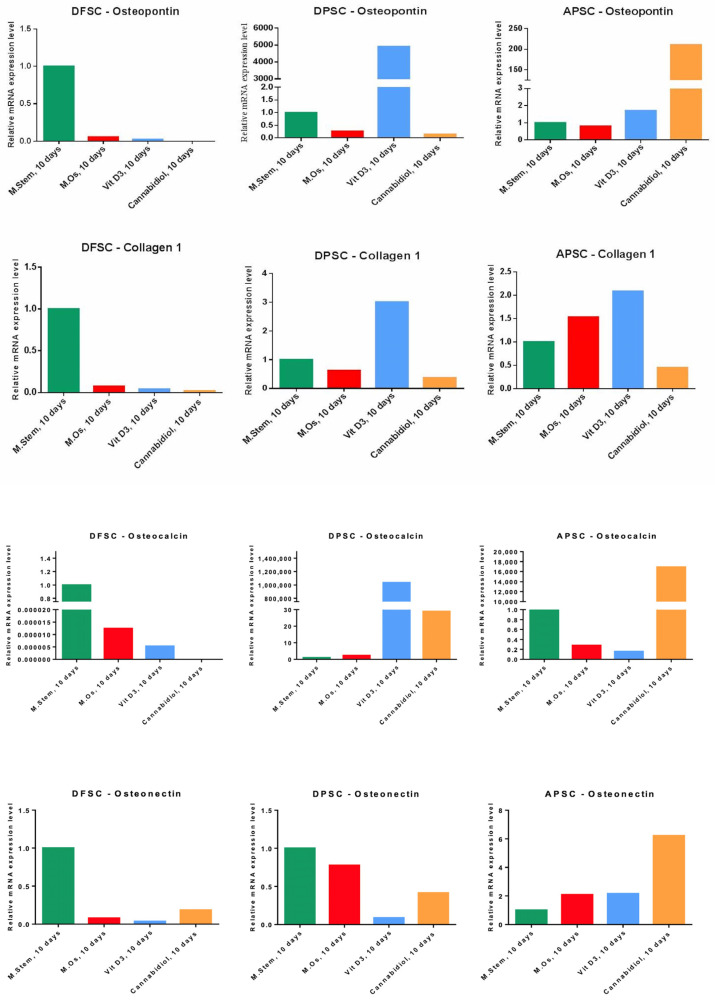
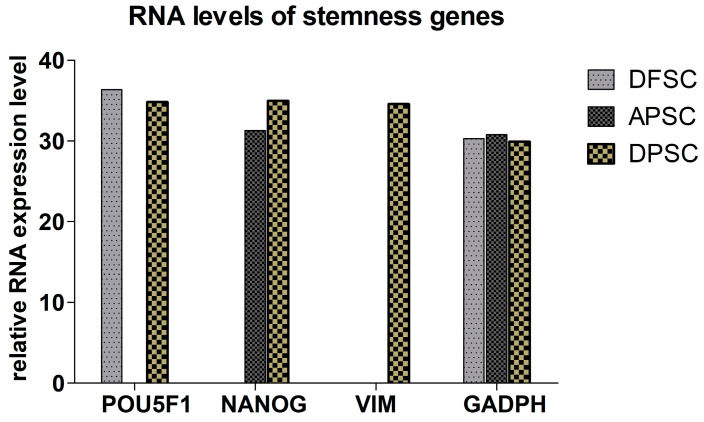
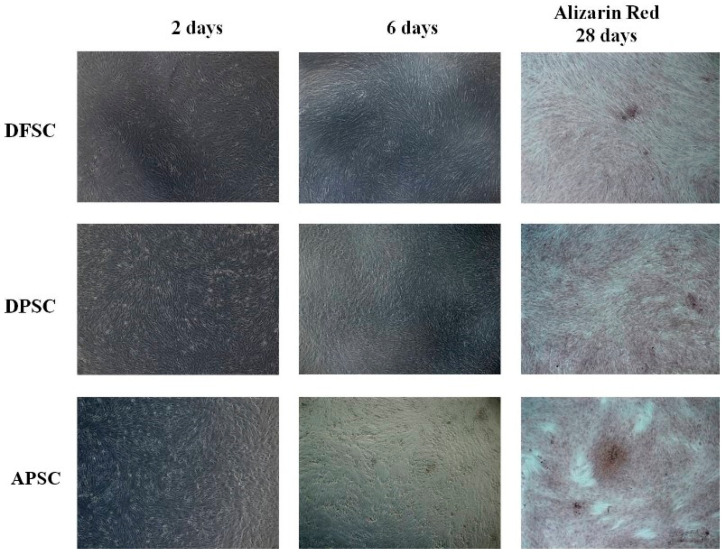
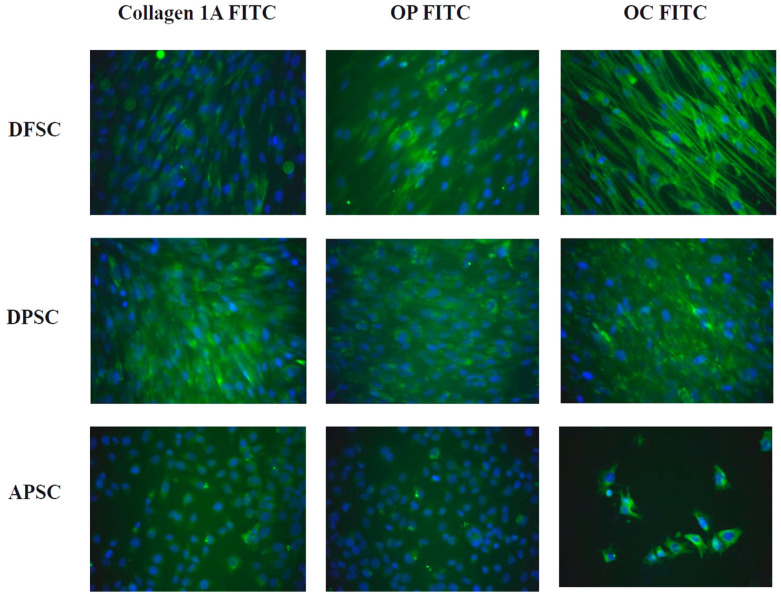
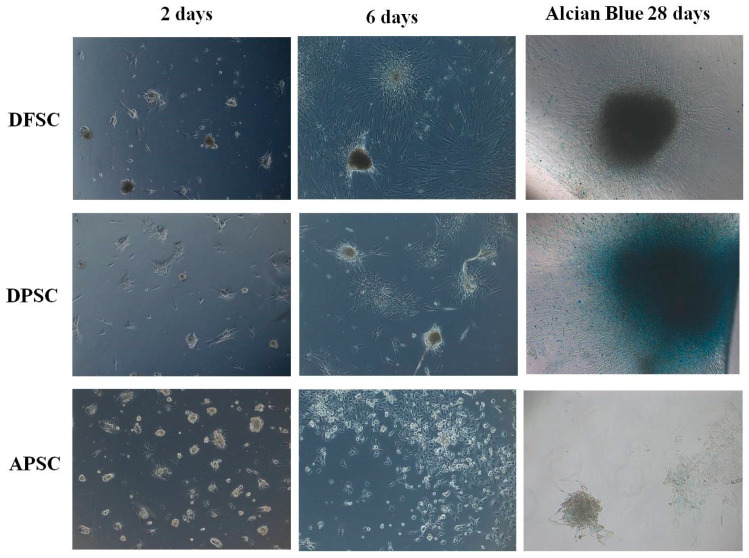
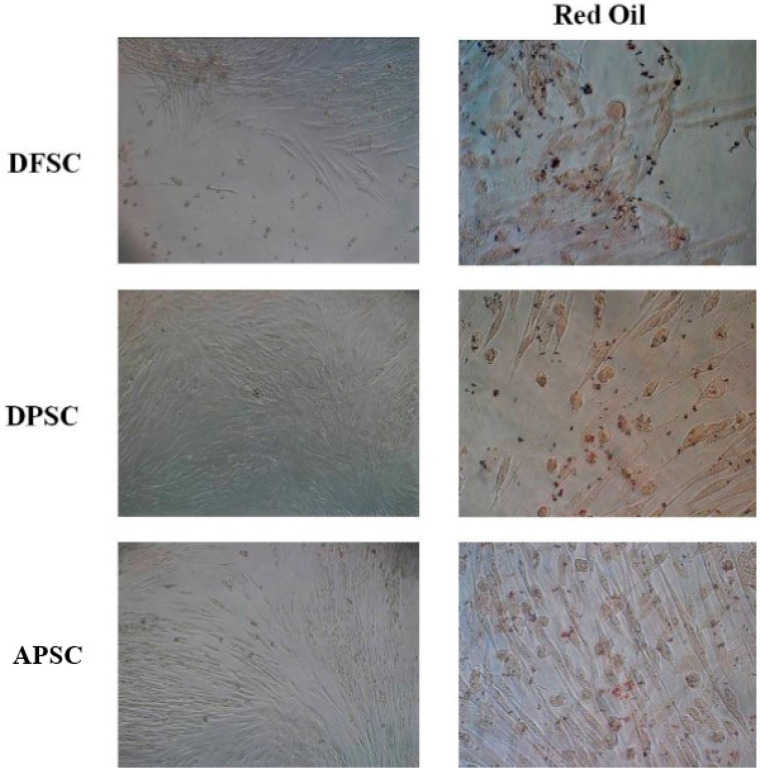
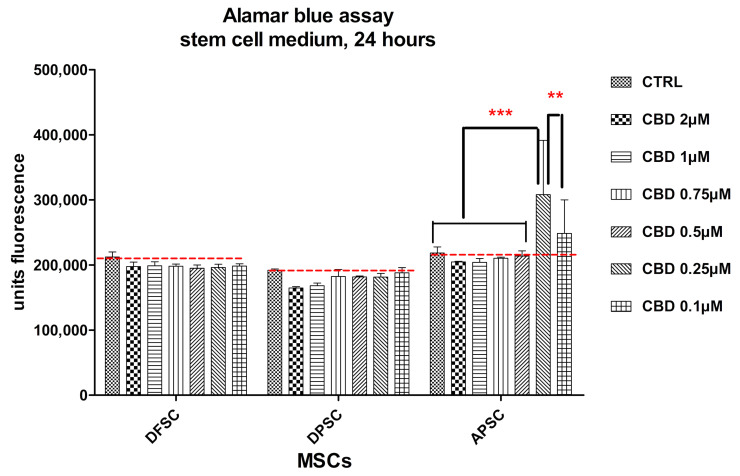
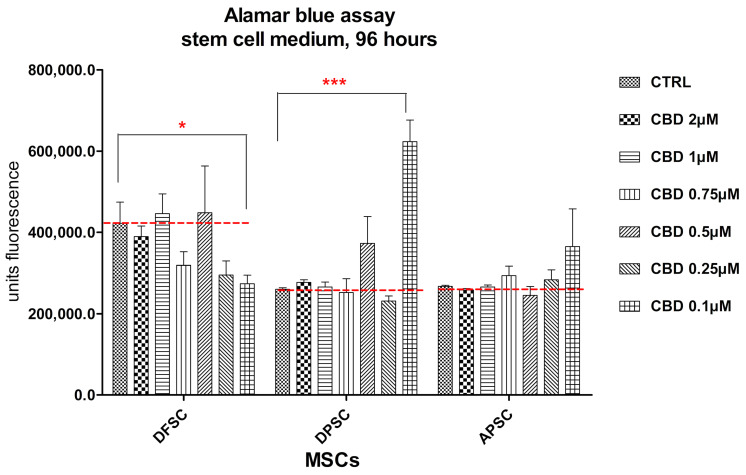
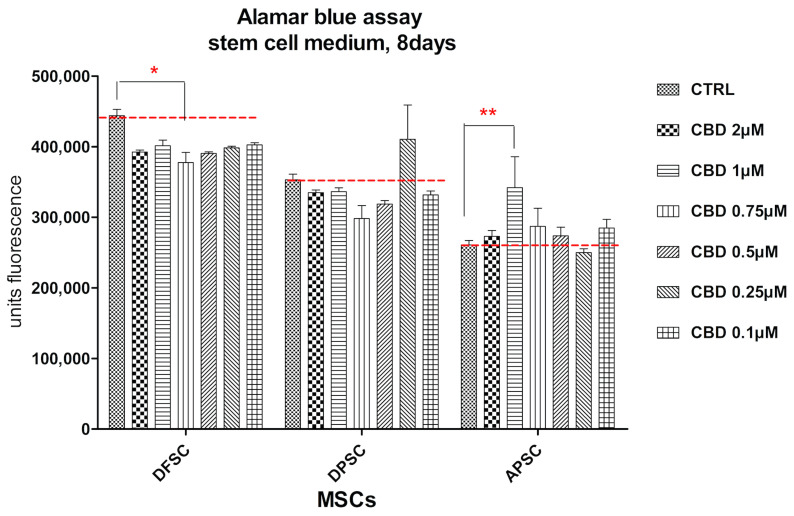
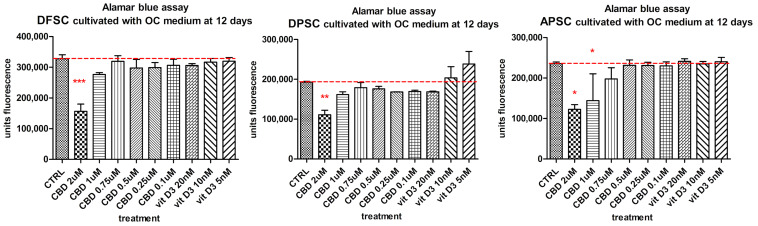
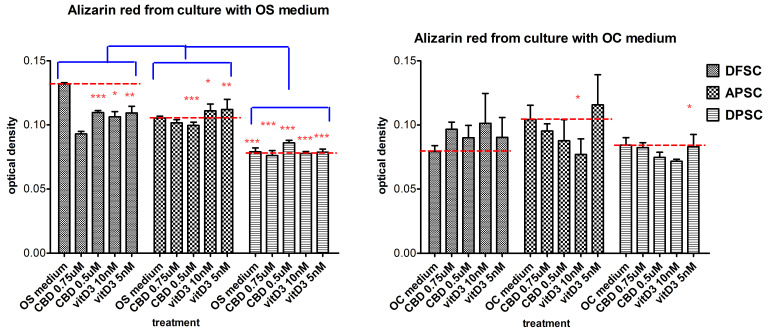
The aim of the present study was to establish a new differentiation protocol using cannabidiol (CBD) and vitamin D3 (Vit. D3) for a better and faster osteogenic differentiation of dental tissue derived mesenchymal stem cells (MSCs). MSCs were harvested from dental follicle (DFSCs), dental pulp (DPSCs), and apical papilla (APSCs) of an impacted third molar of a 17-year old patient. The stem cells were isolated and characterized using flow cytometry; reverse transcription polymerase chain reaction (RT-PCR); and osteogenic, chondrogenic, and adipogenic differentiation. The effects of CBD and Vit. D3 on osteogenic differentiation of dental-derived stem cell were evaluated in terms of viability/metabolic activity by alamar test, expression of collagen1A, osteopontin (OP), osteocalcin (OC), and osteonectin genes and by quantification of calcium deposits by alizarin red assay. Stem cell characterization revealed more typical stemness characteristics for DFSCs and DPSCs and atypical morphology and markers expression for APSCs, a phenotype that was confirmed by differences in multipotential ability. The RT-PCR quantification of bone matrix proteins expression revealed a different behavior for each cell type, APSCs having the best response for CBD. DPSCs showed the best osteogenic potential when treated with Vit. D3. Cultivation of DFSC in standard stem cell conditions induced the highest expression of osteogenic genes, suggesting the spontaneous differentiation capacity of these cells. Regarding mineralization, alizarin red assay indicated that DFSCs and APSCs were the most responsive to low doses of CBD and Vit. D3. DPSCs had the lowest mineralization levels, with a slightly better response to Vit. D3. This study provides evidence that DFSCs, DPSCs, and APSCs respond differently to osteoinduction stimuli and that CBD and Vit. D3 can enhance osteogenic differentiation of these types of cells under certain conditions and doses.
本研究旨在建立一种新的分化方案,使用大麻二酚 (CBD) 和维生素 D3 (Vit. D3) 促进牙源性间充质干细胞 (MSCs) 的更好更快成骨分化。MSCs 从 17 岁患者的阻生第三磨牙的牙囊 (DFSCs)、牙髓 (DPSCs) 和根尖乳头 (APSCs) 中提取。通过流式细胞术、逆转录聚合酶链反应 (RT-PCR) 以及成骨、软骨和成脂分化对干细胞进行分离和鉴定。通过 alamar 试验评估 CBD 和 Vit. D3 对牙源性干细胞成骨分化的影响,以细胞活力/代谢活性为指标,通过胶原 1A、骨桥蛋白 (OP)、骨钙素 (OC) 和骨粘连蛋白基因的表达以及茜素红染色法测定钙沉积量来评估。干细胞鉴定结果显示,DFSCs 和 DPSCs 具有更多典型的干细胞特征,而 APSCs 具有非典型的形态和标志物表达,这一表型通过多能能力的差异得到证实。骨基质蛋白表达的 RT-PCR 定量分析显示,每种细胞类型的行为不同,APSCs 对 CBD 的反应最佳。DPSCs 在用 Vit. D3 处理时表现出最佳的成骨潜能。在标准干细胞条件下培养 DFSC 可诱导最高的成骨基因表达,表明这些细胞的自发分化能力。关于矿化,茜素红染色法表明,DFSCs 和 APSCs 对低剂量 CBD 和 Vit. D3 的反应最为敏感。DPSCs 的矿化水平最低,对 Vit. D3 的反应略好。本研究提供的证据表明,DFSCs、DPSCs 和 APSCs 对成骨诱导刺激的反应不同,CBD 和 Vit. D3 在某些条件和剂量下可以增强这些类型细胞的成骨分化。