Sarkar Amitabha, Liu Guangqi, Jin Yinzi, Xie Zheng, Zheng Zhi-Jie
Centre of Social Medicine and Community Health, School of Social Sciences (Building-II), Jawaharlal Nehru University, New Mehrauli Road, New Delhi 110067, India.
Department of Global Health, School of Public Health, Peking University, 38 Xueyuan Road, Haidian District, Beijing 100191, China.
Glob Health J. 2020 Dec;4(4):121-132. doi: 10.1016/j.glohj.2020.11.003. Epub 2020 Nov 12.
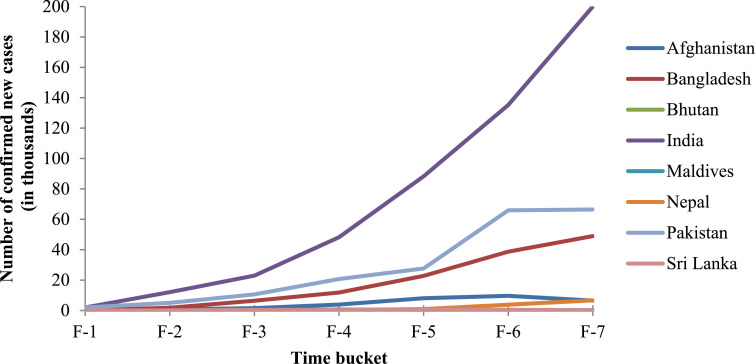
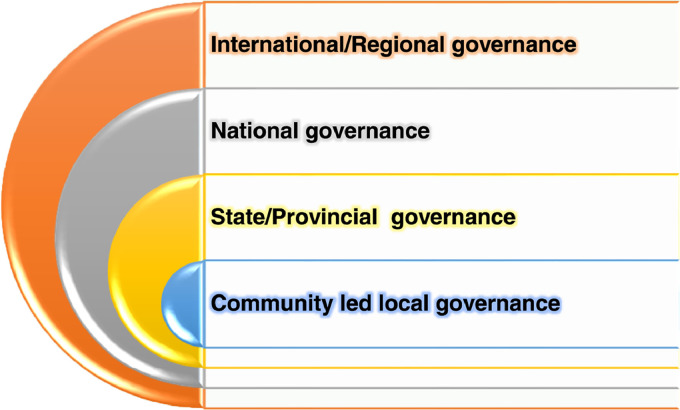
Like rest of the world, the South Asian region is facing enormous challenges with the coronavirus disease 2019 (COVID-19) pandemic. The socioeconomic context of the eight South Asian countries is averse to any long-term lockdown program, but the region still observed stringent lockdown close to two months. This paper analyzed major measures in public health preparedness and responses in those countries in the pandemic. The research was based on a situation analysis to discuss appropriate plan for epidemic preparedness, strategies for prevention and control measures, and adequate response management mechanism. Based on the data from March 21 to June 26, 2020, it appeared lockdown program along with other control measures were not as effective to arrest the exponential growth of fortnightly COVID-19 cases in Afghanistan, Bangladesh, India, Nepal and Pakistan. However, Bhutan, Maldives and Sri Lanka have been successfully limiting the spread of the disease. The in-depth analysis of prevention and control measures espoused densely populated context of South Asia needs community-led intervention strategy, such as case containment, in order to reverse the growing trend, and adopt the policy of mitigation instead of suppression to formulate COVID-19 action plan. On the other hand, mechanism for response management encompassed a four-tier approach of governance to weave community-led local bodies with state, national and international governance actors for enhancing the countries' emergency operation system. It is concluded resource-crunch countries in South Asia are unable to cope with the disproportionate demand of capital and skilled health care workforce at the time of the pandemic. Hence, response management needs an approach of governance maximization instead of resource maximization. The epidemiologic management of population coupled with suitable public health prevention and control measures may be a more appropriate strategy to strike a balance between economy and population health during the time of pandemic.
与世界其他地区一样,南亚地区正面临2019冠状病毒病(COVID-19)大流行带来的巨大挑战。南亚八个国家的社会经济环境不利于任何长期封锁计划,但该地区仍实施了近两个月的严格封锁。本文分析了这些国家在大流行期间公共卫生防范和应对的主要措施。该研究基于形势分析,以讨论适当的疫情防范计划、预防和控制措施策略以及充分的应对管理机制。根据2020年3月21日至6月26日的数据,在阿富汗、孟加拉国、印度、尼泊尔和巴基斯坦,封锁计划以及其他控制措施似乎并未有效遏制COVID-19病例每两周呈指数增长的态势。然而,不丹、马尔代夫和斯里兰卡成功地限制了疾病的传播。在南亚人口密集的背景下,对预防和控制措施的深入分析需要社区主导的干预策略,如病例控制,以扭转增长趋势,并采取缓解而非抑制政策来制定COVID-19行动计划。另一方面,应对管理机制包括四级治理方法,将社区主导的地方机构与国家、国际治理行为体相结合,以加强各国的应急行动系统。得出的结论是,南亚资源匮乏的国家在大流行期间无法应对资本和熟练医护人员的不成比例需求。因此,应对管理需要一种治理最大化而非资源最大化的方法。在大流行期间,对人群进行流行病学管理并辅以适当的公共卫生预防和控制措施,可能是在经济与人口健康之间取得平衡的更合适策略。