National Germplasm Center of Domestic Animal Resources, Institute of Animal Sciences, Chinese Academy of Agricultural Sciences (CAAS), No. 2 Yuanmingyuan West Road, Beijing, 100193, China.
Key Laboratory of Animal (Poultry) Genetics Breeding and Reproduction, Ministry of Agriculture and Rural Affairs, CAAS, Beijing, 100193, China.
BMC Genomics. 2020 Nov 17;21(1):800. doi: 10.1186/s12864-020-07210-9.
Fat tail is a unique trait in sheep acquired during domestication. Several genomic analyses have been conducted in sheep breeds from limited geographic origins to identify the genetic factors underlying this trait. Nevertheless, these studies obtained different candidates. The results of these regional studies were easily biased by the breed structures.
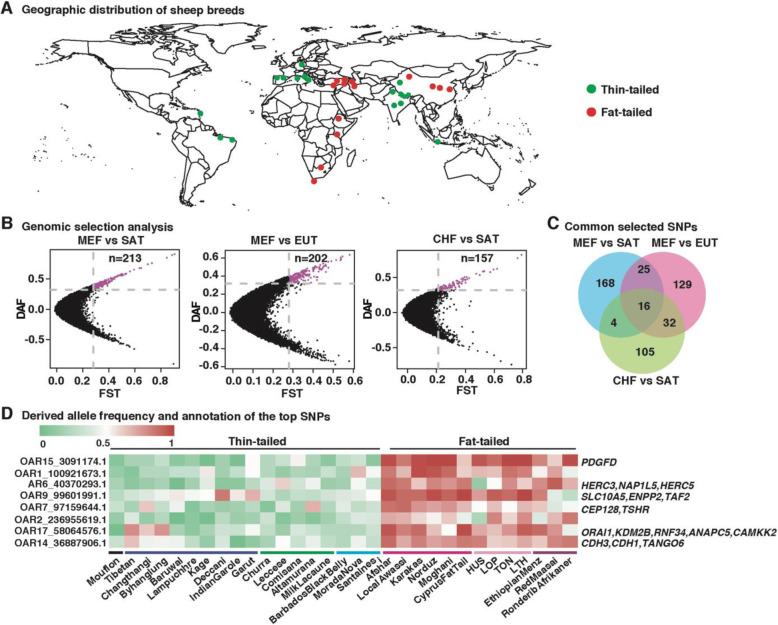
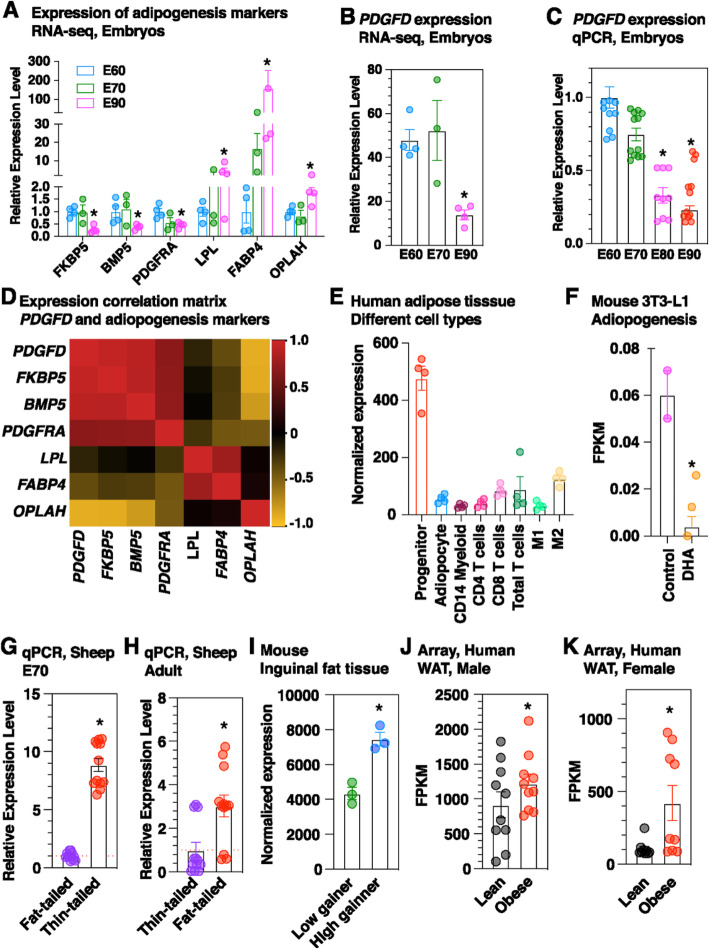
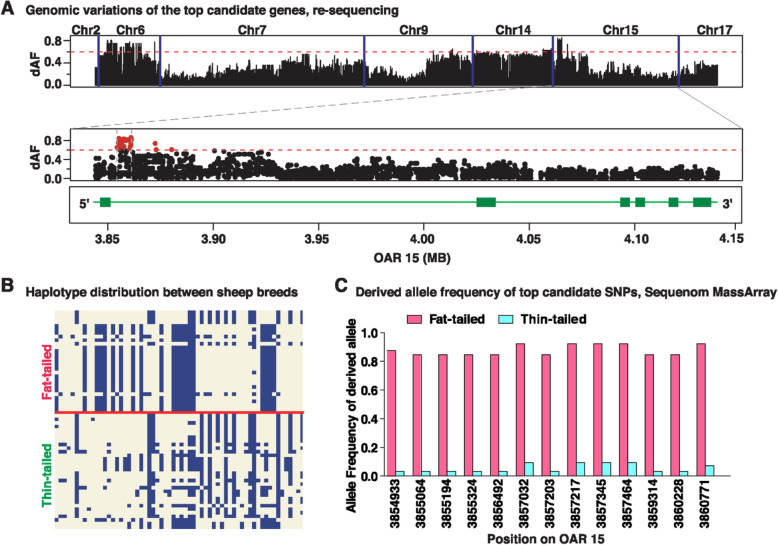
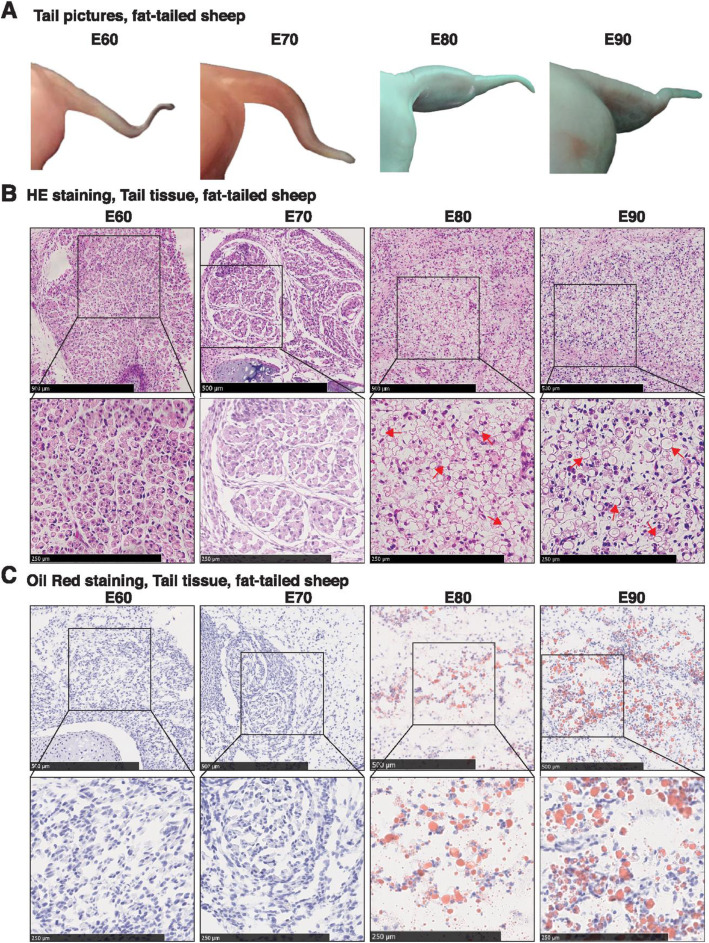
To minimize the bias and distinguish the true candidates, we used an extended data set of 968 sheep representing 18 fat-tailed breeds and 14 thin-tailed breeds from around the world, and integrated two statistical tests to detect selection signatures, including Genetic Fixation Index (F) and difference of derived allele frequency (ΔDAF). The results showed that platelet derived growth factor D (PDGFD) exhibited the highest genetic differentiation between fat- and thin-tailed sheep breeds. Analysis of sequence variation identified that a 6.8-kb region within the first intron of PDGFD is likely the target of positive selection and contains regulatory mutation(s) in fat-tailed sheep. Histological and gene expression analyses demonstrated that PDGFD expression is associated with maturation and hemostasis of adipocytes. Further retrospective analysis of public transcriptomic datasets revealed that PDGFD expression is down-regulated during adipogenesis in both human and mouse, and is higher in fat tissues of obese individuals than that in lean individuals.
These results reveal that PDGFD is the predominant factor for the fat tail phenotype in sheep by contributing to adiopogenesis and maintaining the hemostasis of mature adipocytes. This study provides insights into the selection of fat-tailed sheep and has important application to animal breeding, as well as obesity-related human diseases.
脂肪尾巴是绵羊在驯化过程中获得的独特特征。已经对来自有限地理起源的绵羊品种进行了几项基因组分析,以确定这种特征的遗传因素。然而,这些研究获得了不同的候选者。这些区域性研究的结果很容易受到品种结构的影响。
为了最大程度地减少偏差并区分真正的候选者,我们使用了一个扩展数据集,其中包括代表来自世界各地的 18 个脂肪尾巴品种和 14 个瘦尾巴品种的 968 只绵羊,并且整合了两种统计测试来检测选择特征,包括遗传固定指数(F)和衍生等位基因频率的差异(ΔDAF)。结果表明,血小板衍生生长因子 D(PDGFD)在脂肪和瘦尾绵羊品种之间表现出最高的遗传分化。序列变异分析表明,PDGFD 基因的第一个内含子内的 6.8-kb 区域可能是正选择的靶标,并且在脂肪尾巴绵羊中包含调节突变。组织学和基因表达分析表明,PDGFD 表达与脂肪细胞的成熟和止血有关。对公共转录组数据集的回溯分析进一步表明,在人和小鼠的脂肪生成过程中,PDGFD 表达下调,肥胖个体的脂肪组织中 PDGFD 表达高于瘦个体。
这些结果表明,PDGFD 通过促进脂肪生成和维持成熟脂肪细胞的止血作用,是绵羊脂肪尾巴表型的主要因素。本研究为选择脂肪尾巴绵羊提供了新的见解,对动物育种以及肥胖相关人类疾病具有重要的应用价值。